

Higher gas prices may hit Georgia drivers harder than most
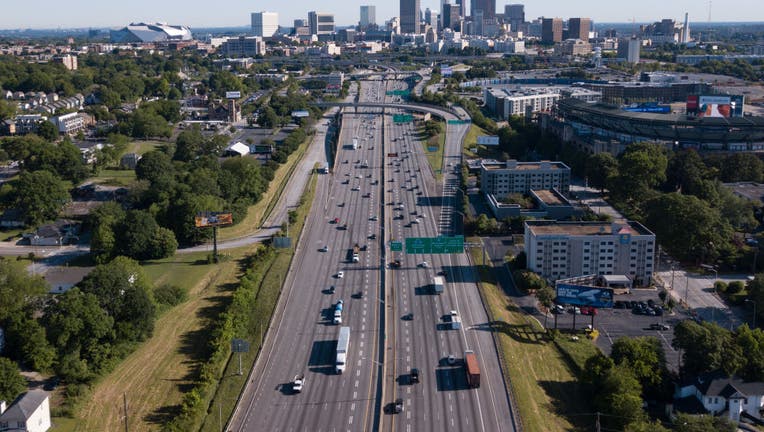
Traffic on Interstate 85 in Atlanta, Georgia. Photographer: Elijah Nouvelage/Bloomberg via Getty Images
ATLANTA - As gas prices climb nationwide, many Georgia drivers are approaching a financial tipping point — one that could soon force changes in how often and how far they drive.
The national average for gas hit $4.11 per gallon on April 15, up nearly 30% from a year ago, according to a new analysis from LendingTree using data from U.S. Energy Information Administration and American Automobile Association. While Georgia drivers are paying less than the national average — about $3.68 per gallon, or roughly 10% lower — the impact may still hit harder locally because of how much people drive.
RELATED: Here's where gas prices have increased the most in US
Georgia gas price pressure
What we know:
On average, Georgia drivers log about 16,700 miles a year, or more than 300 miles a week — well above the national average. In metro Atlanta, long commutes and widespread development mean many residents rely heavily on their vehicles for daily life, from work to errands to school.
That combination — high mileage and rising prices — is what economists say creates a sharper financial squeeze, even in states where gas is relatively cheaper.
A national survey by the American Automobile Association found 59% of Americans say $4 per gallon is their tipping point for gas prices, while about half say $3 per gallon is already too high. The same survey found nearly two-thirds of drivers change their habits when prices spike, including driving less or cutting back on other spending.
In Georgia, current prices are just below that $4 threshold, suggesting many drivers are already feeling pressure but have not yet hit a widespread breaking point.
PREVIOUS GEORGIA GAS STORIES
- Gas prices slightly down from last week's average in Georgia
- What the gas tax relief bill means for you
- 'Hard to survive': Atlanta truckers feel the squeeze of diesel price hike
- Gas prices soar in Georgia following Israeli strikes on Iranian oil
- Gas prices spike in Georgia as national average climbs above $3
The financial tipping point
What they're saying:
Recent polling from Ipsos conducted with Reuters found more than half of Americans say rising gas prices are impacting their finances, reinforcing that the strain is already being felt even before prices peak.
Gas prices have surged in every state over the past year, with some of the largest increases seen in Kentucky, Tennessee and New Hampshire, according to LendingTree. Even in states with smaller increases, prices are still up significantly, reflecting broader inflation pressures tied in part to global conflicts and energy markets.
Driving habits and shifts
What's next:
Experts say Georgia drivers may feel those increases more quickly than drivers in some higher-cost states because of how dependent residents are on their vehicles. With limited public transportation options outside metro Atlanta and long commute distances across both suburban and rural areas, cutting back on driving is often difficult.
That leaves fewer options when prices rise — meaning households may instead reduce spending elsewhere.
If gas prices in Georgia climb closer to or above $4 per gallon, the data suggests a majority of drivers could begin making more significant lifestyle changes, from limiting trips to adjusting budgets to offset higher fuel costs.
For now, Georgia remains just under that threshold. But with prices continuing to rise, many drivers may not have much room left before reaching the point where filling up becomes more than just a routine stop — and instead, a financial decision.
Sources:
- LendingTree analysis of gas price increases (April 2025–April 2026)
- American Automobile Association gas price data and consumer survey on price thresholds
- U.S. Energy Information Administration historical fuel price data
- Reuters / Ipsos polling on financial impact of rising gas prices
- InsuredBetter: Average miles driven each year by state