

Nearly half of Georgia counties are maternity care deserts
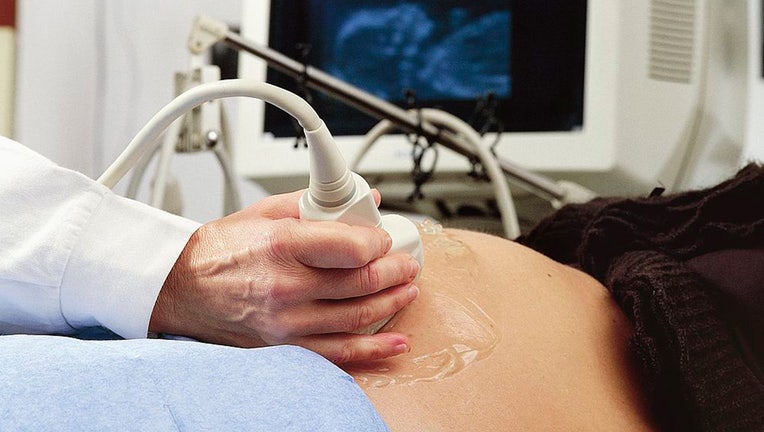
FILE - A pregnant woman receiving an ultrasound at a doctor's office. (DEA / G. CIGOLINI/De Agostini via Getty Images)
ATLANTA - For thousands of women in Georgia, getting maternity care can mean traveling well beyond their own communities — and a new report shows just how widespread the problem has become.
What we know:
Nearly 44% of Georgia counties are considered maternity care deserts, according to the March of Dimes' 2026 Nowhere to Go: Maternity Care Access Across the U.S. report. Those counties are home to nearly 158,000 women, and about 10,000 babies are born each year to women living in them.
March of Dimes defines a maternity care desert as a county with no birthing facility and no obstetric clinician.
The problem is even broader when looking specifically at hospitals and other birthing facilities. Nearly 65% of Georgia counties do not have a birthing facility, according to the report. About 159,000 women live more than 30 minutes from a hospital with labor and delivery services.
RELATED STORIES
- Congresswoman Nikema Williams pushes maternal health legislation
- St. Mary’s to end Lavonia birthing services, shift care to Athens hospital
- Report outlines maternal care deserts in Georgia
- Mortality rate for Black mothers has not improved: CDC data
Georgia's shortage of maternity care providers
What they're saying:
A lack of doctors and other obstetric clinicians is a major factor behind Georgia's maternity care gaps.
The report found 44% of Georgia counties have no obstetric clinician at all, while another 11.9% have only one.
The lack of nearby care can have consequences beyond inconvenience. March of Dimes says longer travel distances have been associated with delays in beginning prenatal care, a greater chance of unplanned births outside hospitals, higher rates of serious maternal health complications and increased admissions to neonatal intensive care units.
Insurance can create another obstacle.
The report found that about 3% of counties nationwide have especially high uninsured rates among women ages 19 to 54, in some cases reaching as high as 1 in 3 women. Clusters of those counties are found in several states, including Georgia.
That does not mean one-third of all Georgia women are uninsured. Rather, the report found that some counties in Georgia are among the relatively small number nationally with particularly high uninsured rates.
Georgia is part of a larger Southern problem
Georgia is hardly alone.
Why you should care:
About 38.7% of counties across the South are maternity care deserts, tying the Midwest for the highest rate of any U.S. region. By comparison, 26.4% of Western counties and just 5.1% of counties in the Northeast are maternity care deserts.
The problem is especially pronounced in rural communities.
Nationwide, nearly 58% of rural counties have no obstetric clinicians, compared with about 19% of urban counties.
Neighboring Tennessee and North Carolina are among the states with the largest numbers of women and infants affected by limited maternity care. Together with Texas, the two states account for more than 1.2 million women and 82,000 infants living in areas with limited access.
In neighboring Alabama, the report offers a glimpse of what those numbers can mean for families. A woman in Lowndes County, which is considered a maternity care desert, had to travel about 45 minutes to reach the nearest hospital when she was ready to give birth. Another Alabama patient receiving prenatal care in Centreville had to plan to deliver more than an hour away because of a pregnancy complication.
Florida stands out for a different reason. It is among the states with the largest shares of the nation's birth centers. Still, birth centers remain relatively scarce nationwide, with only 8.4% of U.S. counties having one.
A nationwide maternity care shortage
Big picture view:
Across the country, 34.6% of counties — roughly 1 in 3 — are maternity care deserts.
About 2.4 million women of reproductive age live in those counties, and approximately 149,000 babies are born to women living in maternity care deserts each year. When counties with low and moderate access are included, the number grows to 5.8 million women and 358,000 infants.
More than half of U.S. counties do not have a hospital offering labor and delivery services, affecting nearly 370,000 births annually.
And access continues to shrink in some communities.
At least 96 labor and delivery units closed across 35 states between 2024 and early 2026. In nearly 60% of those communities, the facility that shut down had been the county's only local birthing option.
Those closures have increased travel times to maternity care by an average of about 25 minutes in affected communities. Overall, residents of maternity care deserts travel about three times longer to reach labor and delivery services than people living in counties with full access.
March of Dimes cautions that its county classifications cannot account for every factor affecting a patient's ability to receive care, including transportation, appointment availability and quality of care. National data can also lag behind local changes in facilities and providers.