

Jack Smith labels Georgia 'Ground Zero' in 2020 election probe during tense House hearing
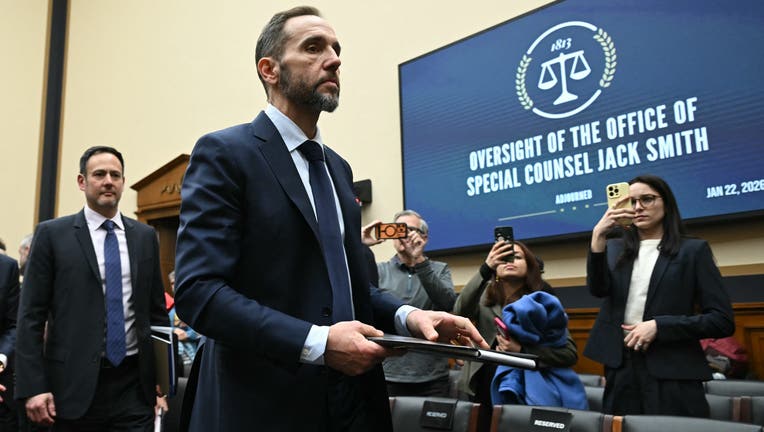
Former US special counsel Jack Smith leaves after testifying before the House Judiciary Committee about his investigations into President Donald Trump, in the Rayburn House Office Building on Capitol Hill in Washington, DC, on January 22, 2026. (Phot
WASHINGTON - Former Special Counsel Jack Smith told lawmakers Thursday that Georgia sat at the center of his now-dismissed federal investigation into efforts to overturn the 2020 presidential election, repeatedly describing the state as "ground zero" for alleged criminal conduct.
Testifying for several hours before the House Judiciary Committee, Smith defended the integrity of his probe and said the evidence was built largely on actions and statements from Republican officials in Georgia who, he said, "put their allegiance to the country before the party."
Georgia election interference case
What we know:
Smith pointed repeatedly to Georgia’s role in the investigation, highlighting actions by state officials who rejected claims of widespread election fraud despite intense pressure from then-President Donald Trump.
Among the most prominent examples was Georgia Secretary of State Brad Raffensperger, whom Smith cited as a key witness. Smith noted that Raffensperger "told Donald Trump the truth" about the election results even as Trump sought to overturn them.
That confrontation occurred during a roughly hour-long conference call on Jan. 2, 2021, days before Congress was set to certify the election. During the call, Trump pressed Raffensperger to "find" enough votes to erase his 11,779-vote loss in Georgia.

Full call between Trump and Georgia's secretary of state
FOX 5 Atlanta has obtained the full phone call between the Georgia Secretary of State's Office and President Donald Trump along with several key White House staff.
"All I want to do is this. I just want to find 11,780 votes, which is one more than we have. Because we won the state," Trump said during the recorded call.
The recording was played again Thursday during questioning by Georgia Democratic Rep. Lucy McBath.
The Raffensperger call, fallout
The backstory:
During the call, Trump cited debunked conspiracy theories, including claims of shredded ballots in Fulton County, compromised Dominion voting machines and thousands of "dead voters." He also suggested Raffensperger and his legal counsel, Ryan Germany, were taking a "big risk" and could face criminal exposure for not acting on his claims.
Raffensperger pushed back directly.
"Respectfully, President Trump: What you're saying is not true," Raffensperger said, adding that "the data you have is wrong."
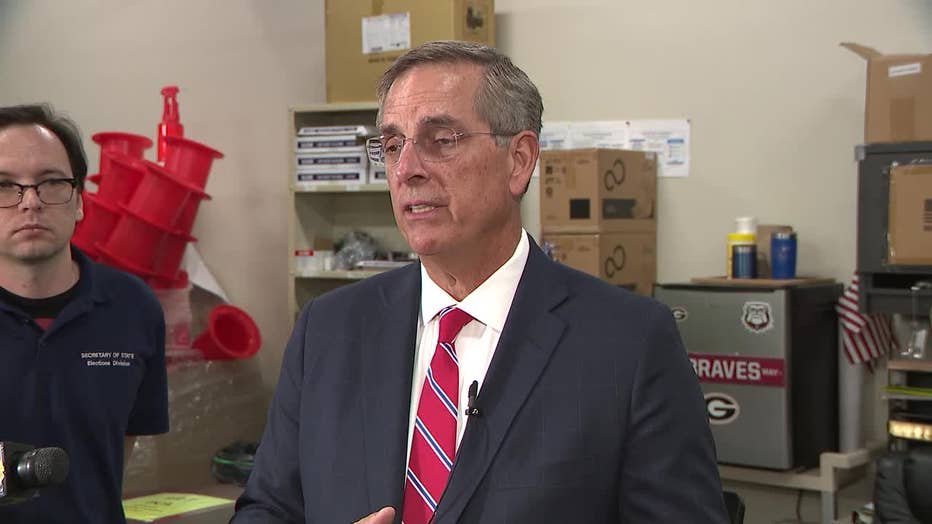
Georgia Secretary of State Brad Raffensperger tours the Paulding County election office on Aug. 13, 2024. (FOX 5)
Raffensperger later noted that Georgia’s votes had been counted three times, including a hand recount, before the state certified Democrat Joe Biden as the winner. He later told FOX 5 Atlanta that he simply "followed the law" and "followed the Constitution."
After the call became public, House Democrats sent a criminal referral to the FBI accusing Trump of the "solicitation of, or conspiracy to commit, a number of election crimes." The call later became a cornerstone of the 2023 racketeering indictment brought by Fulton County District Attorney Fani Willis against Trump and 18 co-defendants.
Georgia Republicans cited
What they're saying:
Smith also referenced actions by Georgia Attorney General Chris Carr, who told Trump’s legal team, "we're just not seeing the things that you are seeing," when reviewing claims of widespread fraud.
FOX 5 Atlanta previously reported that Carr said his office independently analyzed allegations of election wrongdoing but found no basis for state criminal charges at that time.

Georgia Attorney General to testify before Fulton County grand jury
Republican Attorney General Chris Carr is expected to testify about a 15-minute phone call then President Donald Trump made to him in December 2020.
The testimony further revisited the role of the late Republican House Speaker David Ralston, who dismissed the so-called fake electors plan as "the craziest thing I've heard."
Trump personally called Ralston on Dec. 7, 2020, urging him to convene a special legislative session to overturn Georgia’s election results. Trump argued such a move would uncover fraud and told Ralston he would be "more popular" if he complied.
While Ralston expressed personal support for Trump, he drew a firm line on constitutional authority. When Trump asked who would stop him from calling a session, Ralston reportedly chuckled and replied, "A federal judge, possibly."
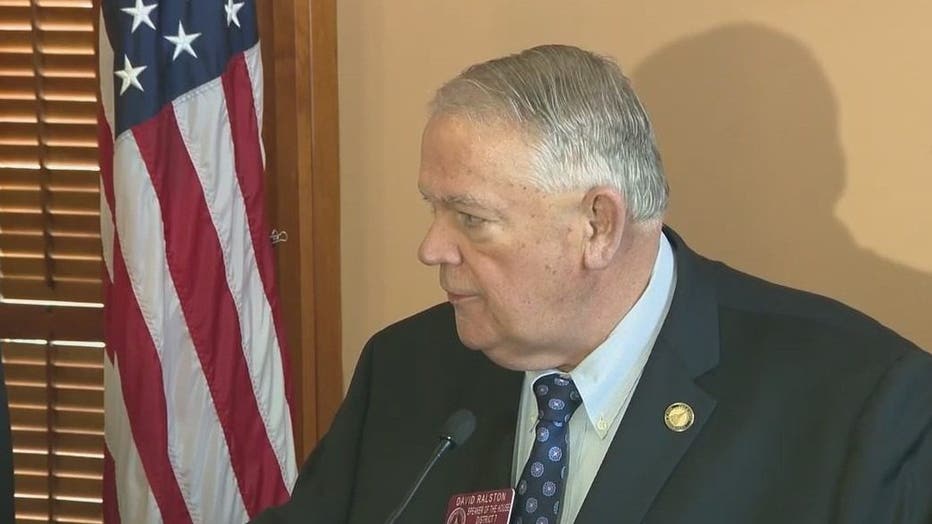
Georgia House Speaker David Ralston, R-Blue Ridge, discusses the passage of the state's budget on March 5, 2021. (FOX 5)
At the time, Deputy Secretary of State Jordan Fuchs told FOX 5 Atlanta the effort amounted to a "clear power grab" to let lawmakers "violate the will of the people."
Before his death in 2022, Ralston testified under subpoena before the Fulton County special purpose grand jury. His former chief of staff, Spiro Amburn, later told FOX 5 Atlanta that Ralston’s refusal to act was simply fulfilling his oath, saying the speaker "did the job he was elected to do."
Georgia election law changes
Local perspective:
Rather than attempting to overturn the election, Ralston proposed altering how Georgia selects its chief election official. In December 2020, he announced plans to pursue a constitutional amendment shifting the power to choose the secretary of state from voters to the legislature.
Ralston told FOX 5 Atlanta the move stemmed from Raffensperger’s perceived "unresponsiveness" and his decision to settle a lawsuit over absentee ballot signature verification without legislative input.
Jack Smith’s broader argument
Big picture view:
Smith told lawmakers the "through line" of the alleged criminal conduct was the use of "knowingly false claims of fraud" to pressure officials to ignore certified vote totals. He said evidence showed Trump publicly insisted the election was stolen while privately acknowledging his loss.
During questioning, Rep. Jamie Raskin cited testimony from Sen. Lindsey Graham’s grand jury appearance in which Graham said Trump was so inclined to believe fraud claims that "if you told him Martians came and stole votes, he'd be inclined to believe it."
The Nathan Wade controversy
Timeline:
Republican members of the committee, led by Chairman Jim Jordan, accused Smith of "weaponization" and "abusive surveillance." Rep. Brandon Gill highlighted the committee’s deposition of former Fulton County special prosecutor Nathan Wade, who led the Georgia racketeering case.
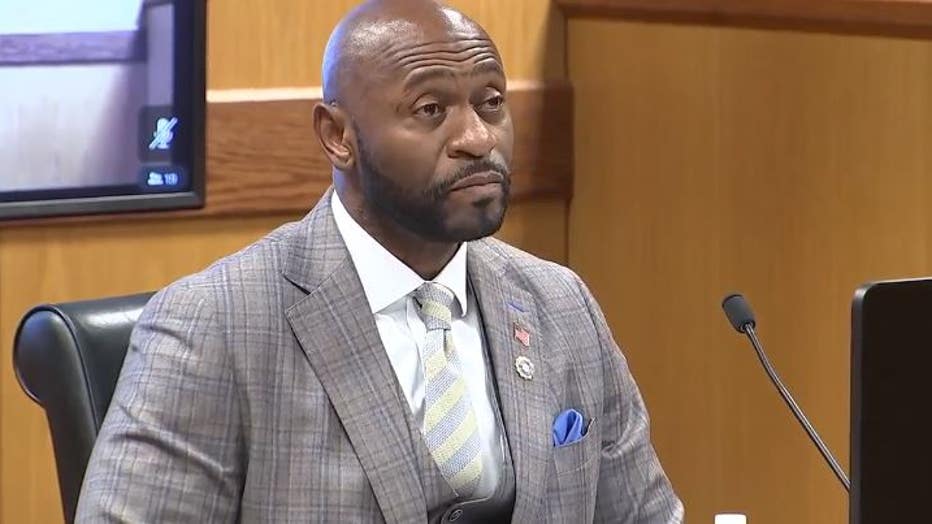
Nathan Wade testifies in a Fulton County courtroom on Feb. 15, 2024. (FOX 5)
Wade resigned in March 2024 after a judge ruled he must step aside to cure an "appearance of impropriety" stemming from a romantic relationship with Willis. Republicans pointed to internal invoices showing Wade billed taxpayers for meetings labeled "Interview with DC/White House" and "Conf w/Jan 6." Wade has denied being "directed, ordered, asked, coerced, or pressured" by the White House or the Justice Department.
Republicans also questioned more than $650,000 in legal fees paid to Wade and alleged federal grant funds may have supported a "politically motivated prosecution." Proceedings in the Georgia case were temporarily halted, and remaining charges were later dismissed in late 2025.
Fulton County election procedures under scrutiny
The backstory:
The hearing also revisited concerns about Fulton County’s handling of election records. Rep. Barry Moore raised allegations that 315,000 ballots were certified without required signatures on tabulator tapes.

Fulton poll worker faces scrutiny over ballots
Fulton County Chairman Robb Pitts says there is no such thing as a perfect election. His comment comes as Georgia's largest county deals with an election impropriety.
In December 2025, Fulton County officials acknowledged procedural violations from the 2020 election, admitting that more than 130 tabulator tapes covering roughly 315,000 early in-person votes were not signed as required. Ten additional tapes, representing more than 20,000 votes, were reported missing.
Georgia State Rule 183-1-12-.12 requires poll managers and witnesses to sign tapes verifying results. The State Election Board voted unanimously to refer the matter to the Georgia attorney general and requested fines of $5,000 per missing tape.

Fulton County at odds against State Election Board
The Fulton County Board of Elections Thursday heard from the managers of the controversial election monitors who will observe the contentious 2024 election in Georgia. In a bold move, the Fulton County Board of Registration and Elections sued the state board over its insistence that its elections be monitored by so call election deniers who support former President Donald Trump.
SEB member Janelle King called the failures "sloppy" and "lazy" at best and "egregious" at worst. Garland Favorito of VoterGA described the lapses as "catastrophic breaks in chain of custody."
Raffensperger countered that "a clerical error at the end of the day does not erase valid, legal votes," noting that voters were verified with photo ID and results were audited multiple times. Fulton County said poll workers made administrative errors and that training has since been improved.
DOJ lawsuit withdrawal
What we know:
Later testimony addressed the changing legal landscape in Georgia. McBath noted that the Justice Department recently withdrew its lawsuit challenging Georgia’s 2023 election law.
In March 2025, FOX 5 Atlanta reported that U.S. Attorney General Pam Bondi ordered the dismissal of the DOJ’s challenge to Senate Bill 202, also known as the Election Integrity Act. The suit, filed in 2021, alleged the law suppressed Black voter turnout.
Bondi rejected those claims, saying "Black voter turnout actually increased" and calling the allegations "fabricated claims of voter suppression meant to divide us." Raffensperger welcomed the move, saying it "reaffirms that the Election Integrity Act stands on solid legal ground," while Gov. Brian Kemp accused critics of spreading "lies and misinformation."
Smith on retaliation and Jan. 6
What they're saying:
During the afternoon session, Smith said he would "not be intimidated" by personal attacks and told lawmakers he expects retaliation.
"I believe they will do everything in their power to do that because they’ve been ordered to by the president," Smith said when asked about possible prosecution against him. He said he was "saddened and angered" by the firing of members of his investigative team, which he characterized as revenge against career public servants.
Smith also defended his office’s use of phone toll records for GOP lawmakers who spoke with Trump on Jan. 6, 2021, calling it standard investigative practice. "I did not choose those members, President Trump did," he said.
The hearing opened with a visual reminder of the Capitol riot, as four responding officers sat directly behind Smith. He closed by standing by his charging decisions, saying "the law requires that he be held to account" and that his team had developed "proof beyond a reasonable doubt."
The Source: The article draws from a public hearing before the House Judiciary Committee on January 22, 2026, and previous FOX 5 Atlanta reports, featuring testimony from Jack Smith, Brad Raffensperger, Chris Carr, and Nathan Wade. Supporting details and quotes are sourced from recorded phone calls, grand jury transcripts (including Lindsey Graham and David Ralston), and official statements from the Georgia State Election Board and the U.S. Department of Justice.