

World Cup Atlanta match traffic: How officials monitor and control it all
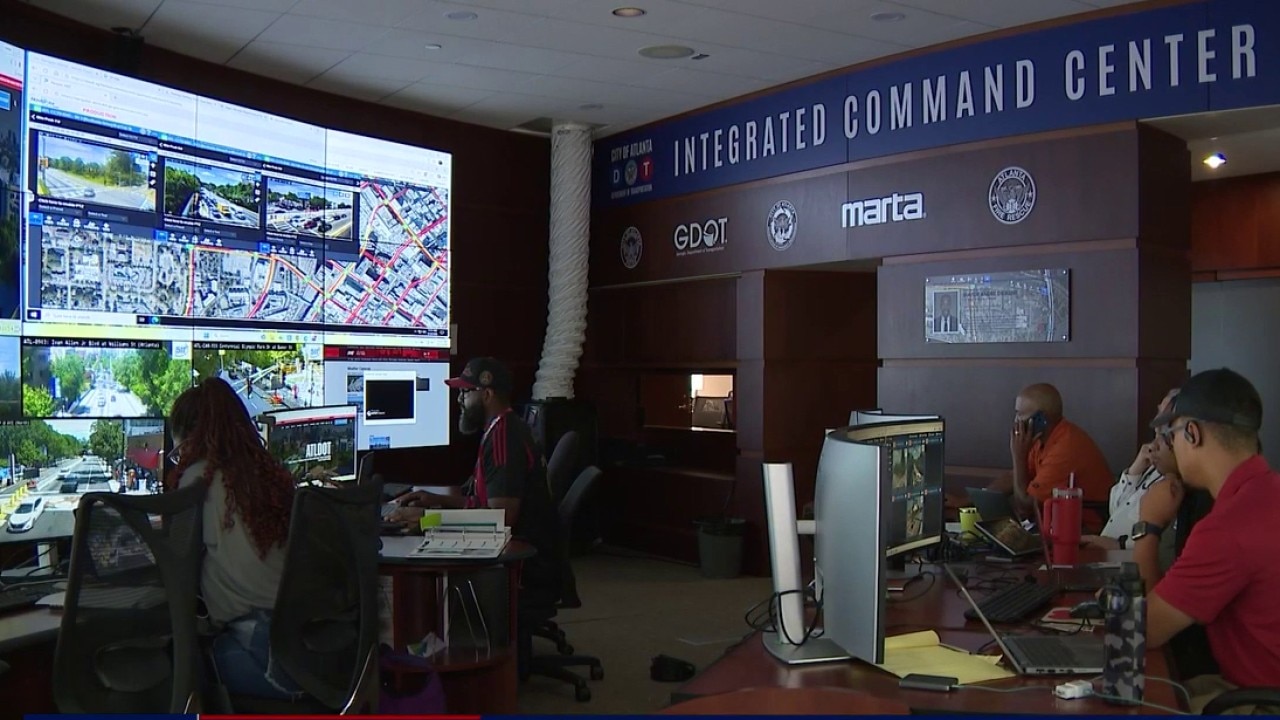
Atlanta center monitors World Cup traffic
The city's new Integrated Command Center allows officials to monitor transit flows and adjust signal timing during World Cup matches, according to city leaders.
ATLANTA - A new high-tech command hub at Atlanta City Hall is tracking vehicle and pedestrian movements as thousands of soccer fans flood into downtown for Wednesday's World Cup match.
Officials are using real-time data to adjust traffic signals and implement detours to keep crowds moving around Atlanta Stadium.
RELATED: World Cup Atlanta: Morocco seeks Group C title in clash with Haiti
Atlanta traffic control
What we know:
Transportation agencies, city police, MARTA and state officials are working together inside the new Integrated Command Center. Assistant Commissioner James Garland from the Atlanta Department of Transportation explained that the facility provides a comprehensive live look at operations unfolding across the entire metropolitan area.
To help visitors navigate the crowded downtown streets, the city launched a program called Navigate Atlanta paired with the CityMapper application. Furthermore, a mass alert system called Notify ATL sends live travel updates directly to fans via text on their cellphones.
Atlanta Police, MARTA, the Georgia Department of Transportation and other agencies say they have spent months preparing for the influx of visitors tied to the World Cup.
Atlanta is hosting eight World Cup matches this summer, drawing large crowds to the city and creating extra demand on roads, parking, MARTA and rideshare services.
When traffic could be heaviest
What they're saying:
Transportation officials have warned that congestion around the stadium can begin building hours before a match and may last after the final whistle as fans leave the area.
For evening matches, commuters are encouraged to get through downtown before the heaviest pregame crowds arrive. Anyone who does not need to be near the stadium should consider avoiding downtown streets during the late afternoon and early evening.
Drivers should also watch for sudden delays caused by team buses, VIP movements, police escorts, road closures, pedestrian traffic and security adjustments around major event areas.
Officials say delays could begin building well before kickoff and continue after the match as tens of thousands of fans leave the stadium area. Increased pedestrian traffic is also expected around Centennial Olympic Park, the Georgia World Congress Center and nearby entertainment districts.
MARTA is recommended
MARTA is expected to be one of the easiest ways to get to the match or move around downtown. Trains are running more frequently on match days, and ambassadors are stationed throughout the system to help riders.
RELATED: MARTA crime decreases as World Cup draws massive crowds
Fans going to Atlanta Stadium can use nearby downtown stations, including Vine City and the station serving the Georgia World Congress Center area. Riders should allow extra time for larger crowds on trains and platforms.
Parking and rideshare tips
Parking near the stadium and Fan Festival may be limited, expensive or unavailable without advance planning. Fans who drive should reserve parking before heading downtown and should not expect easy last-minute options near the stadium.
Rideshare users should also plan ahead. Pickups and drop-offs are not expected directly at the stadium, Fan Festival or GWCC. Designated Uber and Lyft zones may require a walk.
Tips for fans and commuters
People heading to the match should leave early, travel light and check stadium rules before arriving. Clear bags may be required, and several items are restricted inside the venue.
Commuters who can work remotely, shift schedules or leave downtown before the late-afternoon rush may have an easier trip. Employers near the stadium or Fan Festival may also want to consider flexible schedules on match days.
Drivers should check traffic before leaving, avoid unnecessary trips through downtown and use alternate routes when possible. Those attending the Fan Festival should arrive early because large crowds may affect entry.
SOURCE: Make a Game Plane for Your Commute from Georgia Commute Options
What to expect downtown
Local perspective:
Transportation and public safety officials say a number of measures are in place to help keep traffic moving, including additional officers, enhanced MARTA service, traffic-control operations and real-time monitoring of conditions throughout downtown.
Atlanta leaders say recent infrastructure improvements are also expected to help accommodate World Cup crowds. Those efforts include roadway resurfacing, sidewalk upgrades, accessibility improvements and coordination through the city's Integrated Command Center, which allows agencies to monitor conditions and respond quickly to issues.
Officials say their goal is not only to move fans safely to and from the stadium, but also to minimize disruptions for downtown residents, businesses and commuters traveling through the area.
Future tournament plans
What we don't know:
Officials have not yet confirmed how many total vehicles have entered the downtown grid since the tournament began. It remains unclear how many localized gridlock incidents the hub has resolved during peak transit hours before the 6 p.m. match.
Long-term infrastructure goals
The backstory:
While the city built this centralized hub to handle the immediate pressure of the global tournament spotlight, its utility will outlast the sports matches. Local leaders intend to keep the technology active as a permanent resource to manage regular daily congestion, major downtown entertainment events and public safety emergencies.