

Is ‘De-Flock America’ on Halloween real or just social media hype?
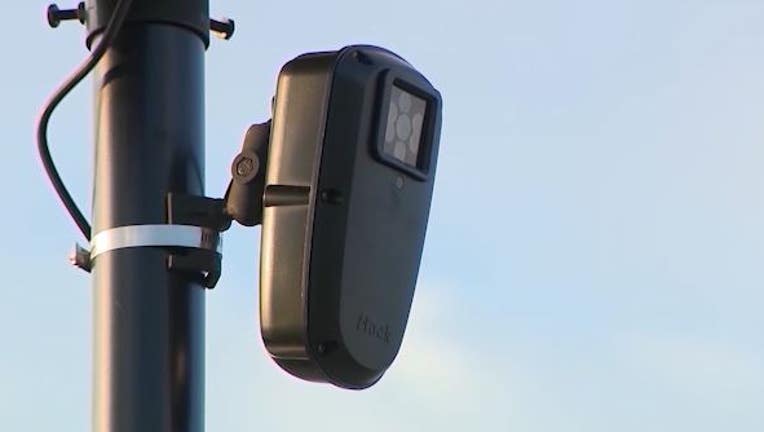
ATLANTA - A provocative idea spreading across social media is calling for people to target Flock Safety license plate-reading cameras on Halloween night, when millions of Americans will already be outside wearing costumes and masks.
What we know:
Dubbed "De-Flock America," some posts encourage people to disable, cover or destroy the cameras Oct. 31.
But despite claims that a national event is taking shape, there is little evidence so far of a coordinated campaign.
An examination of the online activity by Cybernews found only a relatively small number of posts explicitly promoting Halloween action, compared with a much larger wave of posts discussing and reporting on the supposed event. There is no known national organizer, official event or reliable estimate of how many people intend to participate.
Where did the Halloween idea come from?
Dig deeper:
The earliest Halloween-related posts identified in the material reviewed appeared Aug. 7 in a Facebook group called DeFlock America. Some suggested using Halloween masks and crowds to conceal the identities of people targeting cameras. The idea subsequently spread to X, Threads and Reddit and was amplified by larger social media accounts.
Map: Flock cameras targeted by vandals across US
That online campaign is separate from an established open-source project called DeFlock, which maps automated license plate readers and has promoted public meetings, records requests and other legal forms of opposition to the technology.
@xixi19332 A viral "De-Flock America" campaign is calling for action against Flock surveillance cameras on Halloween amid growing debate over privacy and automated surveillance.#fyp#usa#news##FlockCameras#deflock ♬ original sound - xixi
What are Flock cameras?
Atlanta-based Flock Safety was founded in 2017 and has grown into one of the country's largest providers of automated license plate readers.
The cameras photograph vehicles as they pass and record license plates and vehicle characteristics. Police can search that information during investigations or receive alerts for vehicles connected to criminal cases.
Law enforcement agencies credit the technology with helping find stolen vehicles, wanted suspects and missing people.
Privacy advocates, however, have questioned how extensively vehicle movements can be tracked, who has access to the information and whether searches receive adequate oversight.
Flock says its license plate readers do not use facial recognition. The company has also announced additional safeguards, including reducing its recommended default data retention period from 30 days to seven days and adding measures intended to identify improper searches.
Flock controversy reaches Georgia
The debate has particular significance in Georgia, where Flock is headquartered and its cameras are widely used.
Georgia has seen both vandalism targeting the cameras and investigations into alleged misuse by law enforcement employees.
Three Flock cameras were vandalized in Barrow County in July, according to the sheriff's office.
In Savannah, four former police department employees were arrested in August following an investigation into alleged misuse of license plate reader data. Other investigations have involved law enforcement employees in communities including Alpharetta, Albany, Sandy Springs, Fayetteville, Cherokee County and DeKalb County.
The allegations vary by case and do not mean the Flock system itself was illegally operated. Instead, several cases have focused on whether individual users accessed information for unauthorized purposes.
PREVIOUS STORIES
- Cobb County residents confront chief over camera tech
- What you need to know now about Cobb County license plate readers
- Flock fear: Websites, maps helping drivers avoid cameras
- Georgia Flock cameras spark widespread misuse fears
Police are watching anti-Flock activity
Law enforcement agencies around the country are already aware of growing opposition to automated license plate readers.
Intelligence bulletins circulated this summer have advised agencies to watch for vandalism and other attempts to interfere with cameras. At least one bulletin also acknowledged concerns about distinguishing peaceful political opposition from people advocating property destruction.
Damaging, stealing or interferring (putting up a physical blocker of some sort) with a Flock camera can result in criminal charges. People have already been arrested in several states in connection with camera vandalism unrelated to the Halloween campaign.
Real event or social media hype?
For now, "De-Flock America" appears to fall somewhere between a viral social media slogan and a loosely organized call to action.
FOX 5 Atlanta also found no evidence of a national organization coordinating participants, locations or activities for Oct. 31. There is also no reliable way to determine how many people posting or sharing the idea actually intend to act on it.
What is clear is that the Halloween posts have attached themselves to a much larger and very real debate over automated surveillance.
That debate is already playing out in Georgia and across the country through arrests, investigations, public meetings and decisions by local governments over whether to continue using the technology.
Whether the online attention translates into widespread activity on Halloween remains to be seen.
The other side:
Flock Safety says its technology supported more than 1 million criminal investigations and incidents in 2025.
According to the company's 2025 Impact Census, Flock technology assisted in about 20% of solved cases in jurisdictions using the system and helped law enforcement locate more than 10,000 missing people. About 42% of surveyed customers said Flock was involved in recovering at least half of the stolen vehicles in their jurisdictions.