

Fires continue to burn out of control Thursday morning in South Georgia
CLINCH COUNTY, Ga. - Wildfires continue to intensify across South Georgia, scorching tens of thousands of acres, forcing evacuations and straining firefighting resources as crews work to contain the growing threat.
PHOTOS: Destructive wildfires burning in South Georgia
The largest blaze, the Pineland Road Fire in Clinch County near the Georgia-Florida line, has expanded to nearly 30,000 acres or 45,000+ square miles since it began on April 18 and remains only about 10% contained. Officials say the fire has grown rapidly in recent days due to extremely dry vegetation and persistent drought conditions.
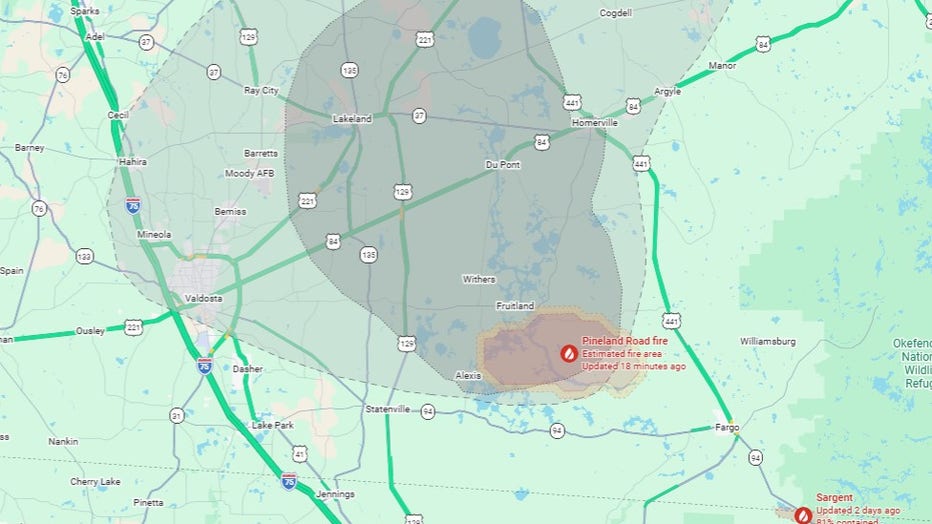
Credit: Google Maps
Click here for full map.
A separate wildfire in Brantley County has also caused significant damage, burning almost 5,000 acres as of Thursday morning and destroying dozens of structures in the Atkinson and Waynesville areas, according to WJCL Channel 22. The fire has also resulted in multiple road closures in the area. Emergency officials say shifting winds continue to push the flames, making containment efforts more difficult and conditions highly unpredictable.
The Brantley County fire began burning Monday and quickly grew on Tuesday. Schools in Brantley County will remain closed Thursday and Friday for all students and staff because of the fire.
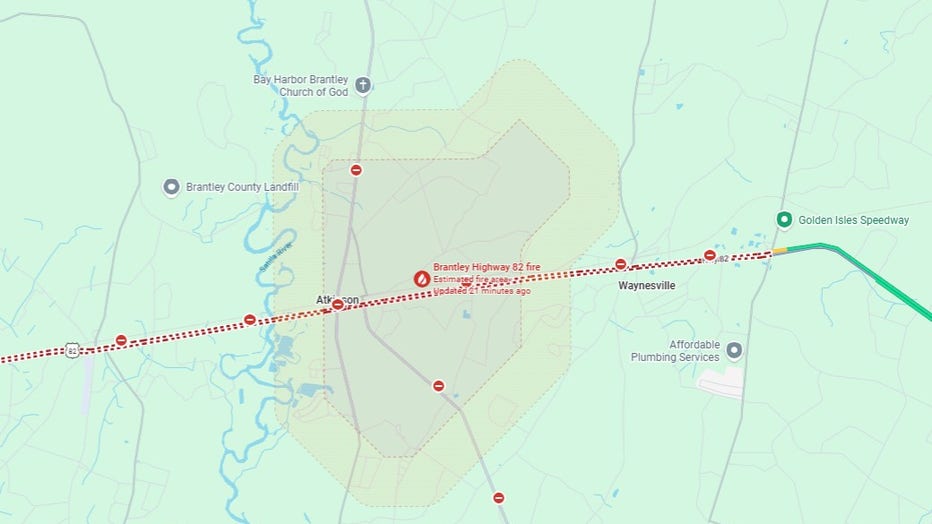
CREDIT: Google maps
Click here for full map.
In response, Georgia Gov. Brian Kemp issued a state of emergency and other government officials implemented widespread burn bans across dozens of counties. Firefighters from multiple agencies, along with federal support, are working to slow the fires’ progression.
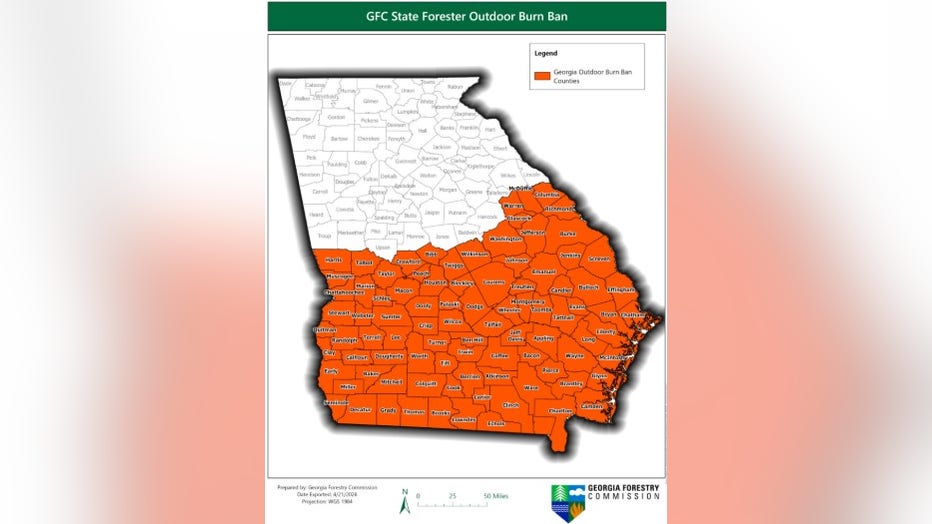
More than 20 fire departments from across South Georgia have responded to the fire. Local firefighters, many of whom are volunteers according to local reports, are receiving state and federal support, including approximately 15 Georgia Forestry Commission tractors that are being used to cut firebreaks in an effort to slow the spread of the fire.
Additionally, FEMA has authorized federal funds to reimburse costs to Georgia in its fight against the Pineland Road fire and the Brantley County fire. FEMA Region 4 Acting Administrator Rob Ashe approved the state's requests on April 21 as the fires threatened to become a major disaster.
Residents in affected areas are being urged to stay alert for evacuation orders, which can be issued with little warning. Officials also stress that even small sparks—such as from discarded cigarettes—can lead to dangerous fires under current conditions.
PREVIOUS STORIES
- State of Emergency issued as wildfires ravage South Georgia
- Wildfire smoke prompts haze concerns in metro Atlanta skies
- Why Atlanta is waking up to wildfire smoke
- Major South Georgia wildfires impacting metro area
- Wildfire smoke clearing in metro Atlanta: What to know
How many wildfires in Georgia?
According to the Georgia Forestry Commission, 52 wildfires were reported in the state between April 18 and 19. On April 20, they reportedly responded to 46 new wildfires, bringing the total to 98 wildfires in a three-day period. Those numbers do not include the Pineland Road Fire in Clinch County. The most recent wildfire map can be found by clicking here.
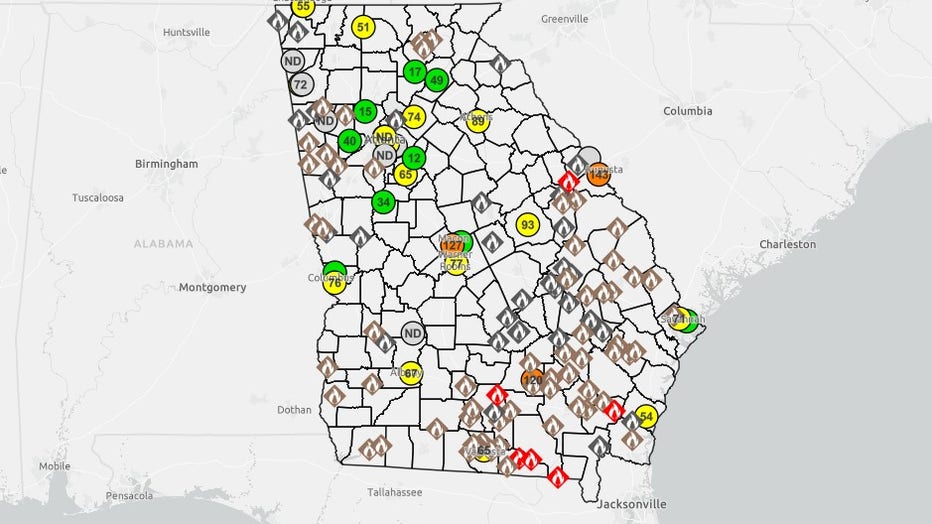
Credit: Georgia Forestry Commission
Authorities say nearly all of Georgia is experiencing some level of drought, with South Georgia facing the most severe conditions. The dry weather, combined with low humidity, has created an environment where fires can ignite easily and spread quickly.
According to the National Weather Service, Georgia has only received about 11 inches of rain since the beginning of September, which is almost 15 inches below normal.
With little to no rain expected in the near future, concerns remain that the fires could continue to grow in size and impact.
How to prevent wildfires
Here are 10 practical tips to help prevent wildfires, especially during dry conditions:
- Avoid outdoor burning when conditions are dry or windy, even if it’s allowed.
- Never toss lit cigarettes or matches onto the ground or out of a vehicle.
- Fully extinguish campfires with water, then stir ashes until cool to the touch.
- Keep grills, fire pits and smokers a safe distance from structures and vegetation.
- Do not burn yard debris during drought conditions or burn bans.
- Properly dispose of ashes in a metal container with a tight-fitting lid.
- Maintain your yard by clearing dry leaves, pine straw and dead vegetation.
- Avoid using equipment that creates sparks, such as chainsaws or grinders, on dry days.
- Park vehicles on pavement, not dry grass, as hot exhaust systems can ignite fires.
- Report any signs of smoke or fire immediately to 911 to prevent rapid spread.
If you must burn something outside, make sure to keep a shovel, hose and cell phone nearby.