

Why your next synthetic oil change may cost a lot more
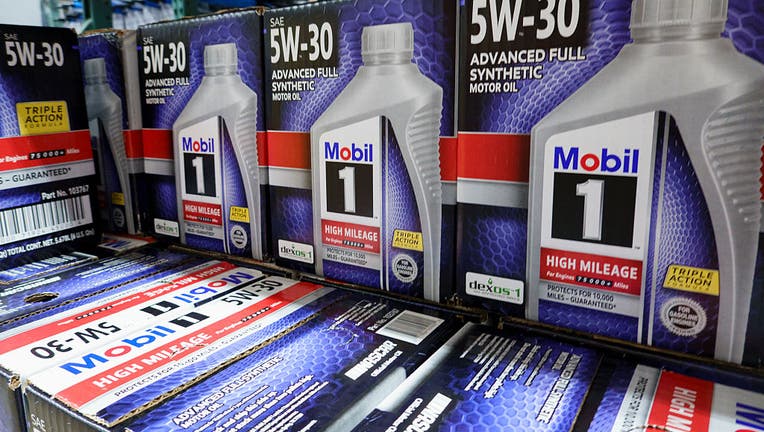
Cases of Mobil 1 Advanced full synthetic motor oil are stacked at a Costco Wholesale store on March 11, 2025 in San Diego, California. (Photo by Kevin Carter/Getty Images)
ATLANTA - The cost of keeping a vehicle on the road could soon get more expensive as the auto industry faces a potential shortage of synthetic motor oil, according to Automotive News.
Synthetic oil prices rising amid supply concerns
What we know:
According to industry reports, automakers, dealerships and distributors are scrambling to secure supplies of synthetic motor oil as disruptions in the Middle East affect the availability of critical base oils used to manufacture the product. Some suppliers have warned that inventories of Group III base oils — a key ingredient in most synthetic motor oils — could become increasingly difficult to obtain in the coming months.
The supply concerns are already driving up costs across the automotive maintenance industry.
Experts say a routine synthetic oil change that once cost around $60 to $65 could rise to as much as $85 to $90, while some drivers are already seeing maintenance bills climb from $80-$100 to more than $100-$120.
Why synthetic oil is in short supply
Synthetic motor oil relies heavily on highly refined Group III base oils, many of which are produced in refineries located in the Middle East.
What they're saying:
Industry analysts say ongoing disruptions to global supply chains and concerns about shipping routes in the region have created uncertainty about future supplies. Some automakers have already begun rationing certain synthetic oils to dealerships, while others have warned service departments about possible shortages and encouraged the use of approved alternatives when available.
The situation has become serious enough that some automotive executives are comparing it to the semiconductor shortage that disrupted vehicle production during the COVID-19 pandemic.
However, not everyone believes widespread shortages are imminent. Some analysts say the biggest impact is likely to be higher prices rather than empty shelves, particularly for drivers who use common motor oil grades.
What this means for drivers
Why you should care:
For most motorists, the most immediate impact could be higher maintenance costs.
Motor oil plays a critical role in lubricating engine components, removing debris and preventing overheating. Delaying oil changes to save money could lead to more expensive repairs down the road.
AAA recommends changing conventional oil every 5,000 miles, blended oils every 6,000 miles and full synthetic oil roughly every 10,000 to 15,000 miles, depending on the vehicle and manufacturer recommendations. Drivers should not go longer than a year between oil changes.
How drivers can prepare
Automotive experts recommend several steps to avoid problems if supplies tighten:
- Purchase enough oil for one or two future oil changes, but avoid excessive stockpiling.
- Check the owner's manual to see whether an approved alternative oil viscosity can be used if your preferred oil becomes unavailable.
- Stay current on routine oil changes rather than delaying maintenance.
- Consider using larger service chains or dealerships, which may have better access to inventory.
- If oil levels become dangerously low and synthetic oil is unavailable, adding conventional oil of the correct viscosity is generally safer than operating the engine with low oil levels.
Industry experts say the biggest mistake drivers can make is panic buying.
While some specialized synthetic oils used in newer vehicles may become harder to find, many commonly used motor oils remain available. Experts say purchasing only what is needed for upcoming maintenance can help prevent unnecessary shortages and keep prices from climbing even higher.