

How much you need to earn to afford an apartment in your state
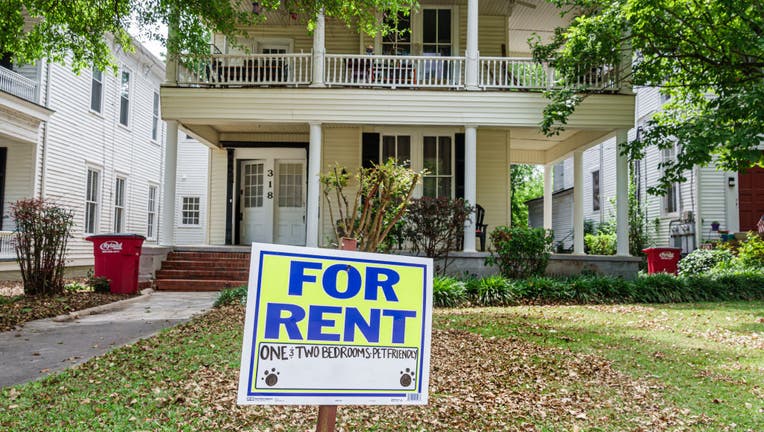
A "For Rent" sign sits in front of a home offering one- and two-bedroom units in a residential neighborhood. A new report shows wages in most states fall short of what’s needed to afford apartments like these without being rent-burdened. (Photo by: Jeffrey Greenberg/Universal Images Group via Getty Images)
LOS ANGELES - Affordable housing remains a fantasy for millions of Americans—and a new report shows just how big the gap is between what people earn and what rent actually costs.
According to the National Low Income Housing Coalition’s 2025 Out of Reach report, a U.S. worker must earn $33.63 an hour to afford a two-bedroom apartment at fair market rent without being considered cost-burdened. That means spending no more than 30% of their income on housing and utilities.
The required wage varies dramatically by location—from $18.94/hour in West Virginia to $49.61/hour in California. In every state, even in areas with higher local minimum wages, the earnings of full-time minimum-wage workers still fall short of what’s needed to afford rent.
How much do you need to earn to afford rent in your state?
The backstory:
Each year, the Out of Reach report calculates what’s known as the Housing Wage: the hourly wage a full-time worker must earn to afford a modest apartment at HUD’s Fair Market Rent.
In 2025, the Housing Wage for a two-bedroom rental is $33.63 nationally. For a one-bedroom, it’s $28.17.
Here’s what that looks like in some key states:
- California – $49.61
- Florida – $37.27
- Texas – $29.64
- New York – $46.03
- Georgia – $29.46
- Illinois – $29.81
- Tennessee – $27.01
- Arizona – $34.18
- North Carolina – $27.14
- West Virginia – $18.94
Even in states with lower housing wages, local incomes tend to be lower too—meaning rent is still unaffordable for many.
By the numbers:
These figures highlight the scale of the affordability gap—and how far wages fall short.
- The average U.S. renter earns $23.60/hour, which is $10 less than what’s needed for a two-bedroom.
- A minimum wage worker would need to work 116 hours a week to afford a two-bedroom at fair market rent.
- Only 219 counties nationwide have one-bedroom rentals affordable to minimum wage workers—and they’re all in states with minimum wages above the federal level.
What we know:
The report provides clear data on where housing affordability is falling short for renters across the country.
- 49 states have average renter wages that fall short of affording a two-bedroom apartment.
- In 37 states, the average renter wage isn’t enough for even a one-bedroom.
- Nearly half of all U.S. renters are cost-burdened, and over a quarter are severely cost-burdened.
What we don't know:
Some key questions remain unanswered as federal housing policy hangs in the balance.
- Whether proposed federal housing cuts for FY26 will go into effect remains uncertain.
- Future rent trends in key metro areas could shift depending on inflation and supply.
- Some states may increase minimum wages in late 2025, which could change local affordability metrics.
What’s next for renters and policymakers?
The other side:
The report comes as the White House proposes a 44% cut to HUD funding, including plans to consolidate housing programs and limit rental assistance to just two years. According to HUD, these changes could eliminate support for tens of thousands of renters.
Meanwhile, advocates are calling for expanded rental vouchers, increased funding for the Housing Trust Fund, and reforms to local zoning laws to ease supply constraints.
Why you should care:
This isn’t just about housing—it’s about food, health, and stability. When rent consumes most of a paycheck, there’s less left for groceries, medications, childcare, or transportation. In extreme cases, it means eviction or homelessness.
The Source: This article is based on the 2025 Out of Reach report published by the National Low Income Housing Coalition, which compiles state-by-state wage data using HUD Fair Market Rent estimates and U.S. Bureau of Labor Statistics wage figures. Additional figures were drawn from the Economic Policy Institute and U.S. Department of Agriculture. All housing wages cited reflect what a full-time worker would need to earn to afford rent without paying more than 30% of income.