

Theme park ride breakdowns have lawmakers ready to step in

National Roller Coaster Day comes to SeaWorld Orlando!
SeaWorld Orlando is gearing up for National Roller Coaster Day! Are you up for the challenge of riding all eight of their coasters? Join LiveNOW from FOX's Christy Matino as she shows us what you can expect if you visit the park on August 16.
Theme parks are under fresh scrutiny after a string of ride malfunctions in Ohio, where one of the nation’s biggest amusement destinations has faced repeated breakdowns. Now, a state lawmaker wants to require parks to provide real-time updates when rides go down.
State Rep. Sean Patrick Brennan (D-Parma) introduced the Real-Time Ride Status Notification Act last week. The measure would apply to Cedar Point in Sandusky and Kings Island near Cincinnati — two parks that draw millions of visitors each year from across the country — and mandate that ride closures be posted within minutes on park apps, websites and digital signs.
The push comes after Cedar Point’s new Siren’s Curse coaster stalled multiple times since opening in June, leaving riders stranded more than 150 feet in the air, and after a June power outage at Kings Island forced several rides to close.
"Families spend hundreds of dollars and travel across the state to visit these parks," Brennan said in a statement. "They deserve accurate, real-time information so they can plan their day and avoid the frustration of walking across the park to find a ride shut down."
Why Cedar Point’s coaster malfunctions matter beyond Ohio
Cedar Point is often called "America’s Roller Coast," drawing millions of visitors from across the country each year. When its rides malfunction, the news ripples far beyond Ohio.
The Siren’s Curse coaster, which opened in late June, has already stalled at least five times, including incidents where passengers had to climb down emergency staircases from more than 150 feet in the air. The park’s Top Thrill 2 coaster, a highly anticipated ride, closed after only eight days in 2024, underwent months of repairs, then briefly closed again this summer for mechanical issues.
Other reports of stranded riders — including on the Power Tower, Valravn and Millennium Force — have circulated on social media, amplifying safety and reliability concerns.
What we know:
The bill is aimed at making theme parks more accountable to visitors. Here are the key details so far:
- Cedar Point’s Siren’s Curse coaster has malfunctioned at least five times since opening this summer.
- The proposed law would require parks to update ride status within five minutes of a closure or reopening.
- The Ohio Department of Agriculture would oversee enforcement and issue fines for violations.
What we don't know:
The legislation has been introduced but faces hearings and debate in committee. Key questions remain:
- Whether the bill will gain enough bipartisan support to advance in the legislature.
- If the law passes, how quickly Cedar Point and Kings Island can implement new real-time notification systems.
- Whether similar measures could spread to other states with large amusement parks.
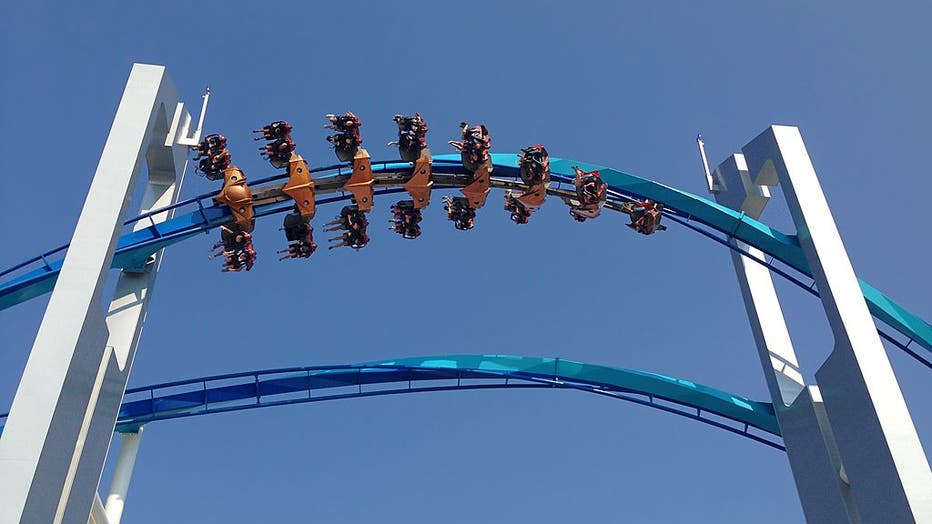
Riders soar upside down on a roller coaster at Cedar Point amusement park in Sandusky, Ohio. (Getty Images. )
The backstory:
For years, Cedar Point has been a top destination for roller coaster enthusiasts, attracting visitors from across the United States and beyond. But its rides have also been prone to highly publicized breakdowns.
Guests have shared photos of evacuations and stalled trains on social media, sometimes sparking viral discussions about ride safety. While safety systems are designed to prevent injuries, the frequency of malfunctions has raised questions about reliability and guest experience.
Brennan’s proposal mirrors systems already common in airports and public transit, where real-time updates help passengers make informed decisions.
The other side:
Cedar Point and Kings Island already offer some real-time information through their mobile apps, including wait times and closure alerts. Critics of the bill may argue that additional regulations could be unnecessary or burdensome for parks already recovering financially from pandemic shutdowns.
Park spokesman Tony Clark has previously emphasized that safety systems work as designed and that guests are never in danger during malfunctions.
Big picture view:
Theme parks across the U.S. face growing scrutiny as ride technology becomes more advanced and downtime more noticeable to guests. Whether in Ohio, Florida or California, visitors expect smooth operations — and lawmakers are beginning to question how much transparency parks owe to the public.
What's next:
The Real-Time Ride Status Notification Act will be assigned to a committee in the Ohio House in the coming weeks. If approved by the legislature and signed into law, it would take effect one year later, giving parks time to set up the required systems.
The Source: This report is based on information from State Rep. Sean Patrick Brennan’s office, Cedar Point park statements, and reporting from local Ohio outlets including the Cincinnati Enquirer. Additional context was drawn from Associated Press coverage of Cedar Point ride malfunctions.