

Georgia Clergy Sexual Abuse Bill passes unanimously
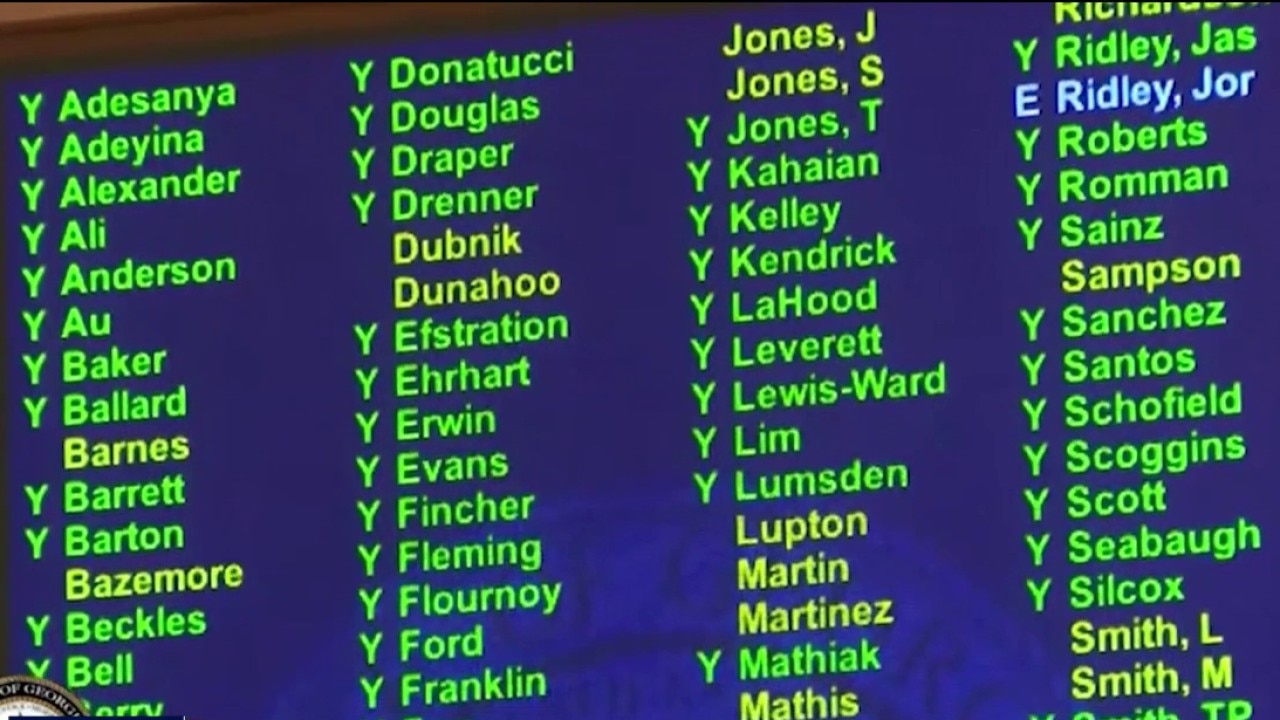
Georgia clergy abuse bill heads to governor
Georgia lawmakers unanimously passed a bill to hold clergy members criminally accountable for sexual misconduct by adding them to the state's list of authority figures.
ATLANTA - In a unanimous show of support, Georgia legislators passed the "Clergy Sexual Abuse Bill," officially adding religious leaders to the list of authority figures, such as teachers and coaches, accountable for sexual misconduct.
The bill’s passage follows years of relentless lobbying by survivors determined to close a long-standing loophole. Their goal was simple but profound: to ensure the pulpit can never again serve as a legal shield for predators.
Senate Bill 542
What we know:
For decades, a specific gap existed in Georgia’s criminal code. While state law held teachers, coaches, and other mentors accountable for the exploitation of those in their care, religious leaders were not explicitly included in that list of authority figures.
Senate Bill 542, the Georgia Clergy Sexual Abuse Bill, eliminates that distinction. By adding "clergy" to the list of persons in a position of trust, the law ensures that religious leaders face the same criminal standards as any other professional in charge of minors or vulnerable adults.
Kim Nunez, Legislative Director at Clergy Law Reform, identified this gap two years ago. Working with Leader Chuck Efstration and Senator Randy Robertson, Nunez helped craft the legislation to ensure that spiritual authority can no longer be used as a defense against prosecution.

Georgia passes bill to criminalize clergy sexual abuse
Georgia lawmakers have unanimously passed Senate Bill 542, a landmark piece of legislation that closes a legal loophole by holding clergy members to the same criminal standards as teachers and coaches. The bill, which now heads to Governor Brian Kemp’s desk, removes "consent" as a defense in cases where religious leaders exploit their positions of trust. Driven by the testimony of survivor Hayle Swinson, the measure aims to protect adults from spiritual coercion and manipulation.
What are survivors saying?
What they're saying:
For survivors, the victory is about more than just policy, it is about being heard.
Halye Swinson, who was exploited for seven years by a campus leader, testified about the unique trauma of spiritual manipulation.
"He used scripture to manipulate me, to tell me that the abuse was from God," Swinson said. "From Genesis to Revelation, everything has been manipulated to exploit me... scripture was a weapon."
Because her abuser wasn't a teacher or a coach, Swinson previously had no path to criminal justice. She says this bill provides "hope for accountability" for those previously silenced by institutions.
Chuck Wills, a survivor of a serial predator at a youth camp, says the process of testifying has been part of his own recovery.
"It’s really reminding me how not alone I am," Wills said. "Getting the opportunity to heal by bringing light to dark."
Wills noted that while the predator in his case is already serving life sentences, this bill is a critical step in protecting the next generation.
What's next:
The bill is now officially on Gov. Brian Kemp’s desk. Once the governor signs the legislation, it will become state law, effectively closing the "clergy loophole" for good.
The Source: The information in this story was gathered from Senate Bill 542, testimony from Halye Swinson and Chuck Wills, and statements from Kim Nunez of Clergy Law Reform.