

Cyclosporiasis outbreak: More states reporting cases of diarrheal illness

Cyclosporasis outbreak expands to over 30 U.S. states
Infectious disease expert Dr. Peter Chin-Hong joins LiveNOW's Shawna Khalafi to answer viewer questions about the cyclosporasis outbreak.
An outbreak of cyclosporiasis, the parasitic illness that causes "explosive diarrhea," has spread to more states.
According to the U.S. Centers for Disease Control and Prevention, there have been 141 hospitalizations across the country, but the CDC says numbers are likely higher than what the agency is reporting. Here’s the latest:
Cyclosporiasis cases by state
According to CDC data, 34 states are reporting a combined 1,645 cyclosporiasis cases as of July 15, but local and state health data show at least 6,756 cases in 38 states. The CDC says case numbers are likely much higher than what the agency is reporting:
What is cyclosporiasis?
Big picture view:
Cyclosporiasis is a gastrointestinal disease caused by the microscopic parasite cyclospora.

Cyclosporiasis parasite (CDC)
In the U.S., the parasite is typically spread through fresh produce in hot weather. It doesn’t spread from person-to-person.
What’s the source of the cyclosporiasis outbreak?
Dig deeper:
According to FOX 2, the FDA is not listing any foods that should be avoided, but the Michigan Department of Health and Human Services said Monday that the illness’s spread was possibly caused by lettuce or vegetable greens.
RELATED: Taco Bell investigated as lettuce emerges as possible source of cyclosporiasis outbreak
Federal and state health agencies are also investigating whether Taco Bell locations may have contributed to the outbreak.
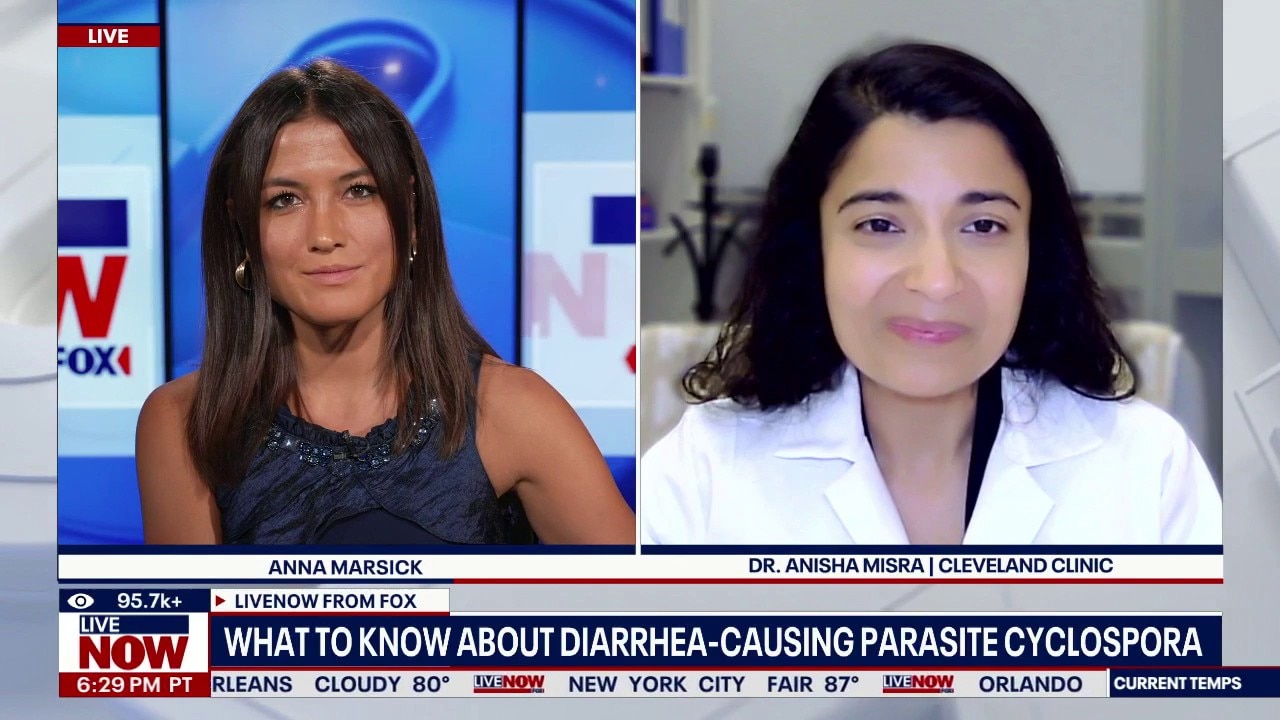
What to know about diarrhea-causing parasite Cyclospora
Dr. Anisha Misra with the Cleveland Clinic joins LiveNOW's Anna Marsick to discuss the cyclosporiasis outbreak that has hit more than two dozen U.S. states.
Cyclosporiasis symptoms
Symptoms can appear two to 14 days after exposure and may include:
- Frequent watery diarrhea
- Loss of appetite and weight
- Abdominal cramps and bloating
- Nausea (vomiting is less common)
- Low-grade fever
For people who do not get treatment, health experts say the illness may last for a few days to over a month. Symptoms could go away and then return one or more times.
RELATED: Cyclosporiasis outbreak: How to wash produce
Preventing cyclosporiasis
What you can do:
Health officials say rinsing your produce with running water and rubbing the surface of the fruit or vegetable can help to prevent the illness, though it’s not a guarantee because the parasite is "stickier" than others.
Health agencies recommend whole heads of lettuce rather than pre-washed, bagged lettuce or pre-mixed salad kits. Before preparation, throw away the outer two to three layers of leaves.
They also say to consider frozen over fresh, although that doesn’t completely eliminate the risk. It’s safest if it’s cooked.
The Source: This article includes information from the U.S. Centers for Disease Control and Prevention, state health department websites, local media reports and previous FOX Local reporting.