

Atlanta marks 30 years since 1996 Centennial Olympic Games opening
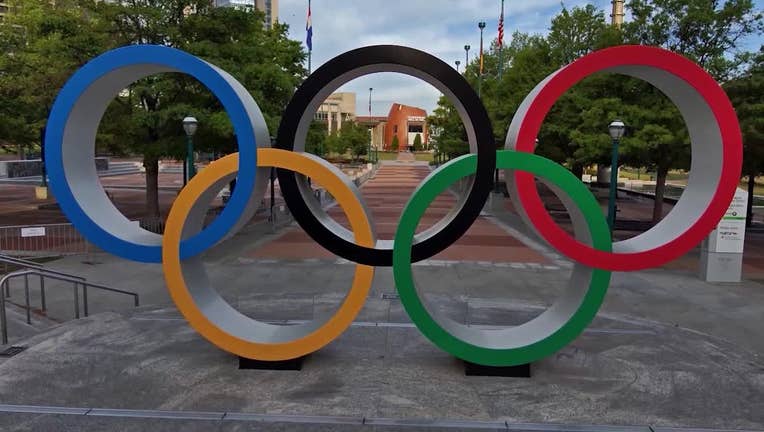
Centennial Olympic Park (FOX 5 Atlanta)
ATLANTA - As North America bids the FIFA World Cup farewell with the final match being played on Sunday, Atlanta is marking three decades since another international sporting event, one which helped to make it a host city this summer.
Sunday marks exactly 30 years since the 1996 Centennial Olympic Games opened in Atlanta, an anniversary that arrives just as the city wraps up its duties as a premier hub for global soccer.
The legacy of those 17 days in the summer of 1996 continues to shape modern Atlanta, serving as both the foundation for its current status as an international sports capital and a permanent catalyst for its urban evolution.
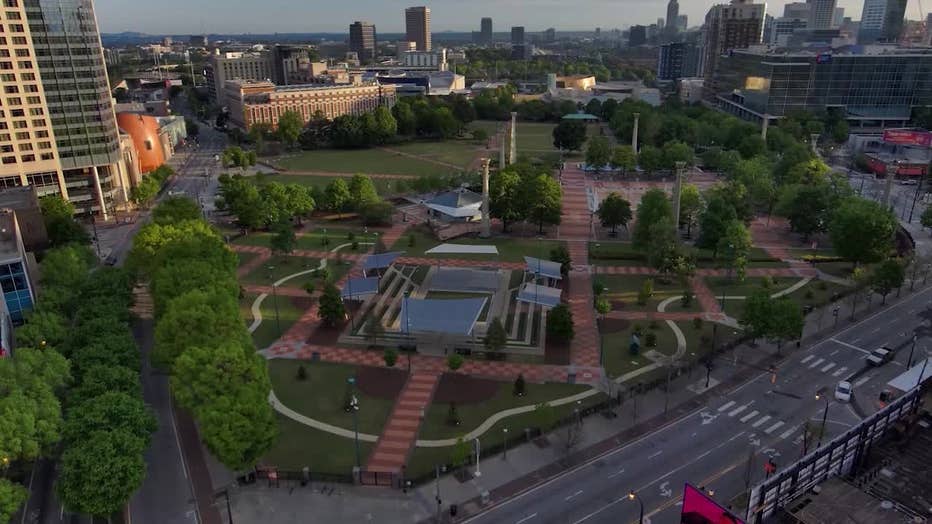
Centennial Olympic Park (FOX 5 Atlanta)
Centennial Olympic Park
Why you should care:
Nowhere is that transformation more visible than at Centennial Olympic Park. Long before global soccer fans took over the downtown greenspace, the area was a neglected, multi-million-dollar downtown eyesore made up of a messy mix of empty warehouses and run-down lots.
The inspiration for the park came to Atlanta Committee for the Olympic Games President and CEO Billy Payne while looking out his high-rise office window, knowing the city needed a central downtown location where everyone could gather.

Atlanta Centennial Olympic Games organizer Billy Payne rides in a bobcat during the groundbreaking ceremony of the Centennial Olympic Park ahead of the 1996 games. (FOX 5 Atlanta)
Despite heavy skepticism from his own team over the logistical nightmare of acquiring property from 50 different owners, Payne teamed up with former U.N. Ambassador Andrew Young to build a park that used zero public tax dollars, funded entirely by corporations like the Woodruff Foundation and thousands of everyday citizens who purchased commemorative paving bricks.
Over the past 30 years, the park has evolved into a premier gathering place, community anchor, and major event center, culminating this summer as it hosted tens of thousands of packed soccer fans for the official FIFA World Cup Fan Watch Parties.
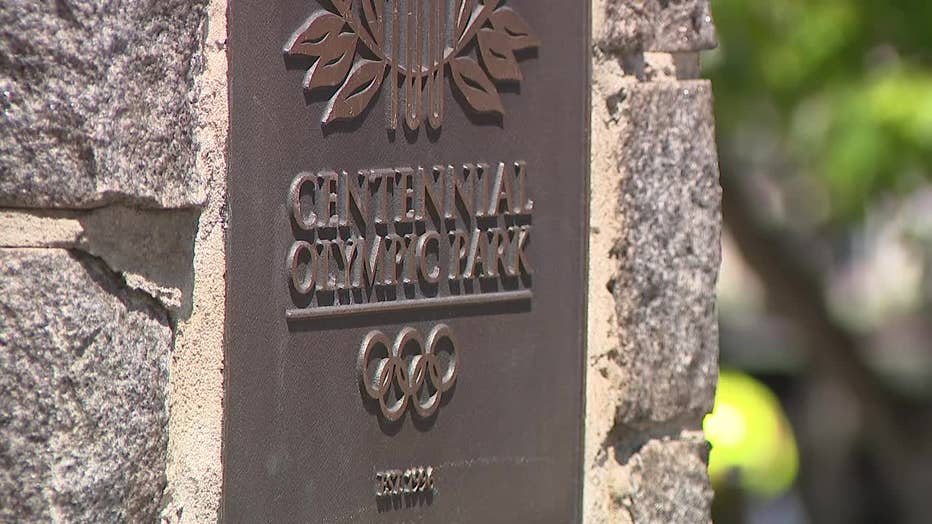
The historic bronze entrance plaque at Centennial Olympic Park stands as a permanent tribute to the 1996 Summer Olympic Games in downtown Atlanta photographed on July 15, 2026 (FOX 5 Atlanta).
Downtown Atlanta restructuring
Dig deeper:
The 1996 Games sparked a historic downtown building boom that fundamentally reshaped the city's skyline under former Mayors Maynard Jackson and Bill Campbell. It also initiated a massive demographic shift, accelerating an influx of labor and international residents that permanently altered the culture of the American Southeast.
The sports landscape of the city was similarly remade. The 85,000-seat main Olympic Stadium in the Summerhill neighborhood was famously converted into Turner Field for the Atlanta Braves the following year. Today, it serves as Center Parc Credit Union Stadium for Georgia State University’s football program, anchoring a vibrant, expanding academic and retail district.
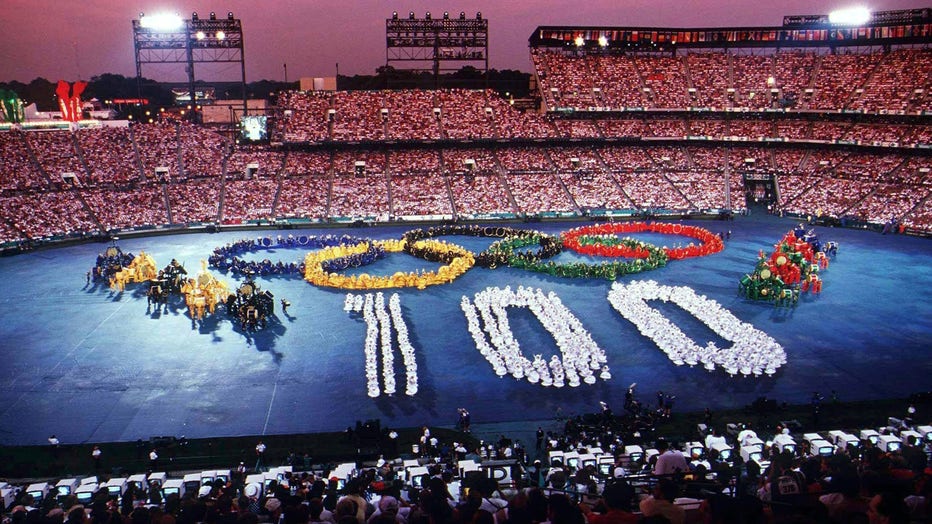
The opening ceremony of the 1996 Centennial Olympic Games in Atlanta on July 19, 1996. (Photo by Bongarts/Getty Images)
Directly next door to the stadium sits the footprint of the historic, former Atlanta-Fulton County Stadium. During the 1996 Games, the venue was utilized to host the baseball competition before it was demolished in 1997. Now, the site is entering its next chapter of sports legacy, as Georgia State University moves forward with plans to construct a brand-new collegiate baseball field on the exact spot where the historic stadium once stood.
1996 Olympic Cauldron
Local perspective:
Even three decades later, that historic footprint is still evolving, sparking intense community conversation. Georgia State University, alongside Payne and Young, recently launched a joint initiative to relocate the iconic 1996 Olympic Cauldron back into Centennial Olympic Park to directly connect the city's modern downtown core with its historic sports heritage. It is the same cauldron which legendary boxer Muhammad Ali lit on July 19, 1996.
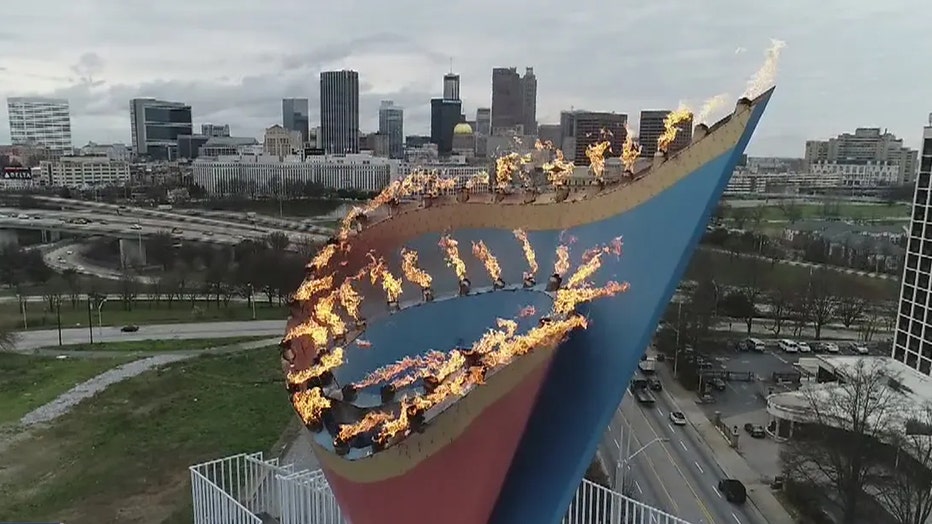
The Centennial Olympic Cauldron, which sits on the corner of Hank Aaron Drive SW and Fulton Street SW, was lit for the U.S. Olympic Marathon Trials in Atlanta on Feb. 26, 2020. (FOX 5 Atlanta)
The original 120-foot Flame Tower structure will remain standing in Summerhill as a gateway landmark, but the plan to move the cauldron has ignited controversy. Local neighborhood advocates and preservationists have fiercely pushed back, arguing that the cauldron is an irreplaceable piece of Summerhill's unique history and identity, and that removing it strips the local community of a monument they have protected for 30 years.
Olympic game tragedy
The backstory:
While the anniversary brings back triumphant sports memories, such as the historic gold-medal run of the "Magnificent Seven" women's gymnastics team, it also carries the solemn memory of July 27, 1996, when a domestic terrorist pipe bomb exploded inside Centennial Olympic Park, killing two people and injuring over 100 others. The tragedy permanently altered modern sports security protocol and deeply impacted the life of security guard Richard Jewell, who was hailed as a hero for spotting the suspicious backpack before being falsely accused by federal law enforcement and the media.
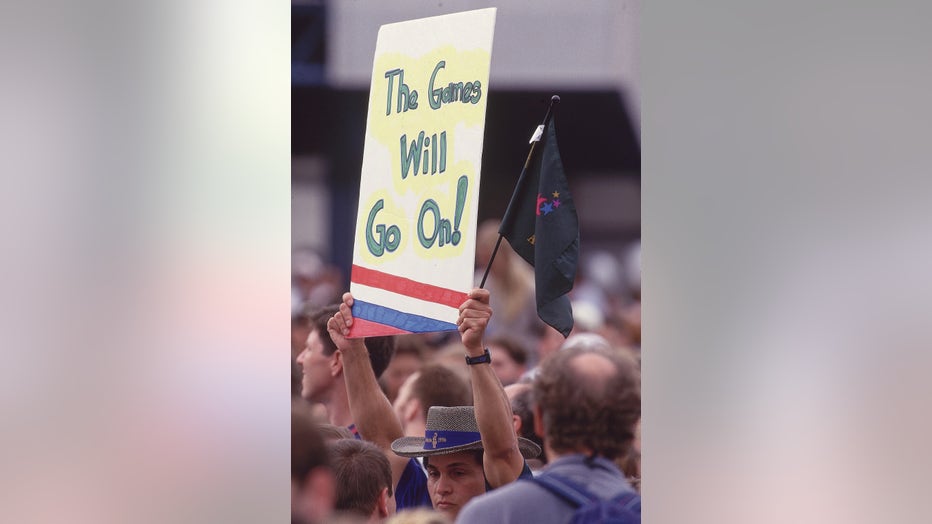
1996 Summer Olympics, View of THE GAMES WILL GO ON sign at reopening of Centennial Olympic Park after bomb explosion, Atlanta, GA 7/30/1996 (Photo by V.J. Lovero/Sports Illustrated via Getty Images)
Yet, as the city reflects on a generation of progress since 1996, local leaders say the lasting impact of the Centennial Games is an undeniable blueprint for how Atlanta handles the world stage.
The Source: The information in this story was gathered from previous FOX 5 Atlanta reporting, including interviews with organizers.