

Artemis II splashdown: NASA astronauts return home
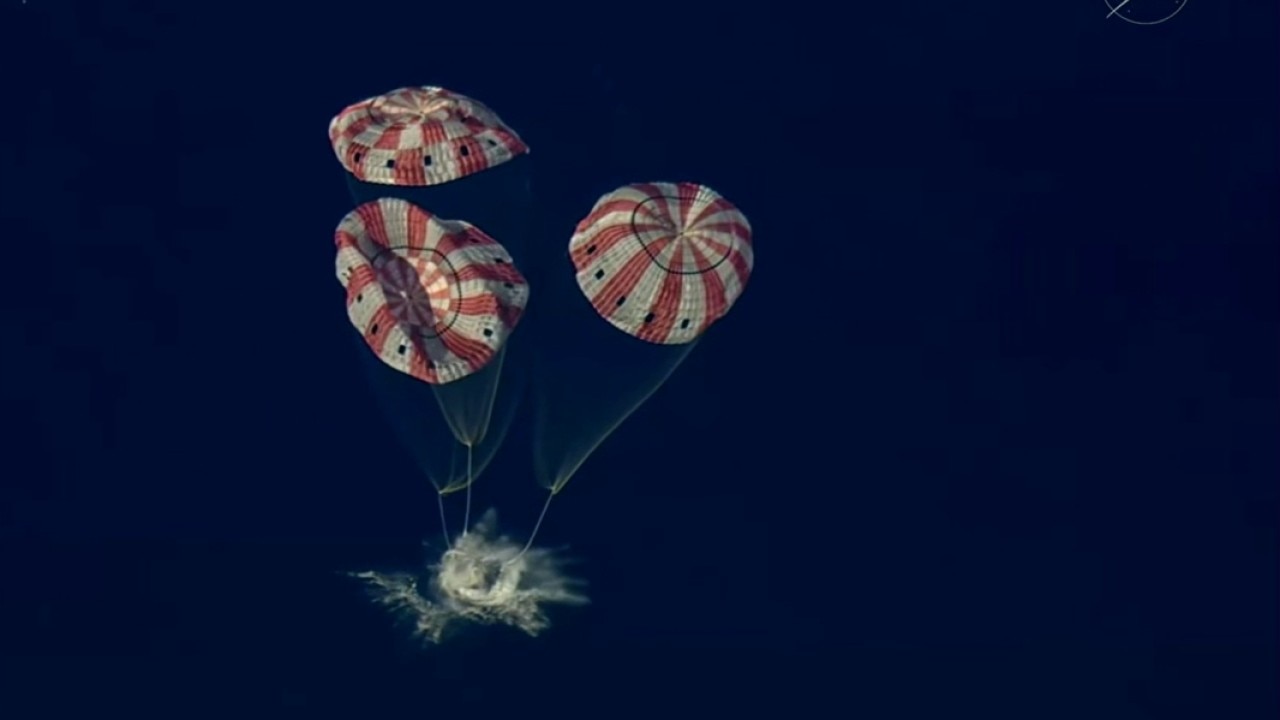
Artemis II splashdown: Watch the historic moment
After its historic 10-day flight to the moon, Artemis II splashed down off the coast of California on Friday night.
After its historic 10-day flight to the moon, Artemis II splashed down off the coast of California on Friday night.
The return appeared to have gone exactly as planned with a gentle, upright landing.
This closes out humanity's first lunar voyage in more than 50 years.
Historic Pacific Ocean splashdown
What we know:
The Orion capsule, named Integrity, hit the ocean at 19 mph following a high-speed reentry. The crew—Commander Reid Wiseman, pilot Victor Glover, Christina Koch, and Jeremy Hansen—hit the atmosphere at 33 times the speed of sound. This blistering speed had not been seen since the Apollo missions of the 1960s and 1970s.

Recovery divers' first contact with Artemis II
Recovery divers execute visual inspection circling Artemis II's spacecraft Orion following reentry.
The capsule was engulfed in red-hot plasma during the descent, causing a planned six-minute communication blackout. The heat shield successfully withstood temperatures of thousands of degrees. The recovery ship USS John P. Murtha awaited the crew off the San Diego coast with a team of military planes and helicopters.
What we don't know:
While the splashdown was described as a "perfect bull's-eye," NASA has not yet released a full report on the condition of the heat shield. Engineers will need to examine the capsule to see if it suffered the same pockmarked charring seen during the uncrewed test flight in 2022.
Breaking deep space records
- 252,756: The number of miles the crew traveled from Earth, the farthest journey ever made by humans.
- 24,661: The top speed in mph reached by the capsule during its return to Earth.
- 33: The Mach speed the crew reached upon hitting the atmosphere.
- 10: The approximate number of days the mission lasted since launching on April 1.
The backstory:
This mission was the first major step in NASA's plan to establish a permanent base on the moon. While Artemis II did not land on the moon, the crew broke the distance record previously held by Apollo 13. During a flyby of the moon's far side, the astronauts saw views never before seen by human eyes and witnessed a total solar eclipse from space.
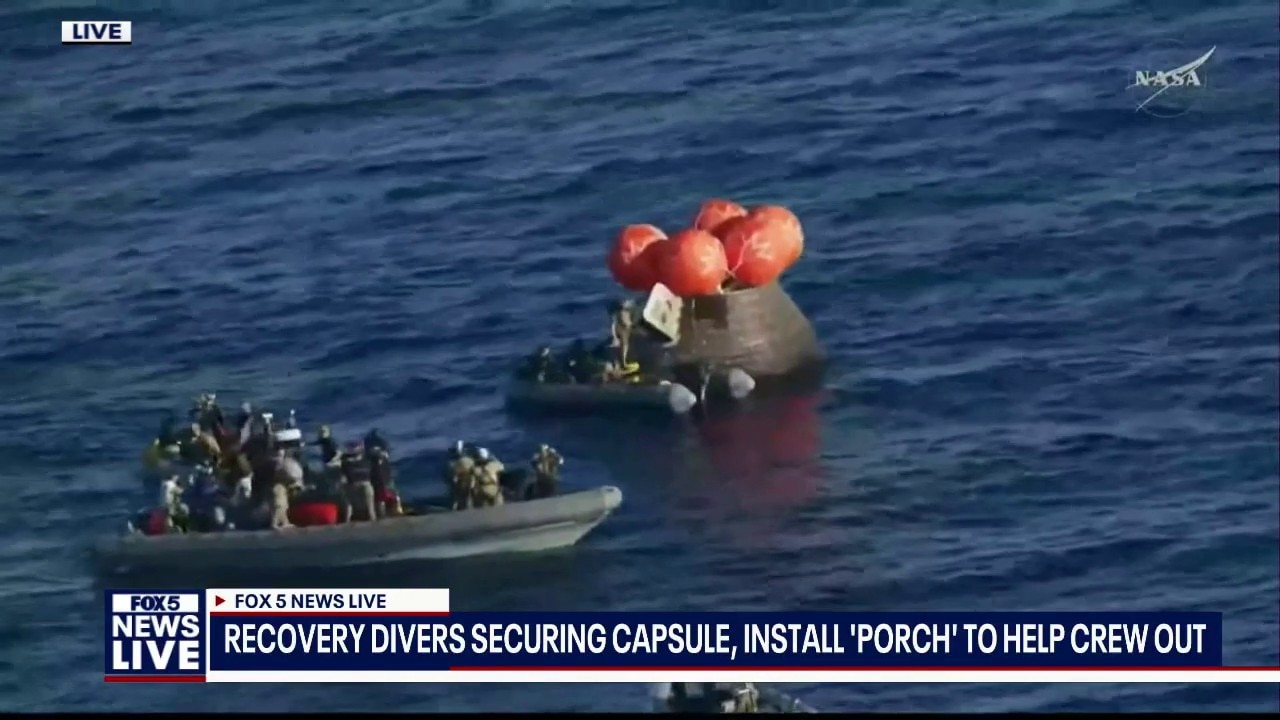
Artemis II hatch open
Recovery divers open the hatch of the Orion spacecraft to make contact with the astronauts aboard the Artemis II mission.
Voices from the mission
What they're saying:
"We can't explore deeper unless we are doing a few things that are inconvenient," Christina Koch said regarding technical issues during the flight. "Unless we're making a few sacrifices, unless we're taking a few risks, and those things are all worth it."
Pilot Victor Glover remarked on the solar eclipse, saying the view "just blew all of us away." After the successful landing, Mission Control's Rob Navias reported a "perfect bull's-eye splashdown."
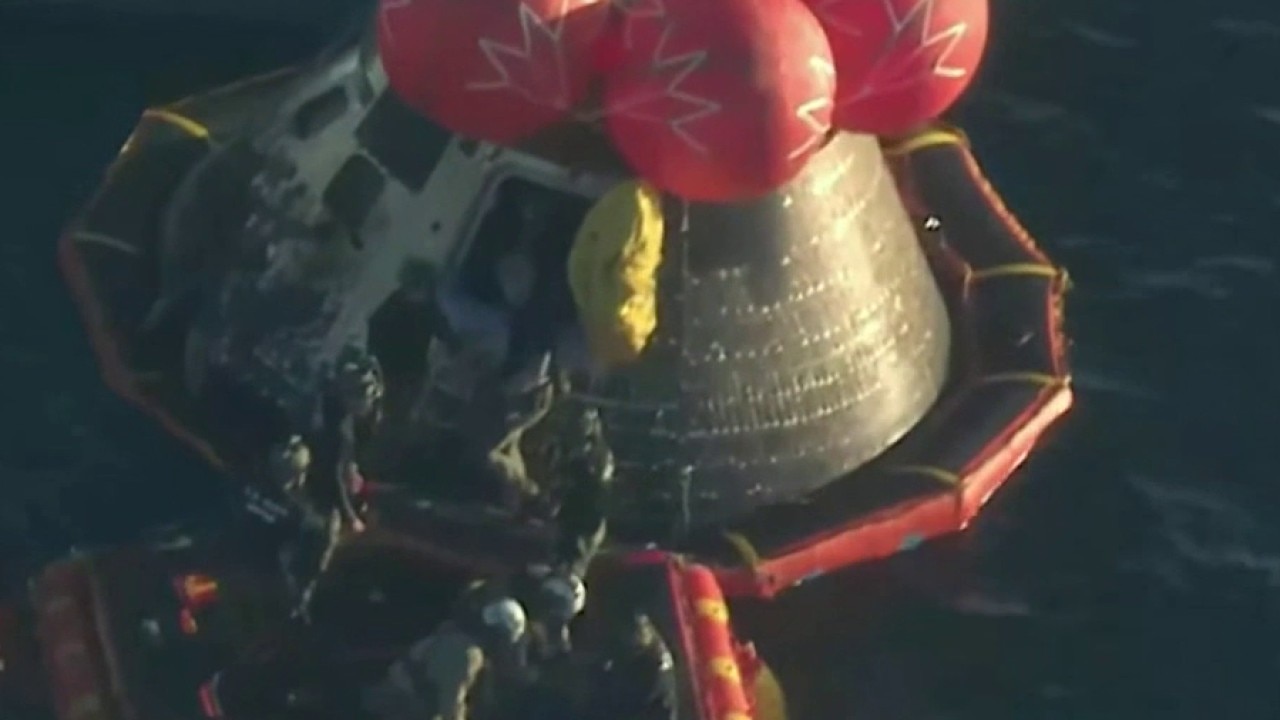
'Feeling very well': Artemis II crew extracted from capsule
All four of the Artemis II crew members are extracted from the Orion spacecraft named "Integrity". They are said to be "feeling very well".
The future of lunar exploration
What's next:
NASA is moving forward with a revamped schedule for the Artemis program. Next year, Artemis III will launch to practice docking a capsule with a lunar lander in Earth's orbit. If that is successful, Artemis IV will attempt to land two people near the moon's south pole in 2028.
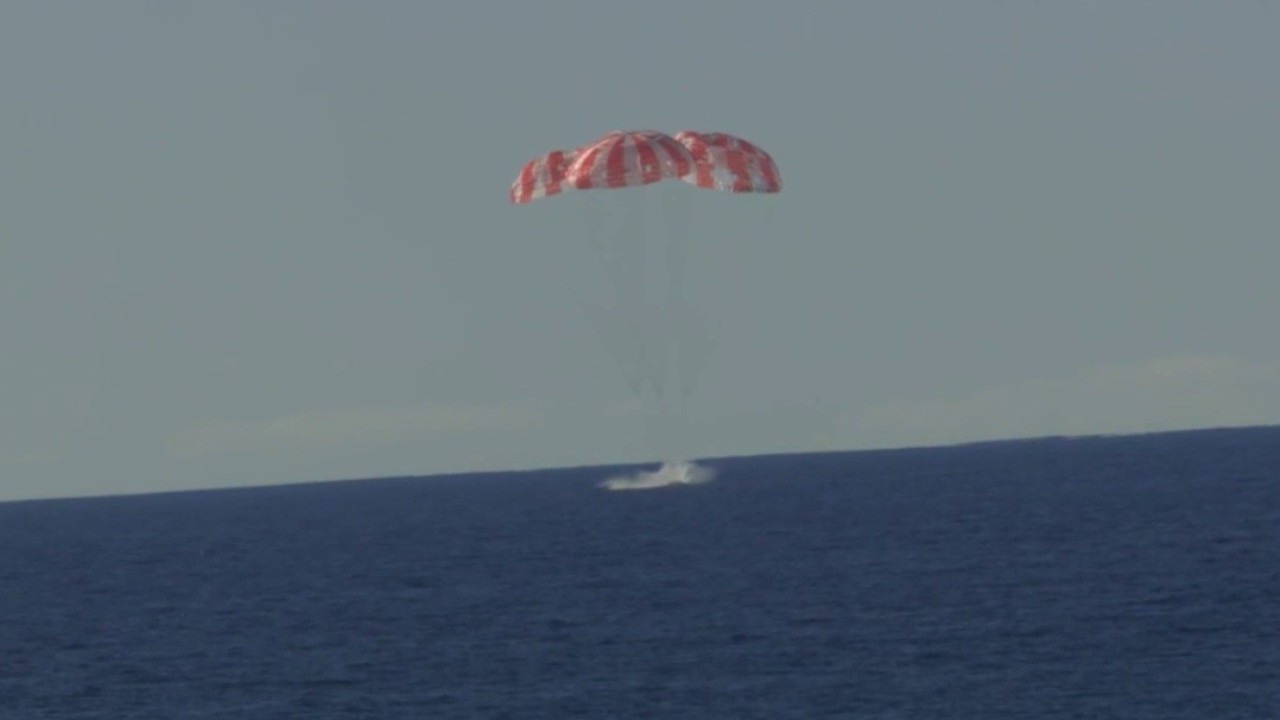
Artemis II crew returns after historic moon mission.
NASA’s Artemis II crew makes history with a successful Pacific Ocean splashdown after traveling further into deep space than any previous human mission.
Artemis II splashdown: Minute-by-minute timeline
Timeline:
Here is NASA's minute-by-minute timeline of the Artemis II splashdown
- 7:33 p.m.: Orion’s crew module will separate from the service module, exposing its heat shield for the spacecraft’s return through Earth’s atmosphere, where it will encounter temperatures of about 3,000 degrees Fahrenheit.
- 7:37 p.m.: Following separation, Orion will perform an 18 second crew module raise burn beginning to set the proper entry angle and align the heat shield for atmospheric interface.
- 7:53 p.m.: When Orion reaches 400,000 feet above Earth’s surface while traveling nearly 35 times the speed of sound. The crew is expected to experience up to 3.9 Gs in the planned entry profile. This moment marks the spacecraft’s first contact with the upper atmosphere and the start of a planned six-minute communications blackout as plasma builds around the capsule.
- 8:03 p.m.: Around 22,000 feet in altitude, the drogue parachutes will deploy, slowing and stabilizing the capsule as Orion nears splashdown.
- 8:04 p.m.: At around 6,000 feet, the drogues will release, and the three main parachutes will deploy, reducing Orion’s speed to less than 136 mph.
- 8:07 p.m.: Slowing to 20 mph, Orion will splash down in the Pacific Ocean off the coast of San Diego, completing the Artemis II crew’s return to Earth and a 694,481-mile journey.
From there, teams from NASA and the U.S. military will extract the crew from Orion and fly them via helicopter to the USS John P. Murtha
Within two hours after splashdown, the crew will be extracted from Orion and flown to the USS Murtha. Recovery teams will retrieve the crew, assist them onto an inflatable raft, and then use helicopters to deliver them to the ship. Once aboard, the astronauts will undergo post‑mission medical evaluations before returning to shore where awaiting aircraft will take them to NASA’s Johnson Space Center in Houston.
After Artemis II splashes down in the Pacific Ocean, NASA and the U.S. military will recover the astronauts from the Orion spacecraft. They will then be flown to the USS John P. Murtha to undergo a medical evaluation.
From there, the Artemis II crew will be flown to NASA's Johnson Space Center in Houston, Texas.
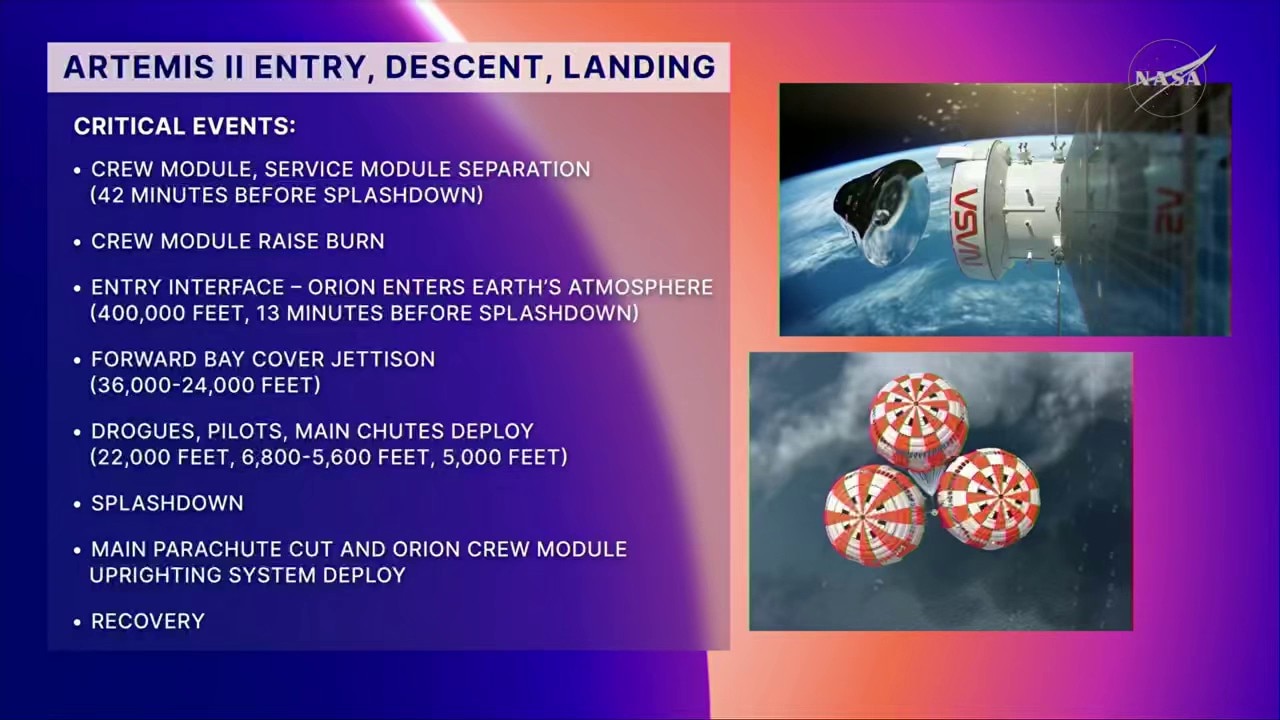
Artemis II splashdown: Where will crew land, how does that happen?
During a press briefing on April 8, NASA discussed the splashdown of the Artemis II. The crew is expected to splashdown in the Pacific Ocean, off the coast of Southern California, on Friday night, April 10. NASA explains how the Orion spacecraft will re-enter Earth's atmosphere and a step-by-step guide of what happens during splashdown.
The Source: This article was written with information from NASA, the Artemis Real-time Orbit Website (AROW), and live feeds from NASA's YouTube channel.