

Army opts for Iowa blast after canceling Georgia firm's deal
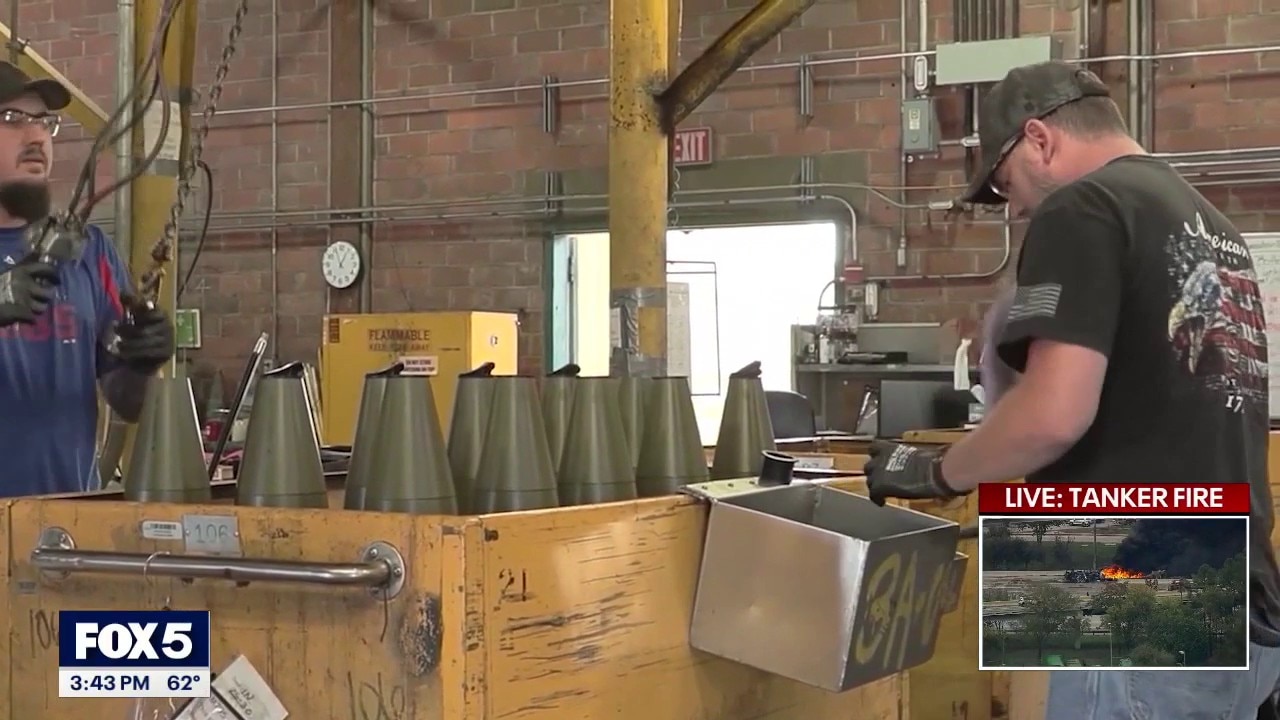
Georgia firm outlines alternative to Iowa blast plan
A University of Georgia professor who owns a company originally contracted to dispose of the lead without detonation stated his contract was suddenly canceled in May after the government turned down his proposal.
ATHENS, Ga. - A University of Georgia professor and chemical company founder says the U.S. Army canceled his firm's contract to safely neutralize unstable explosives in Iowa, opting instead for a massive controlled detonation scheduled for Wednesday.
What we know:
Dr. Valentine Nzengung, a UGA faculty member on an inventor’s leave of absence and founder of MuniRem Environmental, told FOX 5 Atlanta that his company won a contract in March to dispose of unstable lead azide at the Iowa Army Ammunition Plant.

Dr. Valentine Nzengung (FOX 5)
He received the deal after briefing a multi-agency federal expert panel.
In May, contracting officers canceled the agreement, citing "an abundance of caution" and unspecified safety concerns.
"I'm not disputing that," Nzengung said. "We do what we do. The government does what it does."
Unanswered safety data requests
What we don't know:
Nzengung said federal officials declined to share the scientific data explaining why they rejected his company's approach.
"We want to see data details," he said. "We want to see data in order to understand."
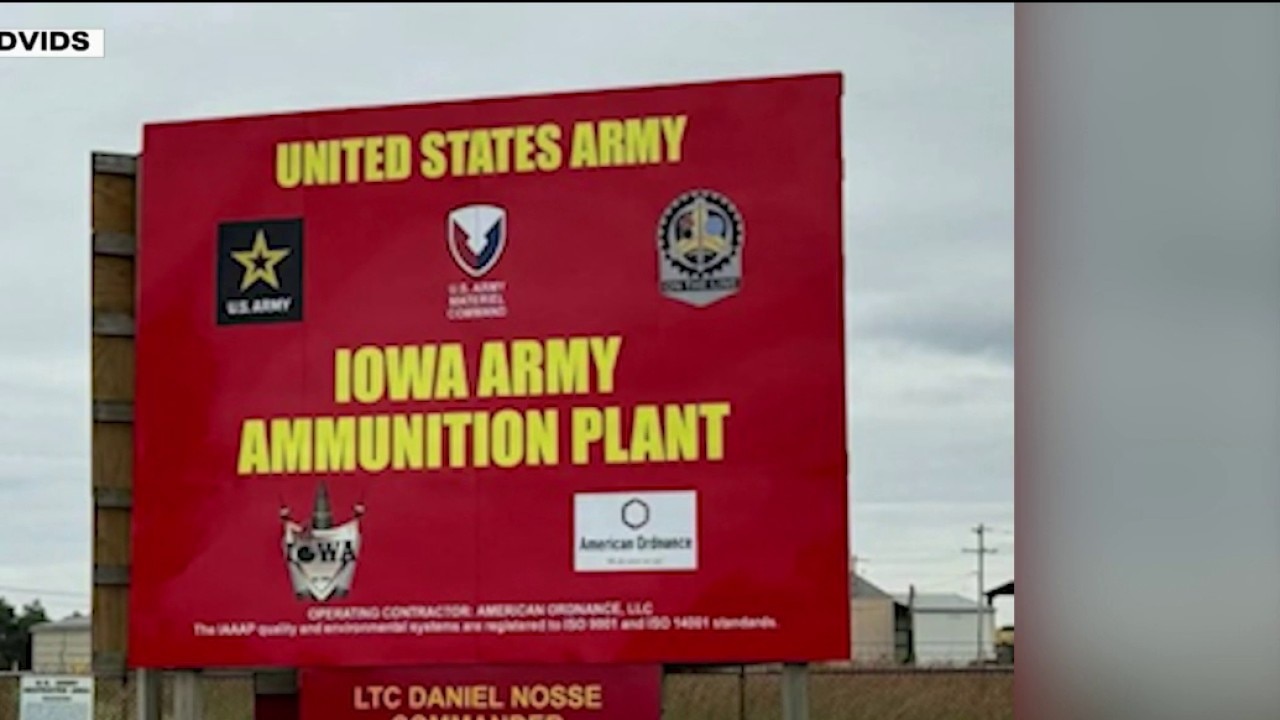
Army cancels Georgia firm's Iowa lead disposal deal
A University of Georgia professor and chemical company founder says the U.S. Army abruptly canceled his firm's contract to safely neutralize unstable explosives in Iowa, opting instead for a controlled detonation scheduled Wednesday ahead of incoming freezing weather.
His company's attorney filed a Freedom of Information Act request for the government's risk assessments, which remains unanswered.
While federal officials plan to detonate the material to prevent a spontaneous explosion, Nzengung declined to criticize the move.
"I do not have enough data to take a position one way or the other," he said. "I'm assuming that the U.S. Army and the U.S. government has enough data to be able to move forward in a way that is protective of human beings, is protective for the environment, and is the best possible option forward."
How the technology works
The backstory:
Developed at UGA and patented by the University of Georgia Research Foundation, MuniRem is a solid chemical reagent powder dissolved in water. When crews apply it to explosives inside containment drums, it neutralizes and destroys the material without an explosion, leaving behind wastewater and sludge tested at Environmental Protection Agency-accredited labs.
"It is a contained system for neutralizing and destroying explosives in containers," Nzengung said.
Both the EPA and the National Academies of Sciences, Engineering, and Medicine recognize the technology as an alternative to traditional open burning and open detonation.
The Pentagon has vetted the product since 2010, and teams have used it to neutralize unstable military-grade explosives in the U.S., Europe and the Middle East.
Nzengung noted the method initially faced skepticism because it broke from centuries-old disposal practices: "Now you are trying to explain to people that you can take this white powder mixed with water, add to explosives, and it won't go off. People don't believe that."
What they're saying:
Nzengung sent FOX 5 Atlanta the following statement on behalf of MuniRem Environmental explaining the situation further.
See the full statement below:
"MuniRem Environmental, LLC (MuniRem) was recently and unexpectedly drawn into a national dialogue about the U.S. Army's decision to conduct a controlled detonation of unstable lead azide, which required disposal at the Iowa Army Ammunition Plant (IAAAP) in Middletown, Iowa.
As many national media outlets have now reported, MuniRem Environmental, LLC, was contracted earlier this year to chemically neutralize and destroy the unstable lead azide, transforming it at the molecular level into more stable compounds that can be transported and disposed of more safely.
Earlier this year, MuniRem Environmental, LLC, was awarded the contract to dispose of the unstable lead azide at the IAAAP site and was mobilizing a team to complete the work when the contract was unexpectedly canceled for reasons not initially disclosed. Despite the proven track record of the MuniRem® Reagents and the safety of neutralization services provided by MuniRem Environmental, LLC, in the United States and internationally, it was later confirmed that the contract was canceled in favor of a controlled detonation.
As an innovative yet small business and a subcontractor that has performed multiple lead azide neutralization and decontamination tasks, MuniRem Environmental, LLC had no direct control over the decision to cancel the contract. The MuniRem Environmental, LLC leadership team provided decision-makers with information regarding the potential environmental and community considerations associated with various disposal methods. However, the final decision regarding the disposal approach rested with the responsible authorities.
While MuniRem Environmental cannot control the decisions made by its customers and stakeholders, the company remains confident that its officers acted ethically and professionally by providing technical information and advocating for what it believed to be a safe and effective solution. Ultimately, the decision was outside MuniRem Environmental's control.
MuniRem Environmental will continue to provide the world with innovative, safer ways to chemically neutralize and destroy unwanted explosives, as it has since its founding in 2013. Although the company is currently receiving national attention, its mission remains unchanged: to drive the transformation of environmental remediation through safe, sustainable and non-destructive solutions that neutralize explosive threats, reduce toxic emissions and minimize ecological harm. By advancing technologies that prioritize public health, climate resilience and operational efficiency, the company aims to safeguard communities and ecosystems for generations to come.
For more information about MuniRem Environmental, LLC, and its founder and inventor of MuniRem technology, Dr. Valentine Nzengung, visit MuniRem's website at www.munirem.com or view the company's LinkedIn profile."
Army's Iowa blast containment plan
Dig deeper:
On Tuesday morning, U.S. Army leaders and federal safety officials defended their plans one day before the scheduled Wednesday blast in Iowa.
Col. Aaron Teller, who leads on-site mitigation, said crews spent eight months preparing two 80-year-old concrete storage magazines holding the unstable lead azide.
LATEST UPDATE: How far will the dust travel? See which counties will be impacted
To stop lead particles from entering the air, crews built earthen barriers and installed temporary wooden doors to vent the blast into 3 miles of uninhabited land.
Teams also positioned two walls of 16,000-gallon water tanks and used a cofferdam, tarps and lead-containment screens to flood the bunkers' exterior and deteriorating roofs with at least 2 feet of blast-suppressing foam developed by Sandia National Laboratories.
"Our goal is to get to zero — zero release of lead particulate into the atmosphere," Teller said.
Maj. Gen. Gavin Shirley, commander of the Army Sustainment Command, said updated models show significant dispersion reductions compared to early estimates of an unmitigated open-air release.
Teller noted that during a 1977 unmitigated disposal of 7,000 pounds of lead azide in Colorado, 75% of the lead stayed at the site, and crews expect current barriers to capture most of the remaining 25%.
Public health and facility reviews
What's next:
EPA official Tom Croci said the agency will release real-time field data and lab samples publicly, continuing air monitoring "for as long as it takes" to confirm safe lead levels.
Army Surgeon General Lt. Gen. Mary Izaguirre noted that lead toxicity typically stems from prolonged exposure over months or years, adding that her team is tracking post-detonation air quality with the EPA and the Iowa Poison Control Center.
Meanwhile, the acting secretary of the Army directed Army Materiel Command and Army Sustainment Command to inspect every weapons storage facility in the Army's inventory to prevent similar incidents.
Officials noted the Iowa plant became the military's sole consolidation site for lead azide stockpiles following a 2009 base realignment.
Pressed by reporters on repeated delays — moving the blast from Friday to Monday, then Wednesday, after a brief pause ordered by the president — the acting secretary said officials needed time to reach interagency consensus and verify weather forecasts.
"We understand your concern, and we understand your frustration," he said. "We have clarity now, and what matters now is the next 24 hours and getting this operation right."
RELATED
- Iowa lead explosion: Army blast set for Wednesday morning after court approval
- US Army to invoke emergency powers to blow up bomb-making chemicals despite court order
- Lead from Army detonation in Iowa town could pose health risks
- Iowa lead explosion: What time will it begin? How far will the dust travel?
The Source: The information in this story was gathered from an interview between Dr. Valentine Nzengung and Jameson Moyer, as well as statements from U.S. Army and Environmental Protection Agency leaders during a Tuesday news conference.