

2026: Things that happened 120 years ago
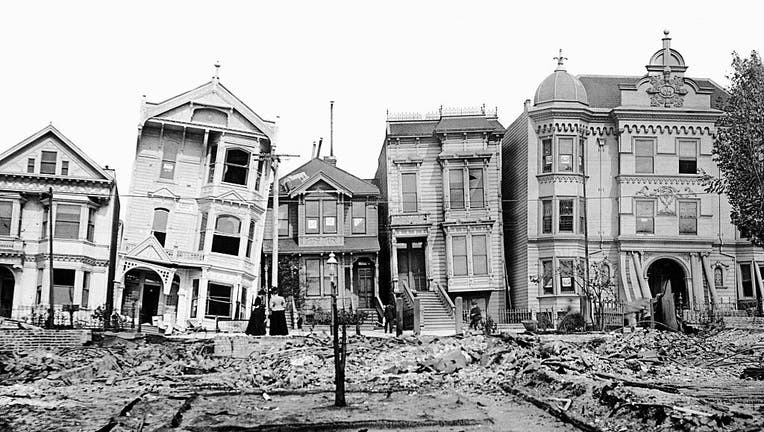
1906: Damaged houses on Howard Street (now South Van Ness Avenue) near 17th Street, after the San Francisco earthquake of April 18th 1906. (Photo by Kirn Vintage Stock/Corbis via Getty Images)
In 2026, several landmark events from 1906 reach their 120-year anniversaries, offering a moment to reflect on a year that left a lasting impact on American history, innovation, and culture.
Here are some events that happened 120 years ago:
San Francisco earthquake (April 18, 1906)
On April 18, 1906, the deadliest earthquake in U.S. history struck San Francisco, followed by raging fires across the city. More than 3,000 people are believed to have been killed by the quake, which was estimated to have reached as high as 8.3 magnitude on the Richter scale.
Xerox is founded
American inventor, physicist, and patent attorney Chester Carlson—whose discovery of xerographic printing would fuel Xerox’s global growth and permanently transform an industry—was born on February 8, 1906. Just weeks later, on April 18, 1906, the M.H. Kuhn Company, originally founded in 1903, became the Haloid Company in Rochester, New York, positioning itself to manufacture and sell photographic paper.
Alpha Phi Alpha Fraternity Inc., is created
Alpha Phi Alpha, the first intercollegiate Greek-letter fraternity established for African American men, was founded on December 4, 1906, at Cornell University in Ithaca, New York, by seven college men who recognized the need to create a strong bond of brotherhood among people of African descent in the United States. The fraternity’s roster of distinguished members includes civil rights leader Martin Luther King Jr., renowned scholar and activist W.E.B. Du Bois, acclaimed artist and performer Paul Robeson, and Maryland’s first Black governor, Wes Moore.
1906 Atlantic City train wreck/ First press release in U.S. issued
According to NewsMuseum, On October 28, 1906, a Pennsylvania Railroad train was involved in a tragic accident that claimed the lives of more than 50 passengers, placing the company at one of the most sensitive and closely watched moments in its history. Public relations pioneer Ivy Lee was closely following the situation and made a groundbreaking decision: instead of attempting to hide the facts or waiting for media coverage to unfold, he proactively provided reporters with a written account of the incident from the railroad’s perspective. That document is widely regarded as the world’s first press release.
First radio broadcast
According to PBS, On December 24, 1906, Canadian-born physicist Reginald Fessenden made history by delivering the first long-distance transmission of the human voice and music from his station in Brant Rock, Massachusetts. Heard as far away as Norfolk, Virginia, the broadcast marked a turning point and laid the groundwork for commercial voice and music radio.
The Source: The information in this story was compiled from a range of well-established historical and educational sources. This story was reported from Los Angeles.