

Voting for the first time in Georgia? Here is what to know
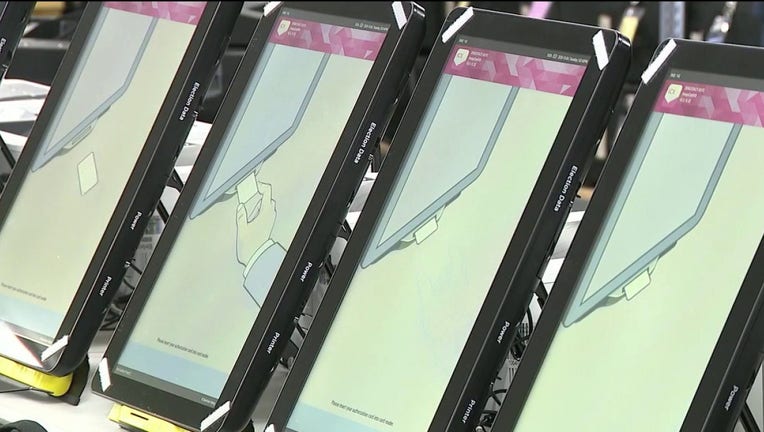
ATLANTA - Stepping into a voting booth for the very first time can feel a bit intimidating, but casting your ballot in Georgia is designed to be a smooth, welcoming and straightforward experience once you know what to expect.
Step-by-Step: How casting your ballot works
What to expect:
Getting ready is simple: check your voter registration status and confirm your assigned neighborhood polling place on the state's My Voter Page before heading out.
Many first-time voters in Georgia do not realize they are already registered. Under Georgia law, the most common way residents end up on the voter rolls is through automatic voter registration when applying for or renewing a driver's license or state ID card at the Georgia Department of Driver Services (DDS). Unless an applicant explicitly opts out during their visit, DDS automatically submits their registration information to state election officials.
Polling locations across Georgia are open from 7 a.m. to 7 p.m. on Election Day, and state rules guarantee that as long as you are in line by 7 p.m., the doors will stay open, and you will be allowed to vote.
During the early voting period, registered voters are not required to visit their assigned neighborhood precinct and can cast a ballot at any designated advance voting site within their home county. Most polling locations are open between 9 a.m. and 5 p.m. during early voting time.
When you walk in, you will show your photo ID to a poll worker and sign a standard voter certificate verifying your name and home address. A poll worker will then hand you a small plastic voter access card to insert into an electronic touchscreen machine known as a Ballot Marking Device.
The screen walks you through every race and ballot question at your own pace. Once you make your choices and review your on-screen summary, tap print. Take a moment to read over your printed paper ballot to ensure every selected candidate matches your choices, then slide the paper into the optical scanner at the front of the room to officially cast your vote.
What photo ID is accepted to vote in Georgia?
What you need :
Georgia requires voters to present a valid photo ID before receiving an in-person ballot, as outlined by the Georgia Voter Identification Requirements page.
Most voters show a Georgia driver's license, which is accepted even if it has recently expired.
Other approved options include: a valid U.S. passport, a state or federal government-issued photo ID, a military photo ID, an employee photo ID from any Georgia government agency, or a student photo ID issued by an in-state public college or university.
Voters who do not have any of these documents can get a free Georgia voter identification card from their local county registrar's office or any Department of Driver Services branch.
What if you forgot your ID?
If poll workers cannot find your name on the check-in pad or if you forgot to bring your photo ID, you do not have to leave without voting. State and federal law guarantees your right to cast a provisional paper ballot on the spot.
Once you cast a provisional ballot, you have a three-day window following Election Day to verify your eligibility.
If your ballot was challenged due to identification, you simply need to bring an approved photo ID to your county registrar's office before the deadline so your vote can be officially certified and counted.
Can you wear campaign hats to vote in Georgia?
What you can't do:
Georgia enforces strict protections to ensure that polling locations remain safe, neutral, and free from disruption. State law establishes a mandatory campaign-free buffer zone prohibiting any electioneering, campaign hats, buttons, clothing, or political literature within 150 feet of the entrance to any building where voting is taking place, as well as within 25 feet of any voter standing in line.
Voter intimidation, coercion, and harassment are serious criminal violations under state and federal law. Prohibited behavior includes aggressive questioning about citizenship or criminal history, unauthorized individuals loitering near voting booths, brandishing firearms, or following voters in parking lots. If any voter encounters aggressive behavior, improper questioning, or disruptions while in line, they should alert the chief poll manager on-site immediately. If the issue is not resolved, voters should step aside and contact law enforcement and state election monitors.
Can someone help me fill out my ballot in Georgia?
Need help?:
Polling locations provide multiple accommodations to ensure voting is accessible to all Georgians.
Any voter who is 75 or older or has a physical disability is legally entitled to move directly to the front of the line between 9:30 a.m. and 4:30 p.m. without waiting.
Every precinct provides accessible touchscreen machines with adjustable text sizes, high-contrast display modes, tactile keypads, and audio headsets that read the ballot aloud.
Voters who need a hand navigating the ballot due to a disability or language barrier are legally permitted to bring an assistant of their choice into the booth, such as a friend, family member, or neighbor, provided that person is not their employer, a union representative, or a candidate on the ballot.
Who do I contact if I have an issue?
Who to contact:
If you run into an issue, your first step is simply alerting the poll manager at your location, who is trained to resolve machine glitches or check-in mix-ups immediately. You can ask one of the poll workers to help you find the poll manager at your location.
If you need outside assistance or want to report a concern, you can reach the Georgia Secretary of State Elections Division directly at 404-656-2871 or 877-725-9797.
The Source: Information in this guide was gathered from official voting guidelines published by the Georgia Secretary of State Voting Guide, statutory photo ID rules from the Georgia Voter Identification Requirements, the Official Code of Georgia Annotated, and nonpartisan voter education materials from the Lawyers' Committee for Civil Rights Under Law.