

FIFA World Cup looming as injuries pile up for stars, raising questions about footballer fatigue
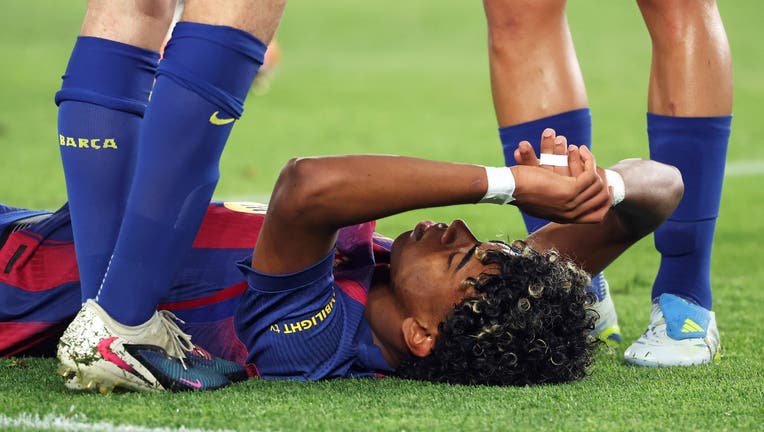
Lamine Yamal is injured after taking a penalty kick during the match between FC Barcelona and Real Club Celta de Vigo, corresponding to week 33 of LaLiga EA Sports, at the Spotify Camp Nou in Barcelona, Spain, on April 22, 2026. (Photo by Joan Valls/
NEW YORK - With less than two months until the FIFA World Cup, some of the game’s biggest young stars are already dealing with injuries.
And it is raising a bigger question across the sport.
Is there just too much soccer?
A growing list of injuries
Barcelona’s Lamine Yamal is out for the rest of the season with a hamstring injury suffered during a match, a classic fatigue-related muscle injury that tends to happen when players are logging high minutes late in the season.
Hamstring injuries are one of the most common signs of overload, according to the National Library of Medicine. They are not usually caused by one bad tackle, but by repeated sprinting, accumulated fatigue and lack of recovery time.
At Real Madrid, both Arda Güler and Éder Militão have been ruled out with injuries, continuing a trend for the club this season where multiple players have broken down physically during the run-in. Reports confirm both are dealing with injuries serious enough to sideline them during a critical stretch.
Militão’s case is especially telling. He has dealt with major ligament issues in recent seasons, and players returning from those injuries often face higher re-injury risk when workload ramps up too quickly.
Then there is Serge Gnabry, who is already out of the World Cup entirely. His injury is not just another knock. It is a tournament-ending setback, the kind that typically comes from muscle or ligament damage after a long season of club and international minutes.
And for Brazil, teenage star Estêvão suffered a grade 4 hamstring injury during Chelsea’s match against Manchester United, a serious setback that could impact his World Cup chances and another example of a young player being pushed through a heavy schedule at an early age. He had already featured heavily for Palmeiras during last summer’s FIFA Club World Cup in the U.S.
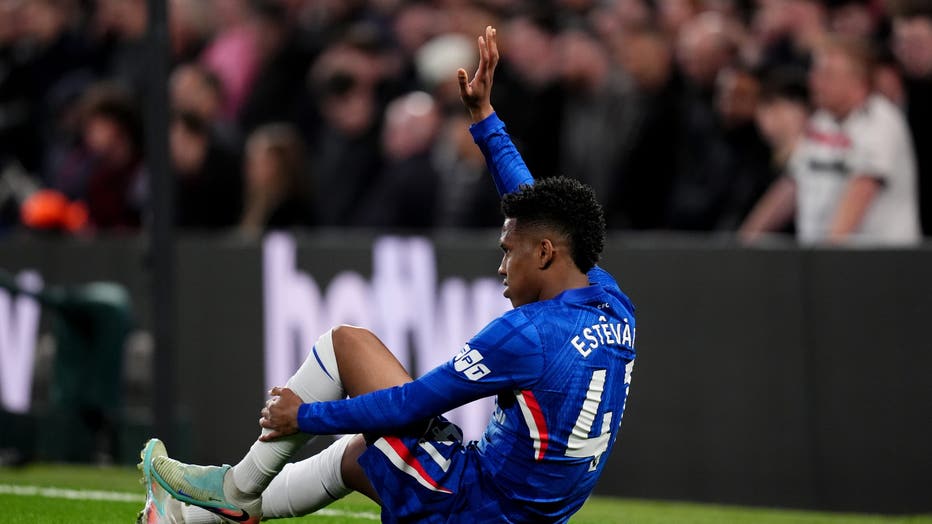
Chelsea's Estevao holds his leg after picking up an injury during the Premier League match at the Stamford Bridge, London. Picture date: Saturday April 18, 2026. (Photo by John Walton/PA Images via Getty Images)
Why it keeps happening
This is not just bad luck.
Research has shown that soccer players are increasingly dealing with overuse injuries tied to congested schedules, limited recovery time and constant high-intensity play.
Common issues include muscle strains, ligament stress and fatigue-related injuries that build over time rather than from a single moment.
And the calendar is only getting more crowded.
The schedule problem
Over the past year, the global soccer schedule has expanded significantly.
The FIFA Club World Cup added more matches to an already packed calendar. Now, the 2026 World Cup itself is expanding, featuring more teams and more games than ever before.
That means more travel, more minutes and less rest for players who are already coming off long club seasons.
For many, the World Cup is not a fresh start. It is the continuation of an already exhausting year.
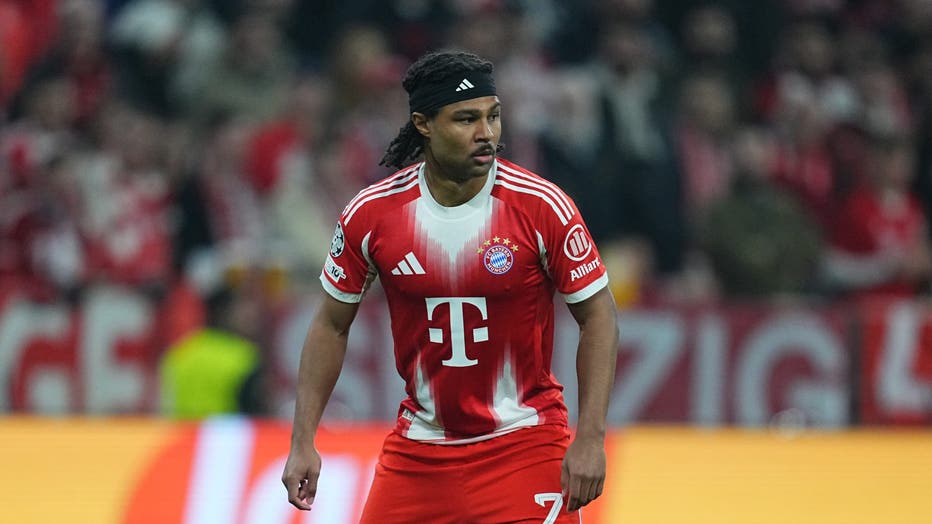
Serge Gnabry (Bayern Munich) looks on during UEFA Champions league Quarter Final UEFA Champions League: Bayern Munich and Real Madrid at Allianz Arena, Munich, Germany on April 15 2026. (Photo by Ulrik Pedersen/NurPhoto via Getty Images)
Why this matters now
The timing is what makes this moment stand out.
League seasons are wrapping up. Players are logging some of their highest minutes of the year. And the World Cup is just weeks away.
That combination creates a narrow window for recovery, and a higher risk of injuries at the worst possible time.
For fans, it also raises the possibility that some of the sport’s biggest stars may not be on the field when the tournament begins.
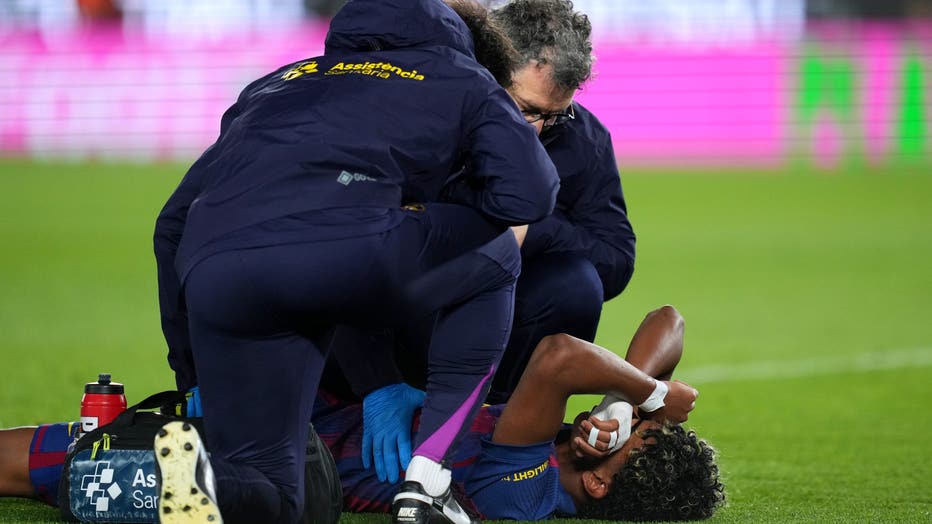
BARCELONA, SPAIN - APRIL 22: Lamine Yamal of FC Barcelona reacts to an injury after scoring his team's first goal during the LaLiga EA Sports match between FC Barcelona and RC Celta de Vigo at Spotify Camp Nou on April 22, 2026 in Barcelona, Spain. (
What's next:
The World Cup is now less than 50 days away.
Teams will soon finalize their squads, and players will shift from club commitments to international duty.
The hope is that those currently dealing with injuries can recover in time.
But the broader concern is not going away.
As the sport continues to grow, the question becomes harder to ignore.
At what point is enough?
The Source: This article was written using information from ESPN, The Athletic and sports medicine research on player workload and injuries.