

Social Security benefits will be cut in 2032 if Congress doesn't act
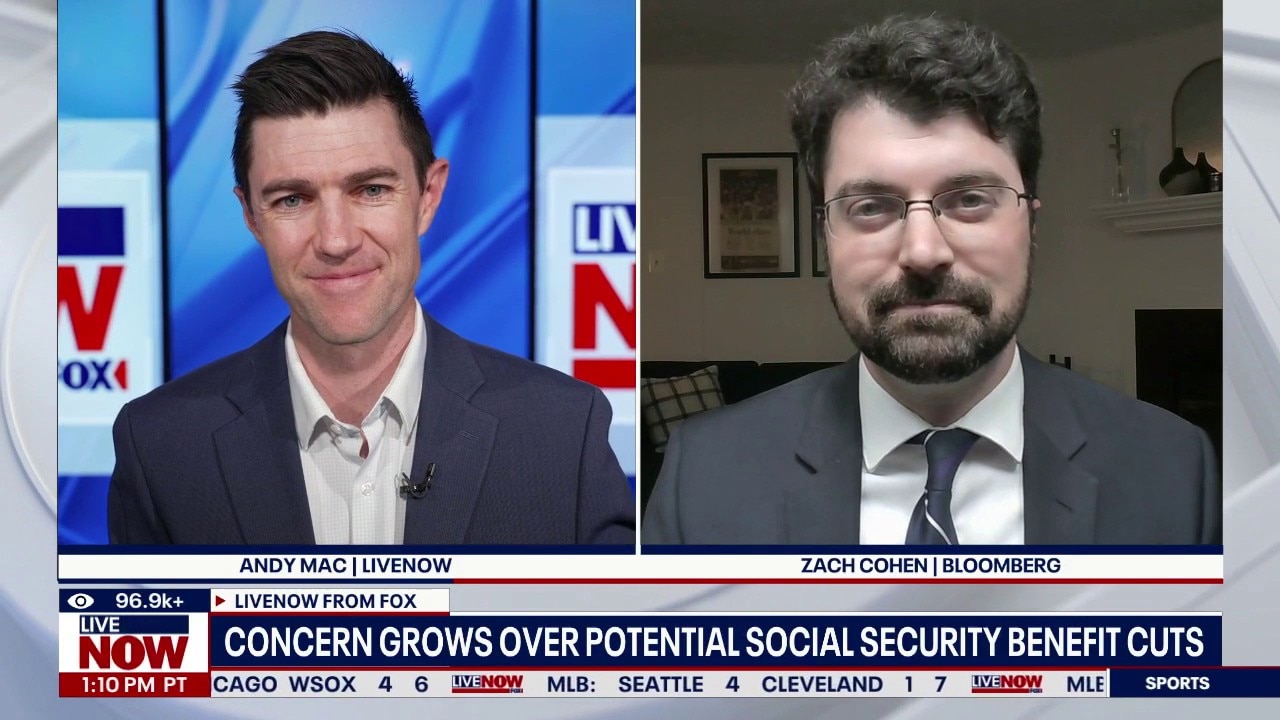
Concern over potential Social Security benefit cuts
LiveNOW’s Andy Mac is speaking with Zach Cohen, Bloomberg Government's senior budget reporter, as the clock continues to tick for American workers and seniors who are worried about cuts to their Social Security. According to Fox Business, the Social Security Administration’s 2026 Trustees Report confirms that the federal retirement safety net is less than seven years away from fiscal depletion.
Social Security’s trust fund is on track to run out of reserves by 2032, in part because "politicians have made its financial condition even worse," experts say.
When the trust fund is emptied, federal law requires that payments be limited to incoming payroll taxes, triggering an automatic 22%-24% benefit cut for retirees unless Congress acts.
Here’s what to know:
What is Social Security?
The backstory:
The Social Security program started in 1935 as a safety net for the nation’s oldest and most vulnerable. President Franklin Roosevelt signed it into law. As of December 2025, Social Security benefits are paid to 70 million Americans, according to the Social Security Administration.
When you work, some of your taxes fund Social Security. The government uses those tax dollars to pay benefits to people who have already retired, people who are disabled, the survivors of workers who have died, and dependents of beneficiaries.
RELATED: Social Security has a 'billionaire problem,' advocate warns
While the money is used to pay people currently getting benefits, any unused money goes to the Social Security trust fund. When you retire, the Social Security contributions of people in the workforce, together with the money in the fund, will pay monthly benefits to you and your family. If the trust fund runs out, Social Security would be funded solely by payroll taxes unless Congress takes action. That would trigger an automatic 22-24% cut in benefits.
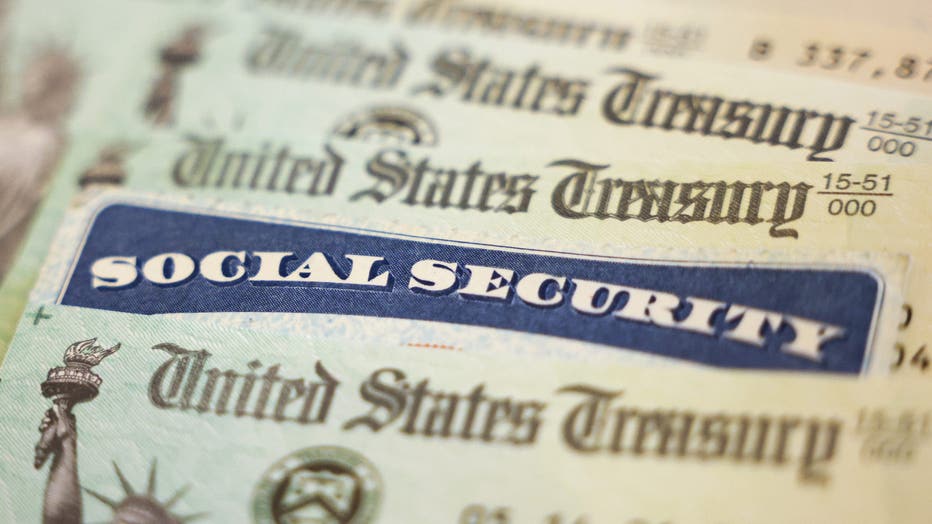
When the Social Security trust fund is emptied, federal law requires that payments be limited to incoming payroll taxes, triggering an automatic 22%-24% benefit cut for retirees unless Congress acts. (Photo illustration by Kevin Dietsch/Getty Images)
Rising healthcare costs and government spending – including the tax provisions under President Trump’s One Big Beautiful Bill Act – reduced revenue to the trust fund, speeding up depletion.
"So they basically pre-funded their retirement – people paid in more into Social Security than was necessary to pay current benefits because it's a pay-as-you-go system, so your money doesn't go to a bank account and wait for you and then you get it when you retire," Social Security Works Executive Director Alex Lawson told FOX Local in 2024.
To determine the Social Security benefits you will receive, the government calculates a percentage of your highest wages in your top 35 years of earning, and factors in when you choose to start receiving benefits.
What’s the retirement age for Social Security?
By the numbers:
Benefits can be claimed as early as age 62, but they are reduced, and this reduction in benefits is permanent. Waiting until your full retirement age (FRA) of 67 provides 100% of your eligible benefit. For each year past your FRA, your monthly benefit increases by 8% annually until it maxes out at age 70.
Will Congress act to save Social Security?
Dig deeper:
"Social Security has been on a path toward insolvency for some time – but over the past year, politicians have made its financial condition even worse," the Committee for a Responsible Federal Budget wrote in reports earlier this year.
Republicans and Democrats agree that reforms are needed to save the program, but they so far haven’t agreed on a solution. Some Democrats, along with GOP Sen. Bernie Moreno, have proposed raising Social Security taxes on the wealthiest Americans (Americans pay Social Security taxes only on up to $184,500 a year). Eliminating the cap would generate more than $3.2 trillion for the trust fund over the course of a decade, according to the Peter G. Peterson Foundation, a nonpartisan debt watchdog.
RELATED: Proposal would limit Social Security benefits to $100K a year for wealthy couples
Others have called for lifting the cap, but only above a certain income threshold. For example, a bill from Sen. Sheldon Whitehouse, D-R.I., and Rep. Brendan Boyle, D-Pa., would apply the payroll tax to income above $400,000.
Republicans, meanwhile, have floated the idea of raising the retirement age and generally oppose raising taxes to fund Social Security.
Social Security advocates say there are essentially two solutions for fixing Social Security:
"Pay more or get less," Kathleen Romig, director of Social Security and disability policy at the Center on Budget and Policy Priorities, told the Associated Press.
A measure by Sens. Dick Durbin, D-Ill., and Bill Cassidy, R-La., would not dictate an outcome, but instead set up a process for Congress to take action. It calls for the bipartisan Social Security Advisory Board to collect public input and submit draft legislation to Congress that would keep the program’s retirement trust fund solvent for at least 50 years.

Social Security tax cuts could impact young Americans
A report shows the cost of stabilizing the Social Security program could cost young taxpayers over the course of their careers.
Even though the bill does not prescribe a solution for replenishing Social Security, sponsors have struggled to win support. Cassidy voiced exasperation in a recent floor speech.
"For some people, the time to do Social is never," Cassidy said. "Don’t disturb Congress. They don’t want to take a tough vote. Even if that vote only sets up a process."
AARP has come out against the bill, saying that the effort amounts to "fast-tracking" Social Security changes through a process that limits what type of amendments are offered and sets arbitrary procedural deadlines.
Separately, Cassidy has a proposal with Sen. Tim Kaine, D-Va., that calls for the creation of a $1.5 trillion fund that would be invested in stocks and other higher-risk assets over 75 years.
The seed money would be financed by the Treasury Department through additional borrowing. At the end of the 75 years, the fund’s assets would be used to repay the Treasury for the seed money as well as the borrowing that would occur over those years to keep Social Security payments going out — now projected at about $26.6 trillion.
Debt watchdogs are worried.
The Committee for a Responsible Federal Budget said "this is a dangerous, debt-funded gamble that would come with huge risks and costs."
The Source: This article includes information from the Social Security Administration, The Associated Press, the Committee for a Responsible Federal Budget, and previous FOX Local reporting.