

Judges debate Georgia's ban on giving snacks, water to voters
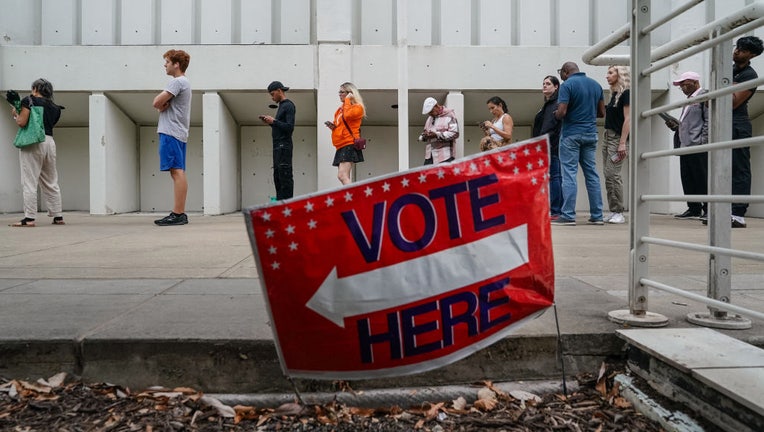
People wait in line to vote on the last day of early voting at the High Museum of Art in Atlanta, on Nov. 1, 2024. (Photo by ELIJAH NOUVELAGE/AFP via Getty Images)
A federal appeals court is debating whether Georgia's ban on providing food and water to voters waiting in line violates the First Amendment.
In court on Wednesday, the groups behind the lawsuit asked the panel of three judges to uphold a lower court's ruling that part of the restrictions were probably unconstitutional.
The backstory:
The ban is just one piece of SB 202, a 98-page bill containing dozens of changes to state voting law passed in 2021. Other changes included shortening the time to request a mail ballot, rolling back the COVID-19 pandemic-driven expansion of ballot drop boxes and reducing early voting before runoff elections.
Voting rights groups, who have filed a lawsuit challenging multiple parts of the law, argued that the provision infringes on their free speech rights and should be blocked.
In 2022, a judge declined to restrict the ban, saying that, while the groups may prevail in part of their challenge, it was too close to the November general election to block any part of the provision. One year later, the judge chose to temporarily block one aspect of the restrictions, saying that the provision that bars people from offering food and drink within 25 feet of any person in line is probably unconstitutional because that zone is tied to the location of voters and could stretch thousands of feet from the polling place.
As part of that ruling, US District Judge J.P. Boulee also stopped the requirement that voters put their birthdates on the envelopes of their absentee ballots.
What they're saying:
During oral arguments, the debate centered on whether passing out snacks and water should be protected under the constitutional right to free speech.
Attorney Davin Rosborough, who is representing the civil rights groups, told the judges that the sharing of food or drinks was a form of speech.
"[The law] absolutely shuts off this form of expressive conduct," he said. "It absolutely prevents the voters."
He said that the testimony they provided as evidence showed that the act was encouraging and did not show an attempt to sway voters to any political message.
The other side:
The state had argued that the provision was necessary to protect against conditions at polling places that could raise worries over potential illegal campaigning or voter distractions.
"The reason you have a buffer zone is because you don't want a situation where people get in line to vote and they are accosted by a bunch of confusing, distracting, and possibly intimidating things," Solicitor General Stephen Petrany said.
He said there was no specific reason that distributing food and drinks would constitute freedom of speech that should be protected.
"We want people to be able to stand in line and be basically unobstructed," he said.
What's next:
The arguments are expected to take months before a final decision is made.
The Source: Information for this article came from oral arguments and previous FOX 5 reporting.