

Georgia school chief candidates clash over literacy and voucher spending
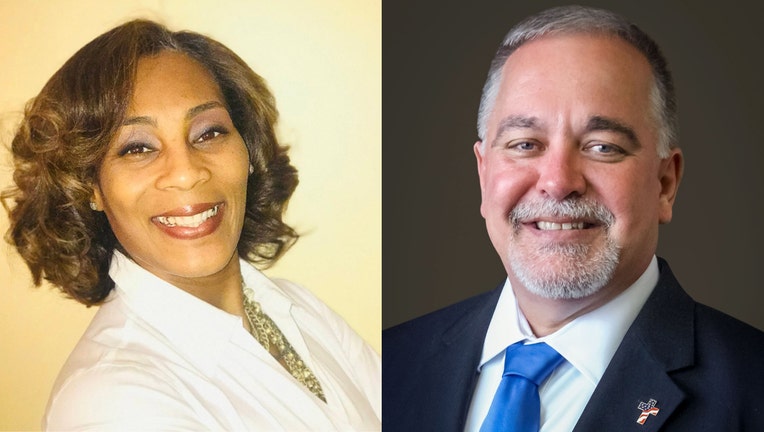
Georgia State School Superintendent Richard Woods and Democratic challenger Lydia Powell (Campaign photos)
ATLANTA - Georgia State School Superintendent Richard Woods and challenger Lydia Powell sparred over taxpayer-funded private school vouchers and classroom literacy during a debate hosted at the Georgia Public Broadcasting studios in Atlanta.
School voucher funding clash
What they're saying:
Powell challenged Woods directly on state education spending, contrasting classroom investments with funds allocated for private school vouchers. She questioned how the state could justify investing over $100 million in private school vouchers while dedicating $70 million to training literacy coaches during a statewide reading struggle.
Woods defended his record by noting that voucher expansion remains a legislative decision enacted by lawmakers rather than the state superintendent. He emphasized that his primary duty is to advocate for public classrooms and ensure public schools receive full funding.
During the candidate cross-examination round, Woods declined to ask Powell any questions. He used his allotted time to thank Powell for her career in public education before yielding the floor.
State reading proficiency debate
What we know:
The debate exposed sharp disagreements over the state of childhood literacy after moderators highlighted that two-thirds of Georgia third-graders do not read at grade level.
Woods pushed back on calling the situation a crisis, stating that annual Georgia Milestones assessments represent a single testing snapshot rather than a complete picture of student ability. He noted that the state has deployed literacy coaches to struggling schools using federal funds, yielding a 29% performance increase.
Powell responded that reading challenges cannot be dismissed, noting that basic word recognition alone does not prepare students to analyze text or pass third-grade exams. She pointed out that only one statewide literacy coach is tasked with traveling across all 159 school districts to train administrators.
Funding formula reform divide
The backstory:
Powell argued that Georgia must modernize its Quality Basic Education funding formula to support economically disadvantaged students. She proposed adding a direct poverty weight to the formula, stating that more than 70% of Georgia students face economic hardship.
Woods responded that state leaders already recognized the need for targeted aid by including a poverty weight in the state budget two years ago. He stressed that any broader funding changes must strike a delicate balance between property tax relief for homeowners and steady school revenue.
Classroom academic performance questions
The other side:
Panelists questioned both candidates on why roughly half of Georgia public school students fail to achieve proficiency on state math examinations.
Woods credited Georgia's removal of Common Core standards three years ago for keeping student performance moving forward. He announced plans to transition federal funds from reading into new math coaches to support struggling schools.
Powell countered that eighth-grade math scores declined this year, arguing that lower-performing schools lack funding to hire certified math educators. She warned that instructional coaches often lack proper training while overseeing up to 15 teachers at a time.
District oversight and curriculum
Local perspective:
Woods addressed state fiscal oversight after the governor suspended the entire Dublin City school board over financial mismanagement earlier this year. He explained that state audits uncovered a loophole in the law, adding that quick action by his department prevented the district from running out of money.
The candidates also offered contrasting visions for classroom diversity and elective coursework. Powell criticized delays surrounding Advanced Placement African American Studies, while Woods stated he created the course numbers that allow schools to offer African American, Native American, and women's studies.
Unanswered questions on policy
What we don't know:
State lawmakers have not determined whether they will eliminate the 21-year salary cap on veteran teacher pay during the upcoming legislative session.
Officials have also not detailed how proposed property tax relief measures will replace funding for major systems such as Atlanta Public Schools, which relies on property taxes for 80% of its budget.
Key debate data points
By the numbers:
Georgia's statewide high school graduation rate has climbed from 70% to 85.4% under Woods' tenure, while career and technical education pathway completers reach a graduation rate above 98%.
Meanwhile, third-grade reading benchmarks and middle school math scores remain a major hurdle, with about 50% of students scoring proficient in math statewide.
Georgia general election schedule
What's next:
Early voting in Georgia is underway and runs through Friday, Oct. 30.
Voters will cast their final ballots on Election Day on Tuesday, Nov. 3.
The Source: The information in this story was gathered from an Atlanta Press Club Loudermilk-Young debate broadcast by Georgia Public Broadcasting, moderated by FOX 5 Atlanta anchor Courtney Bryant, alongside questioning from reporters Martha Dalton of The Atlanta Journal-Constitution and Ty Tagami of Capital Beat News Service.