

1,000+ flights canceled as FAA reduces traffic in shutdown

A cancelled flight is displayed on a departures screen at Ronald Reagan Washington National Airport in Arlington, Virginia on November 7, 2025. (Photo by ANDREW CABALLERO-REYNOLDS/AFP via Getty Images)
More than 1,000 U.S. flights were canceled again on Saturday, marking the second day of the Federal Aviation Administration’s air traffic reductions prompted by the government shutdown.
So far, the slowdown at many of the nation’s busiest airports hasn’t caused widespread disruptions. But it has deepened the impact felt by the nation’s longest federal shutdown.
Local perspective:
"We all travel. We all have somewhere to be," said Emmy Holguin, 36, who was flying from Miami Saturday to see family in the Dominican Republic. "I'm hoping that the government can take care of this."
RELATED:
Analysts warn that the upheaval will intensify and spread far beyond air travel if cancellations keep growing and reach into Thanksgiving week.
Already there are concerns about the squeeze on tourism destinations and holiday shipping.
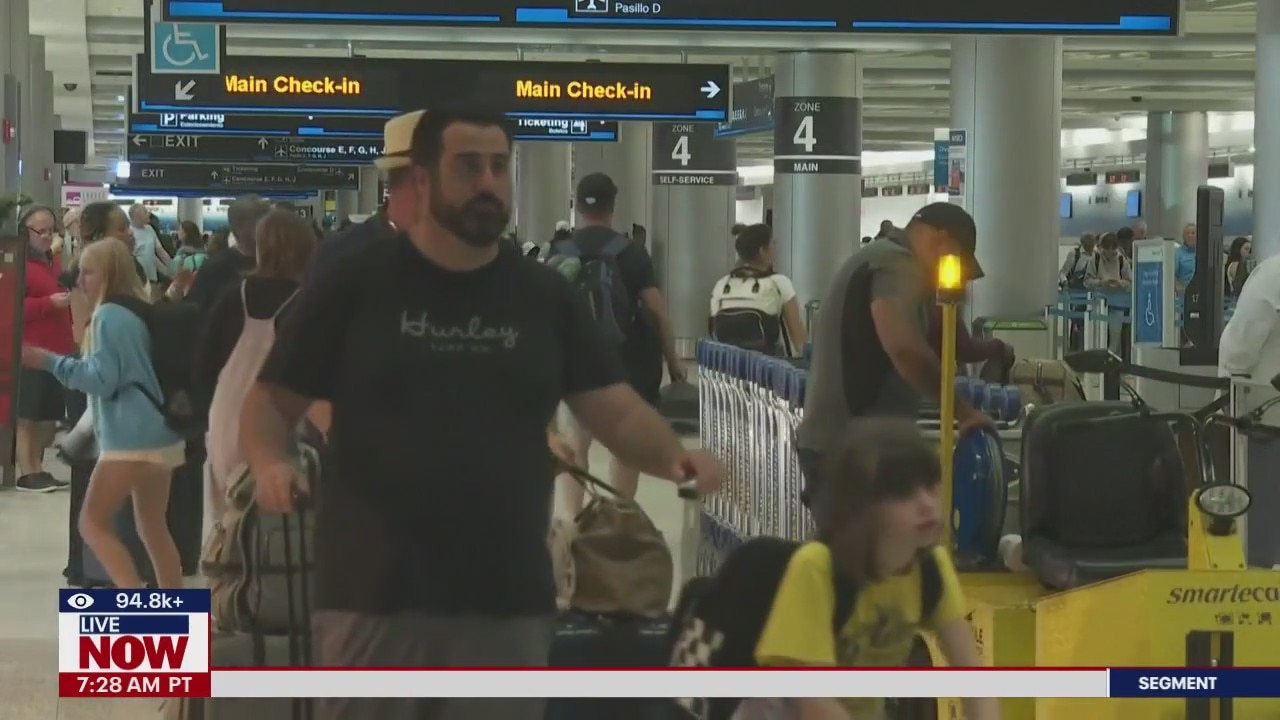
Duffy: 20% flight reductions possible
U.S. Transportation Secretary Sean Duffy warned on Friday that if the government shutdown continues, he may require airlines to reduce their flight schedules by as much as 20%. Airlines were already rushing to comply with new government orders to scale back operations. The Federal Aviation Administration directed airlines to cancel 4% of flights at 40 major airports on Friday, with those cuts expected to increase to 10% by November 14.
Here’s what to know about the flight reductions:
How many flights have been canceled?
By the numbers:
Flight disruptions ticked up a bit on Saturday — typically a slow travel day — as each of the first two days creeped above 1,000 cancellations, according to FlightAware, a website that tracks flights.
The airport serving Charlotte, North Carolina, saw 130 arriving and departing flights canceled by mid-afternoon Saturday.
Airports in Atlanta, Chicago, Denver, and Newark, New Jersey, also saw numerous disruptions throughout the day. Ongoing staffing shortages in radar centers and control towers added to the cancellations and delays on Saturday at several East Coast airports, including those around New York City.
RELATED:
Not all the cancellations were due to the FAA order, and those numbers represent just a small portion of the overall flights nationwide. But they are certain to rise in the coming days if the slowdown continues.
The FAA said the reductions impacting all commercial airlines are starting at 4% of flights at 40 targeted airports and will be bumped up again on Tuesday before hitting 10% of flights on Friday.
Transportation Secretary Sean Duffy warned this week that even more flight cuts might be needed if the government shutdown continues and more air traffic controllers are off the job.
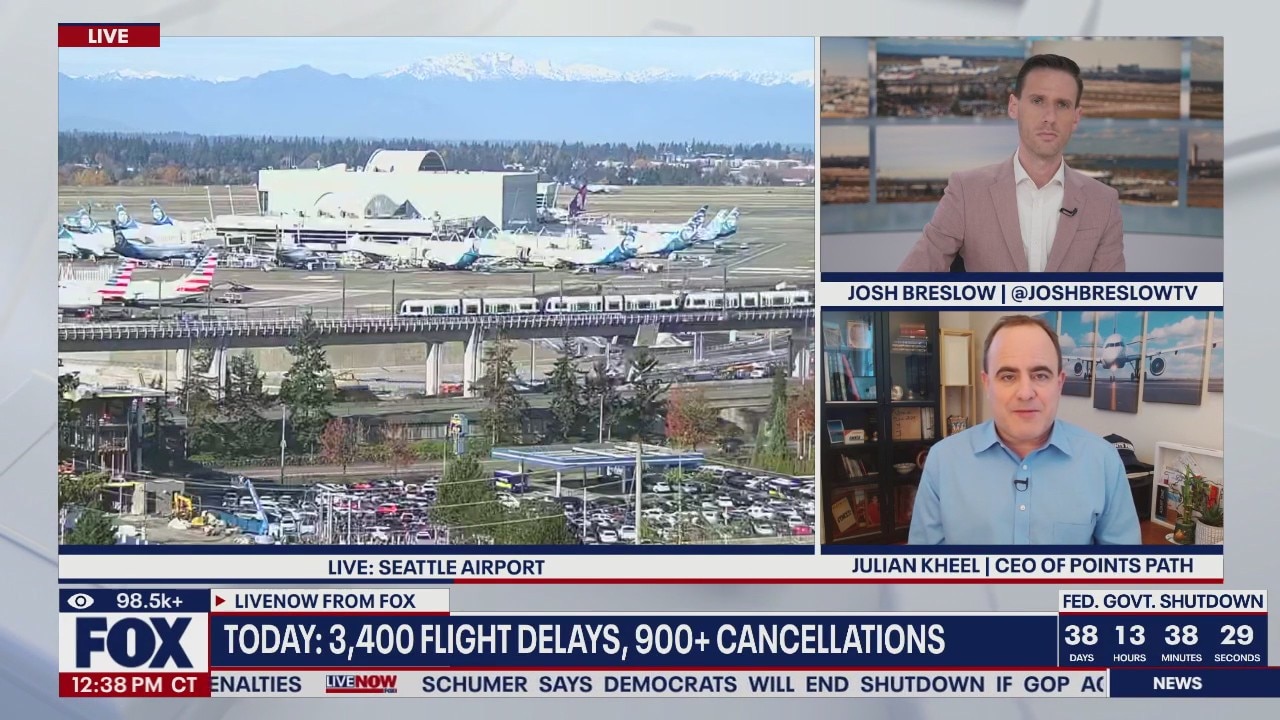
TODAY: 3,400 flight delays, 900 cancellations
There are more than 3,000 delays and 900 cancellations on flights nationwide Saturday, one day after the start of a phased-in reduction in flights at 40 major airports. By next Friday, Transportation Secretary Sean Duffy says 10% of flights will be reduced at those same airports. Julian Kheel, the CEO of Points Path joined LiveNOW's Josh Breslow to discuss what happens next.
Why are the flights being canceled?
Dig deeper:
Air traffic controllers have gone without paychecks for nearly a month as the shutdown continues, leading many to call in sick and add to already existing staffing shortages.
Most controllers are working mandatory overtime six days a week during the shutdown without pay, and some are taking second jobs to pay their bills, the National Air Traffic Controllers Association has said.
How are passengers being affected?
Why you should care:
Most were relieved to find that airlines largely stayed on schedule Friday, and those whose flights were called off were able to quickly rebook. So far, longer international flights haven't been interrupted.
There is still a lot of uncertainty about what flights will be canceled next.
RELATED:
And not everyone has the means to pay for a hotel or deal with a last-minute disruption, said Heather Xu, 46, who was in Miami on Saturday after a cruise and flying home to Puerto Rico.
"Travel is stressful enough. Then you put these disruptions in place and it really makes everything more challenging," she said.
Rental car companies reported a sharp increase in one-way reservations Friday, and some people are simply canceling flights altogether.
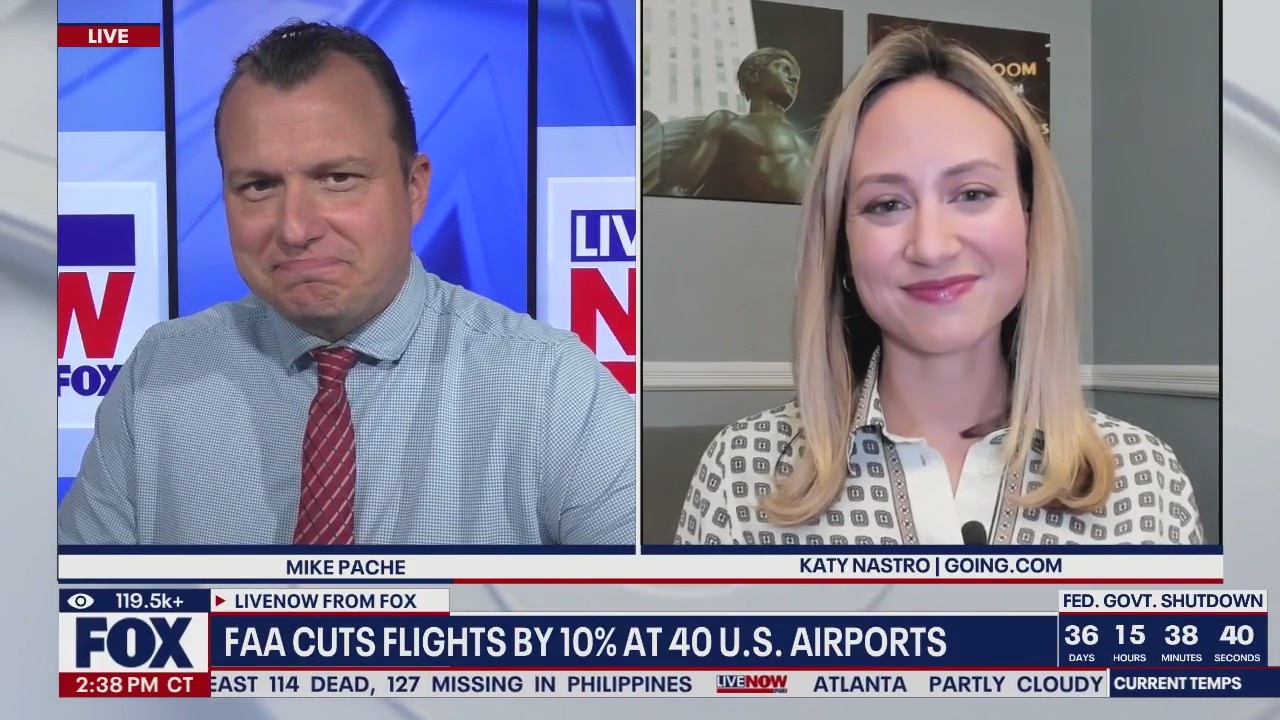
FAA cuts flights by 10% at 40 U.S. airports
LiveNOW's Mike Pache brings GOING.COM reporter Katy Nastro into the conversation to discuss the federal aviation administration forcing airlines to cut 10% of their flights at 40 of the busiest airports across the U.S. to reduce pressure on air traffic controllers during the ongoing government shutdown and ensure that travelers remain safe. Officials say the cuts will start to take effect on Friday.
Diana Alvear of Bridgewater, New Jersey, canceled her family’s trip next weekend to see her in-laws in California because of concerns about flying when controllers are working long hours and understaffed.
She also was nervous about being stranded — "a huge debacle" for work. United Airlines gave her credit for the airfare, but the family is still out nearly $700 for the deposit on an Airbnb.
"This has been costly to us, and it’s a huge disappointment for us and our family," she said. "It’s really weighing on our hearts that we had to do this."
What could be the impacts beyond air travel?
Big picture view:
First, there's the potential for higher prices in stores, as nearly half of all U.S. air freight is shipped in the bellies of passenger aircraft.
Major flight disruptions could bring higher shipping costs that get passed on to consumers, said Patrick Penfield, professor of supply chain practice at Syracuse University.
More losses will ripple through the economy if the slowdown continues — from tourism to manufacturing, said Greg Raiff, CEO of Elevate Aviation Group.
"This shutdown is going to impact everything from cargo aircraft to people getting to business meetings to tourists being able to travel," he said. "It’s going to hit the hotel taxes and city taxes. There’s a cascading effect that results from this thing.’’
The Source: The Associated Press contributed to this report. The information in this story comes from official statements by the Federal Aviation Administration and the Transportation Department, data from FlightAware tracking cancellations, and interviews with travelers and aviation experts. This story was reported from Los Angeles.