

Examining Georgia’s death row after Tennessee execution fails
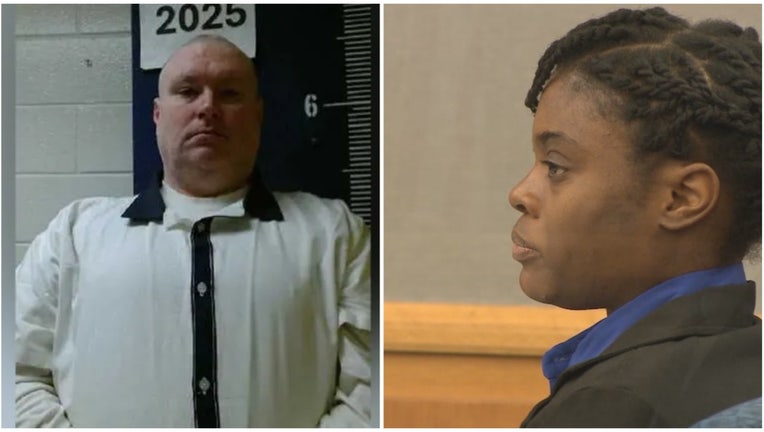
Stacey Ian Humphreys and Tiffany Moss (FOX 5 Atlanta file photos)
ATLANTA - Tennessee’s failed attempt to execute Christa Gail Pike has brought renewed attention to how states carry out death sentences, including Georgia, where the history of capital punishment stretches back nearly three centuries.
What we know:
Pike survived an attempted lethal injection Wednesday after receiving two doses of pentobarbital, according to her attorneys. Tennessee Gov. Bill Lee ordered an independent review and canceled the state’s remaining scheduled execution for 2026. Pike was sentenced to death for the 1995 killing of Colleen Slemmer, a classmate at a job training facility in Knoxville.
RELATED: Inside the chamber: The agonizing moments of Christa Pike’s stalled execution
Georgia has its own record of executions with serious complications. Its history also includes women sentenced to death, prisoners granted clemency and people cleared after spending years on death row.
How many people are on Georgia’s death row?
The Death Penalty Information Center lists Georgia’s death row population at 36. However, the Georgia Department of Corrections’ August 2026 statistical report counts 33 people under death sentences: 32 men and one woman.
In addition to Tiffany Moss, here's a list of the other inmates on death row:
- Brian Brookins: Convicted of murdering his wife, Sandra Suzanne Brookins, and his 15-year-old stepdaughter, Samantha Rae Giles.
- Leonard Drane: Convicted of murdering Renee Blackmon and committing aggravated battery against her.
- David Homer Edenfield: Convicted of murder and other crimes in the sexual assault and death of 6-year-old Christopher Barrios.
- John Esposito: Convicted of murdering Lola Davis after kidnapping and robbing her.
- David Scott Franks: Convicted of murdering Deborah Diane Wilson, armed robbery and other crimes involving attacks on her children.
- Jerry Heidler: Convicted of murdering Danny and Kim Daniels and two of their children after entering the family’s home.
- Stacey Ian Humphreys: Convicted of murdering real estate agents Cynthia Williams and Lori Brown during a robbery in Cobb County.
- Ashley Lyndol Jones: Convicted of murdering Keith Holland, who was beaten to death with a sledgehammer.
- Jerry William Jones: Pleaded guilty to four murders involving his infant daughter and three members of his former girlfriend’s family.
- Warren King: Convicted of murdering convenience store employee Karen Crosby during an armed robbery.
- James Allyson Lee: Convicted of murdering Sharon Chancey, his father’s girlfriend, and committing armed robbery.
- Pablo Maldonado: Convicted of murdering Timothy Clements, armed robbery, concealing a death and forgery.
- DeKelvin Martin: Convicted of murdering his girlfriend’s 12-year-old son and her grandparents, as well as raping his girlfriend.
- Michael Miller: Convicted of murdering and robbing Larry Sneed in Walton County.
- Jeremy Moody: Convicted in the rape and murder of 13-year-old Chrisondra Kimble and the murder of her 15-year-old cousin, Delarlonva Mattox Jr.
- Michael Wayne Nance: Convicted of murdering Gabor Balogh while fleeing a bank robbery in Gwinnett County.
- Dorian F. O’Kelley: Convicted of murdering Susan Pittman and her 13-year-old daughter, Kimberly Pittman.
- Lyndon Fitzgerald Pace: Convicted of raping and murdering four women in their Atlanta homes in 1988 and 1989.
- Virgil D. Presnell Jr.: Convicted of kidnapping and murdering an 8-year-old girl and kidnapping and sexually assaulting a 10-year-old girl.
- Mustafa A. Raheem: Convicted of murdering Brandon and Miriam Hollis, with the death sentence imposed for Miriam’s murder.
- Billy Daniel Raulerson: Convicted of murdering Jason Hampton, Charlye Dixon and Gail Taylor.
- Lawrence Rice: Convicted of murdering Connie Mincher and her 14-year-old son, Ethan, and committing burglary.
- Reinaldo Javier Rivera: Convicted of raping and murdering Marni Glista, along with sexual assaults and other crimes involving additional victims.
- James R. Rogers: Convicted of murdering Grace Perry and committing aggravated assault against Edith Polston.
- DeMarcus Ali Sears: Convicted of armed robbery and kidnapping with bodily injury involving Gloria Ann Wilbur, with the death sentence imposed for kidnapping.
- Darryl Scott Stinski: Convicted of murdering Susan Pittman and her 13-year-old daughter, Kimberly, in the same case involving O’Kelley.
- Nicholas Tate: Pleaded guilty to murdering Chrissie Williams and her 3-year-old daughter, Katelyn, and numerous related crimes.
- Leon Tollette: Pleaded guilty to murdering armored-truck employee John Hamilton during an armed robbery in Columbus.
- Frederick R. Whatley: Convicted of murdering Ed Allen and committing armed robbery and other related crimes.
- Joseph Williams: Pleaded guilty to murdering fellow prisoner Michael Deal and received a death sentence following a sentencing trial.
- Demetrius Gosheun Willis: Convicted of murdering Talisa Hankins, Jerry Williams Jr. and their 3-year-old son, Jerry Williams III.
- Rodney Young: Convicted of murdering Gary Jones, the son of a woman with whom Young had a long-term relationship.
The center reports that Georgia has carried out 77 executions since 1976, when the U.S. Supreme Court upheld revised death penalty laws. Before 1976, Georgia recorded 950 executions — the fourth-highest historical total among states.
The center separately lists 10 clemencies and six death row exonerations in Georgia. Clemency can reduce a death sentence without overturning the conviction; exoneration means a person has been cleared under the center’s criteria.
Georgia’s first known execution was a woman
Georgia’s first known execution occurred in 1735, when Alice Riley, an indentured servant, was hanged in Savannah for the murder of her employer, William Wise.
Her execution took place during Georgia’s colonial period, decades before statehood. Accounts of Riley’s life later became part of Savannah’s ghost-tour lore, but the documented case concerns a murder conviction and a hanging.
RELATED: The Ghost Story of Alice Riley
Another woman, Lena Baker, was executed in the electric chair in 1945 after a one-day trial before an all-white, all-male jury. Baker maintained that she killed her employer in self-defense. Georgia granted her a posthumous pardon in 2005.
Kelly Gissendaner was executed Sept. 30, 2015, becoming the first woman put to death in Georgia in 70 years. She was convicted of arranging her husband’s murder by Gregory Owen, who received a life sentence through a plea agreement.
RELATED: Kelly Gissendaner's last words before being executed
Tiffany Moss is the only woman currently on Georgia's death row
Tiffany Moss was sentenced to death in April 2019 for the starvation death of her 10-year-old stepdaughter, Emani Moss, in Gwinnett County. The Department of Corrections’ 2026 roster identifies her as the state’s only woman under a death sentence.
RELATED: Tiffany Moss sentenced to death for stepdaughter's starvation
Prosecutors presented evidence that Moss fed her biological children while withholding food from Emani. The girl weighed about 30 pounds when she died in 2013. Her body was burned and placed in a trash container in an attempt to conceal her death.
Moss represented herself at trial, called no witnesses and presented no closing argument. She was convicted of murder, child cruelty and concealing a death.
Emani’s father, Eman Moss, pleaded guilty in 2015 and is serving life without parole. Tiffany Moss’ case remains in the legal review process.
Georgia executions with documented complications
Several Georgia executions appear on the Death Penalty Information Center’s list of botched executions. The documented problems range from repeated electrical shocks to prolonged efforts to establish IV access.
Alpha Otis Stephens, Dec. 12, 1984: Stephens continued breathing after the first electric-chair cycle. Officials administered another cycle, and he was pronounced dead 19 minutes after the initial electrical surge. ABC News later published a transcript of the state’s recording of the execution.
Brian Keith Terrell, Dec. 9, 2015: A reporter who witnessed preparations said nurses struggled to place the IV lines, taking about an hour. Terrell was ultimately executed by lethal injection.
Brandon Jones, Feb. 3, 2016: Execution personnel repeatedly tried to establish IV access in Jones’ arms before a physician inserted a line near his groin, according to the center’s account.
Roy Blankenship’s June 23, 2011, execution also drew scrutiny after some witnesses described grimacing and jerking movements. A federal appeals court subsequently found that the evidence did not establish serious harm and that Blankenship was unconscious before the second execution drug was administered.
Those cases differ from an execution postponed before drugs were administered. In March 2015, Georgia stopped preparations for Gissendaner’s execution after officials discovered that the pentobarbital solution contained solid particles. The state temporarily suspended executions to investigate the drug problem.
Lethal injection replaced the electric chair
Lethal injection is Georgia’s only authorized execution method under state law.
The Georgia Supreme Court ruled Oct. 5, 2001, that electrocution violated the state constitution’s prohibition against cruel and unusual punishment. The ruling ended Georgia’s use of the electric chair and required future executions to proceed by lethal injection.
Before that change, Georgia had used the electric chair since 1924. Hanging had been the predominant method during earlier periods.
Georgia cases helped shape national death penalty law
Two Georgia cases played central roles in the modern death penalty system.
In Furman v. Georgia in 1972, the U.S. Supreme Court rejected the way existing death penalty laws were administered, effectively stopping executions nationwide. Georgia enacted a revised law the following year.
In Gregg v. Georgia in 1976, the court upheld Georgia’s revised system, allowing capital punishment to resume under procedures intended to limit arbitrary sentencing.
Other Georgia cases have focused attention on wrongful convictions and disputed executions. Gary Nelson was freed in 1991 after 11 years on death row, following findings that prosecutors withheld evidence. Troy Davis was executed in 2011 despite disputed eyewitness testimony and international appeals for clemency.
Georgia’s clemency decisions have also changed the outcome of capital cases. Billy Neal Moore’s death sentence was reduced in 1990, and Samuel David Crowe received a commutation in 2008, shortly before his scheduled execution. In Georgia, the State Board of Pardons and Paroles holds the authority to grant clemency in death penalty cases.
Georgia execution currently on hold
Stacey Ian Humphreys’ execution is currently on hold after the Georgia Supreme Court upheld a Cobb County judge’s decision to pause it while legal questions about the state’s 2025 Survivor Justice Act are considered.
Humphreys, sentenced to death in 2007 for the 2003 murders of real estate agents Lori Brown and Cyndi Williams, is seeking resentencing based on evidence of severe childhood abuse. His attorneys argue that the abuse qualifies him for relief under the law.
Prosecutors contend the law does not apply to his death sentence because the victims were not his abusers. They also argue that the original sentencing jury and subsequent appeals already considered the abuse evidence. The legal dispute centers on whether the act permits resentencing in his circumstances and how it interacts with Georgia’s death penalty laws. The State Board of Pardons and Paroles has denied him clemency.
RELATED: Georgia high court upholds stay of execution for Stacey Humphreys