

Cyclosporiasis map: 29 states now investigating diarrheal illness
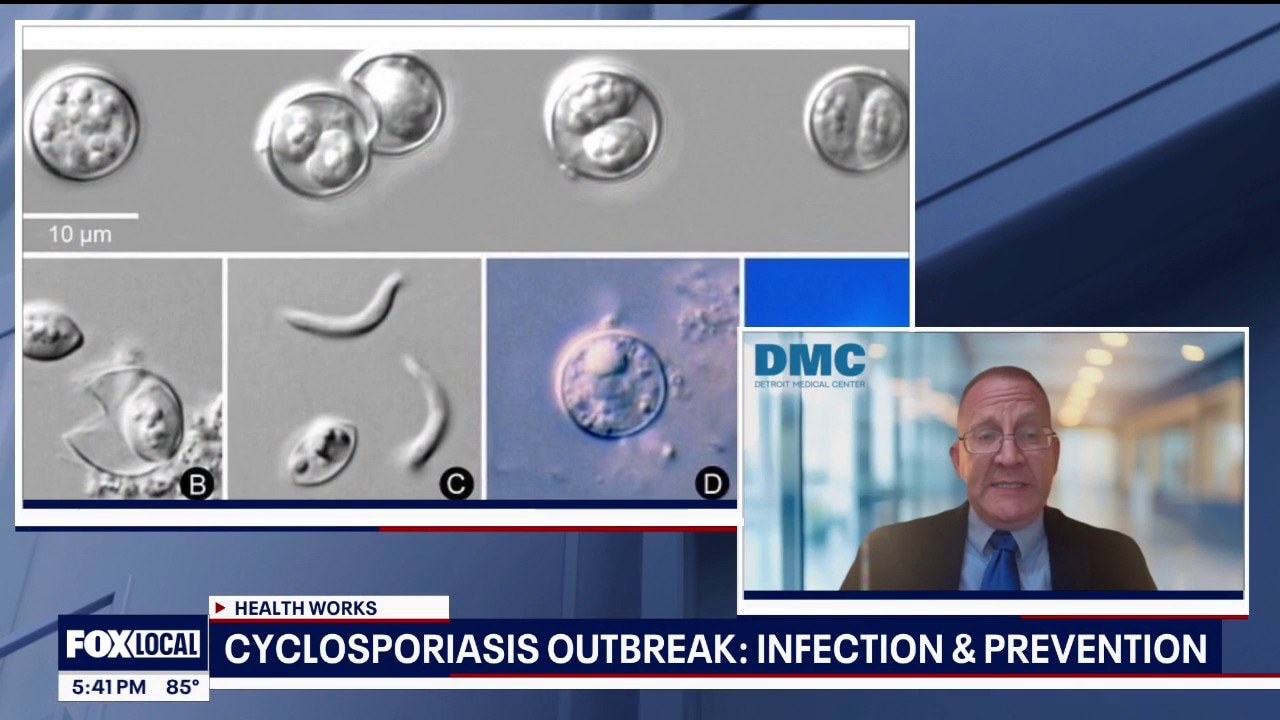
Cyclosporiasis in Michigan -- doctor explains what we need to know
Cases of the parasitic outbreak continue to climb, and Dr. Joel Kammeyer of the Detroit Medical Center explains how we can best protect ourselves.
At least 29 states are now investigating potential cases of cyclosporiasis, the parasite known to cause "explosive diarrhea," as it continues to spread across the U.S.
Experts say cases appear to be surging in Michigan, where nearly 1,000 people have been sickened and 40 people have been hospitalized, but it’s not yet considered a national health emergency. Here’s the latest:
Cyclosporiasis cases by state
Local perspective:
Researchers say the illness is hard to track for several reasons, but cases are currently being investigated in 29 states, according to The Associated Press. Here’s a look at cases in each state, based on the data available as of July 9:
What is cyclosporiasis?
The backstory:
Cyclosporiasis is a diarrheal illness caused by the parasite Cyclospora cayetanensis. Experts say it’s usually found in developing countries and is spread by food or water contaminated with feces.
In the U.S., the parasite is typically spread through fresh produce in hot weather. It doesn’t spread from person-to-person.
RELATED: CDC investigates parasite outbreak linked to 'explosive' diarrhea across 17 states
Dig deeper:
Public health officials haven’t linked the most recent outbreak to a specific type of produce grower or supplies, or a specific type of produce as a potential source of the outbreak.
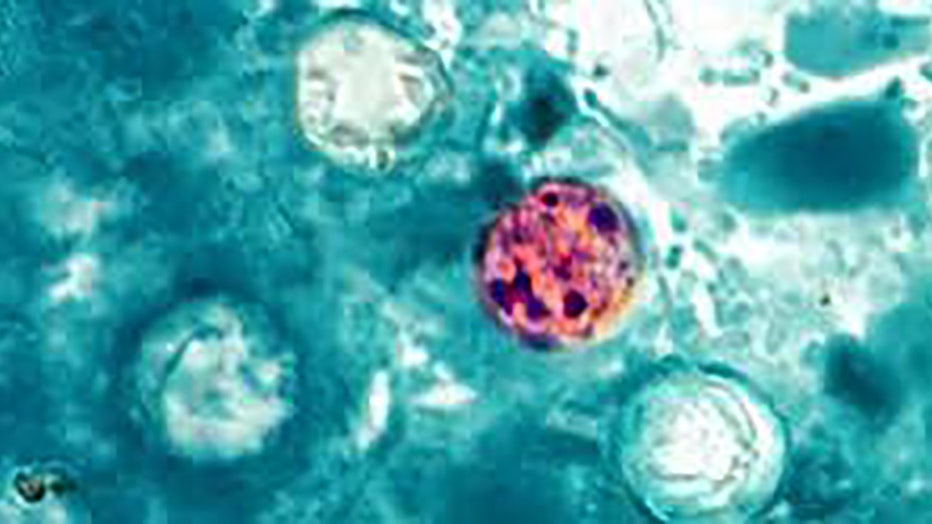
Cyclosporiasis parasite (CDC)
The Michigan Department of Health and Human Services released a list of produce that has been tied to previous outbreaks, including:
- Bagged salad mixes and kits (pre-cut lettuce blends with romaine, iceberg, red cabbage, carrots)
- Fresh cilantro (coriander leaves)
- Fresh basil
- Raspberries
- Snow peas
- Green onions (scallions)
Why is cyclosporiasis hard to track?
Big picture view:
Cyclosporiasis surges can be challenging to investigate, and food poisoning sources can be tricky to confirm. But "there is clearly a linked outbreak happening right now," Dr. Natasha Bagdasarian, Michigan’s chief medical executive, told The Associated Press.
There are several reasons it’s challenging to know the exact toll, said Melanie Firestone, a University of Minnesota foodborne illness researcher. Some tests used to check for types of food poisoning are not geared to detect cyclosporiasis, "so there is a lot of underreporting when it comes to this," she said.
Other Challenges:
Technicians aren’t able to grow the parasite in labs, making it hard to draw evidence from contaminated produce. And it can be hard to figure out what food sick people had in common, because sometimes it’s a single ingredient that might be common in multiple recipes — like basil or cilantro.
It’s also possible that food distributors may channel contaminated foods to both grocery stores and restaurants, making it hard to discern where tainted food came from. Investigations can take months and sometimes never find a clear source.
Preventing cyclosporiasis
What you can do:
Health officials say rinsing your produce with running water and rubbing the surface of the fruit or vegetable can help to prevent the illness. They also say to consider frozen over fresh, although that doesn’t completely eliminate the risk. It’s safest if it’s cooked.
Cyclosporiasis symptoms
Timeline:
Symptoms can appear two to 14 days after exposure and may include:
- Frequent watery diarrhea
- Loss of appetite and weight
- Abdominal cramps and bloating
- Nausea (vomiting is less common)
- Low-grade fever
For people who do not get treatment, health experts say the illness may last for a few days to over a month. Symptoms could go away and then return one or more times.
Cyclosporiasis treatment
If you experience sudden, ongoing diarrhea, reach out to your health care provider and your local health department.
Symptoms can be improved with an antibiotic.
The Source: This article includes information from the U.S. Centers for Disease Control and Prevention, the Michigan Department of Health and Human Services, the Ohio Department of Health, KGW, KOAT, KVOA, The Hill, WKYT, FOX 59, CBS News, The Milwaukee Journal-Sentinel, and previous FOX Local reporting. FOX’s Megan Ziegler contributed.