

Atlanta gas prices rise again: What to expect this week | Sept. 28, 2026
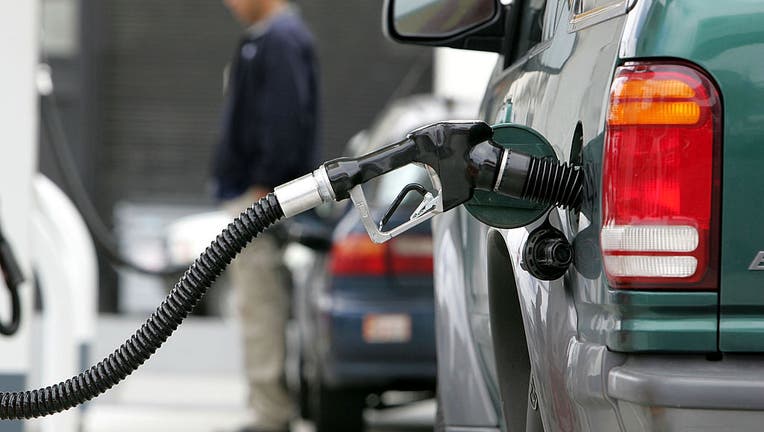
A gas pump pumps fuel into a car at a Shell service station. (Photo by Justin Sullivan/Getty Images)
ATLANTA - A national dip in gas prices has yet to reach Atlanta. Regular gas averaged $4.21 a gallon Monday, up 19.6 cents from last week, according to GasBuddy’s survey of more than 2,100 metro-area stations.
What we know:
Atlanta’s average is 45 cents higher than a month ago and $1.36 higher than a year ago. For someone buying 15 gallons, that year-over-year increase adds about $20 to a fill-up.
Across Georgia, gas averaged $4.17 a gallon, up 12.5 cents for the week. The national average slipped 1.6 cents to $4.42, GasBuddy reported. Prices still varied sharply from station to station: GasBuddy found a $1.24-per-gallon gap between the cheapest and most expensive Atlanta-area stations Sunday.
AAA’s separate survey showed the same broad local trend, putting Monday’s averages at about $4.24 in Atlanta and $4.19 statewide.
The pain at the pump varies widely across the country. As of Monday, regular gas averaged more than $5 a gallon in Alaska, California, Hawaii, Nevada, Oregon and Washington, according to AAA. Indiana, Texas and Mississippi had the lowest state averages.
The added cost is substantial. Brown University researchers estimate Americans had spent more than $100 billion extra on gasoline and diesel from the start of the Iran war through Sept. 7, compared with what they estimate consumers would have paid without the conflict. That figure includes diesel, so it should not be described as a gasoline-only cost.
Why fuel remains expensive
The war in Iran has disrupted oil and fuel shipments from the Middle East, while reduced refinery activity in Russia and elsewhere has tightened supplies of diesel and other refined fuels. U.S. refineries were already operating at 97% of capacity in mid-September, according to the U.S. Energy Information Administration, leaving limited room to quickly make up for lost production abroad.
Those pressures do not affect every part of the country at the same time. GasBuddy petroleum analyst Patrick De Haan said prices fell in slightly more than half of states last week. Refinery operations helped bring prices down in the Great Lakes region, while problems at West Coast refineries pushed prices higher there.
For Atlanta drivers, the result is a frustrating split: The national average eased, but local prices kept climbing.
How diesel reaches your grocery bill
Dig deeper:
Most households do not buy diesel for their cars, but they pay for it indirectly. Trucks use it to bring food and other products to stores. Farm equipment uses it to produce crops, and freight trains and construction equipment also depend on it.
When diesel rises, businesses must decide how much of the added expense they can absorb and how much to pass along. The effect can show up sooner in fresh products that are shipped frequently and later in shelf-stable goods already sitting in warehouses. It also depends on how large a share of a product’s price comes from transportation.
RELATED: Georgia diesel surge sparks potential trucker strike
Diesel averaged about $6.45 a gallon nationally Monday, according to both GasBuddy and AAA. Although that is down slightly from last week, it remains far above last year’s level.
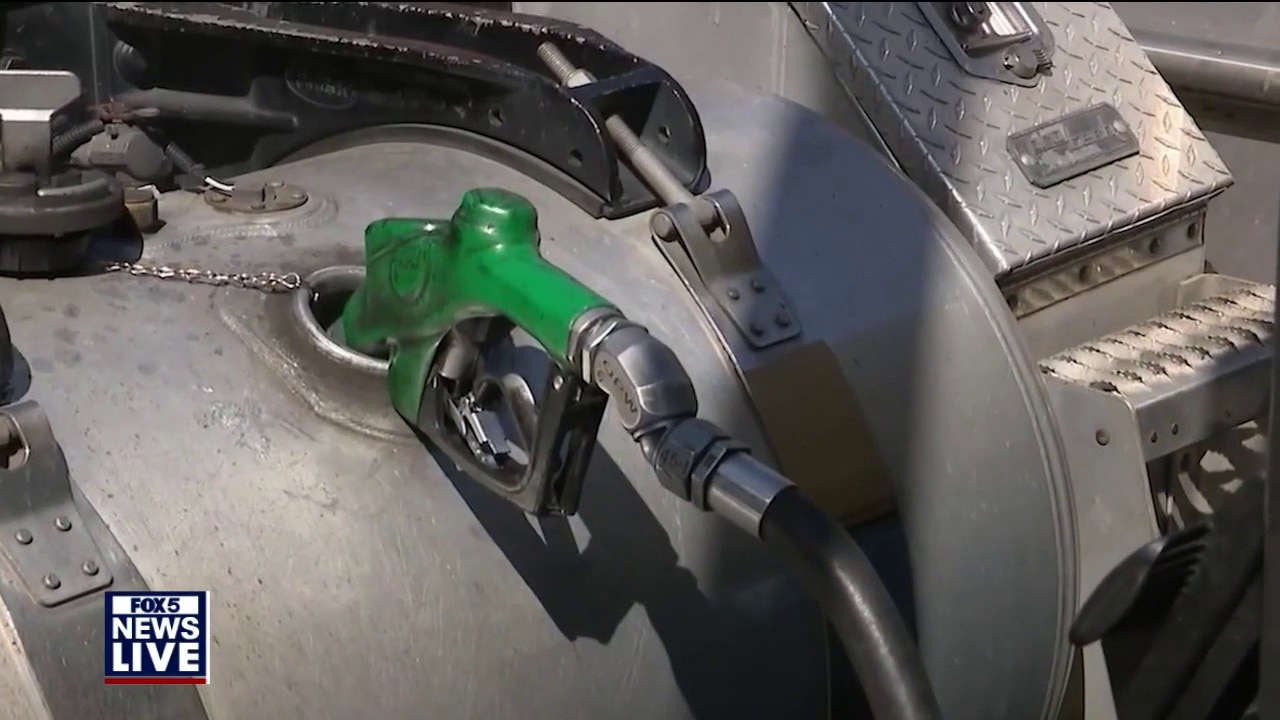
When will diesel gas prices come back down?
Fuel prices continue to stay high and the impact is being felt well boyond the pump. Patrick De Haan with GusBuddy joins us to break down what's happening and when we can expect relief.
There are reasons to expect the pressure to last beyond this week. The EIA projects U.S. diesel inventories will remain unusually low through the end of 2026 and much of 2027. Fall brings refinery maintenance and increased fuel demand for harvesting crops; winter adds demand for heating oil, a closely related fuel. The agency’s forecast assumes oil and fuel shipments from the Middle East improve. Continued disruptions could keep prices higher than projected.
Holiday flights could cost more, too
Airlines are facing their own fuel squeeze. The global average jet fuel price rose 7.4% last week to $194.90 a barrel, according to the International Air Transport Association.
Travelers are already seeing higher fares. The Bureau of Labor Statistics reported that airline fares in August were 23.4% higher than a year earlier. Looking ahead to the holidays, travel-booking company Hopper found advertised round-trip domestic fares averaging $402 for Thanksgiving, up 31% from last year, and $452 for Christmas, up 23%. Those are fares found in recent searches, so individual flight prices will vary.
A drop in oil prices would not necessarily bring an immediate drop in airfares. Airlines set schedules and begin selling seats months ahead of travel. If fuel costs rise after some tickets have sold, carriers cannot change the price of those tickets and may adjust later fares or schedules instead. Travelers could therefore continue to feel the effects of a fuel spike after the price of fuel begins to ease.
What to watch next
What's next:
De Haan said many Americans could see modest gasoline declines if oil holds below $100 a barrel. Diesel prices could also ease slightly. But refinery problems and developments in the Middle East could change that outlook quickly, and neither forecast promises an immediate break for Atlanta drivers.
For this Monday’s update, the clearest takeaway is that filling the tank costs more locally than it did last week. The less visible costs of diesel — and the price of flying home for the holidays — may take longer to come down.