

Apalachee HS shooting: Students testify on day 2 of Colin Gray trial
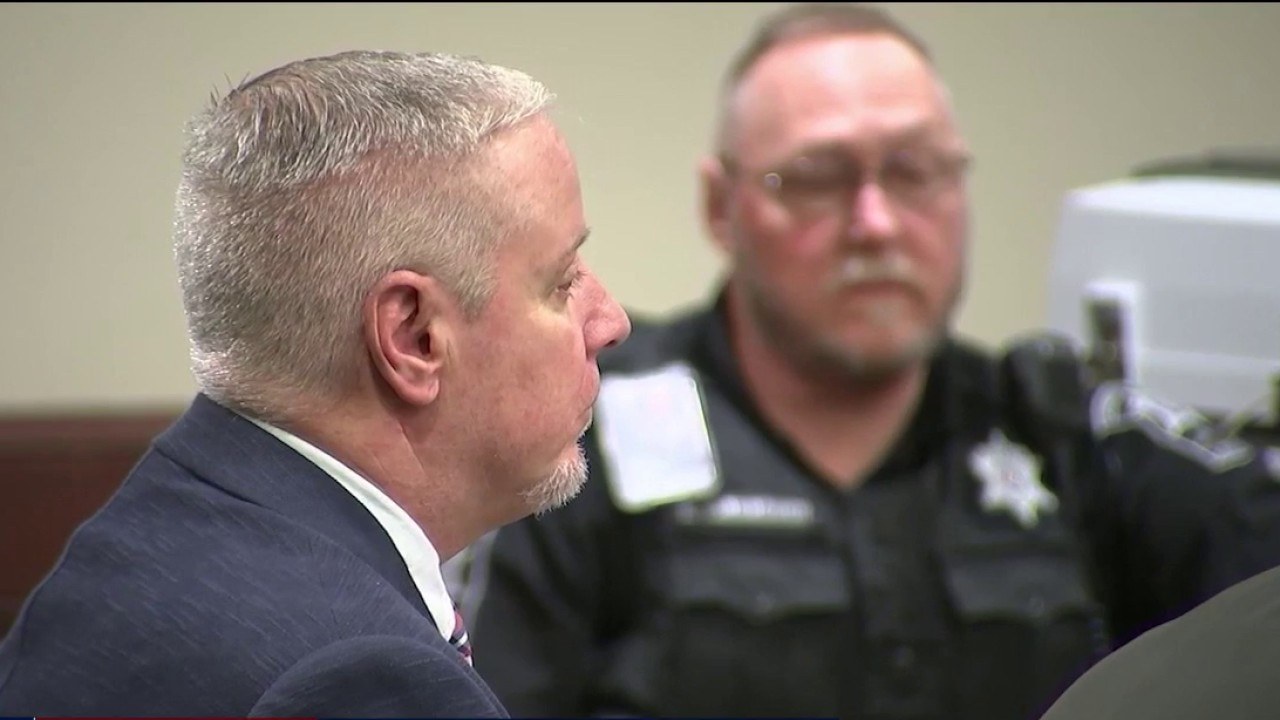
Colin Gray trial: Students recount school shooting
The trial of Colin Gray enters a somber second day as twenty-five witnesses, including 20 juvenile students, deliver harrowing testimony at the Barrow County Courthouse. Students recounted the terrifying moments during the 2024 Apalachee High School shooting, describing how they took cover behind desks while their teacher was giving an algebra lesson.
BARROW COUNTY, Ga. - EDITOR'S NOTE: FOX 5 Atlanta and other media will not show the faces of juvenile witnesses or some graphic evidence, per judge's orders.
The second day of testimony is now underway in the trial of Colin Gray, father of accused Apalachee High School shooter Colt Gray. The prosecution is trying to prove that Colin Gray knowingly purchased his son the gun used in the shooting despite knowing his son was a serious threat to others. The defense claims that Colt Gray hid his intentions from his father and led a "double life." The following is what has happened in court so far today.
11 A.M. UPDATE | Several of the emotional statements heard in court so far today have come from student victims who survived the shooting at Apalachee High School.
A student, who was 15 at the time of the shooting, described how she saw the accused shooter Colt Gray pointing a gun into her classroom and firing. She also told jurors that she didn't know at first that she was shot and her body just "told me to hold my arm." The student also described seeing the students who had been killed lying on the floor.
A sixteen-year-old testified about seeing the shooter in her classroom, saying, "There was a kid standing there with a gun." She also recalled, "I turned to my friend, and I asked him to hold my hand because I was scared."
Another student, 16, described realizing she had been shot, telling jurors, "I got shot, I got shot, I'm a kid and I got shot." She later said of the experience, "Time was seemingly moving quickly, but to me, it was very slow," and testified that she developed PTSD afterward.
RELATED: Apalachee school student, parents share their story during Harris campaign town hall
Colin Gray trial: Students testify about school shooting
During day two of the Colin Gray murder trial, the courtroom was filled with visceral, tearful accounts from Apalachee High School students who survived the September 4, 2024, shooting. These young witnesses sat just feet away from the defendant, recounting the "big loud banging noise" of gunfire and the sight of blood covering their classrooms.
Georgia Bureau of Investigation crime scene specialist Taylor Lawrence also testified, describing one of the student's demeanor during interviews after the shooting. Lawrence told jurors that on the day of the shooting, the student "was very mad. She was very ready to go, kind of upbeat. She had a good attitude about healing, but she was mainly mad." During a later interview, Lawrence said she was "much more soft spoken."
12 P.M. UPDATE | A Georgia Bureau of Investigation crime scene specialist and multiple medical witnesses testified about treating and documenting injuries suffered by students after the shooting at Appalachia High School.
Taylor Lawrence, a crime scene specialist with the GBI assigned to Region 8 out of Cleveland, told jurors she responded to Northeast Georgia Medical Center in Gainesville after learning a victim was in surgery. Lawrence said nurses provided her the victim’s clothing, which she said was already in a plastic bag.
"When I found the clothing, it was in a plastic bag that the nurses had put all her clothing in," Lawrence testified. "And at that time, I went through the bag to see what clothing was in there and what items were in there."
Lawrence said she photographed items from the bag and that the clothing "was" later placed into evidence. She testified she later spoke with the victim and described the girl's demeanor in a first interview on Sept. 4.
"She was very mad. She was very ready to go, kind of upbeat. She had a good attitude about healing, but she was mainly mad," Lawrence testified, adding the teen "couldn't recall everything that happened, mainly because her back was to the door."
Lawrence said she interviewed the girl again the following Friday, describing a shift in mood.
"During the second interview, she was much more soft spoken," Lawrence testified. "She seemed more traumatized, like it had set in what had actually happened to her."
A registered nurse at Northeast Georgia Medical Center in Gainesville, Sydney Garner, testified she participated in the girl's care after the teen arrived at the emergency department.
Garner said she has worked at the hospital for 10 years and previously served as a paramedic for Gwinnett County Fire for a decade. She told jurors she was working an 11 a.m. to 11 p.m. shift and served as team lead over the trauma area.
Garner testified the girl arrived by ambulance and was "registered in the emergency department at 1201." Garner described injuries that included what she called a "graze wound across the top of her left breast," a "penetrating wound" to the upper left arm and a "large wound" to the left wrist. She said the wounds were treated as an apparent gunshot injury.
"I remember her when she came in. She was calm, especially for a 15-year-old," Garner testified, adding that the girl "asked for her mother multiple times."
Garner testified the girl received I.V. antibiotics and underwent surgery, including a "washout" to clean debris and reduce infection risk. Garner also testified the girl was screened for PTSD and that the result was positive.
"Result was positive," Garner testified, when asked about the screening.
Two students also testified about what they experienced inside a classroom that day.
One student, who testified he was 16 and attended Appalachia High School at the time, told jurors he noticed something felt off that morning and later saw "chaos" when shots were fired.
"I remember just chaos happening. People throwing chairs, screaming, people on the floor," he testified.
He said he realized he was injured when he looked down and saw blood. "I looked down and I saw a hole in my shorts and noticed I was bleeding," he testified. The teen said he felt scared, "thinking he was going to come back into the room," and later tried returning to school but struggled.
"Every time I go back to the school, I would feel like something bad was going to happen again," he testified.
Another student, who testified he was 16 and a sophomore at the time of his testimony, described hearing a door slam and turning to see what he said appeared to be a shooter entering the room.
"The door had slammed, like a table that was in there," he testified. "And that's how we all had, like, turned around."
He testified he saw a gun and said he ducked and later helped barricade the classroom door with furniture.
He said he later realized he had been injured. "On my thigh," he testified, describing the location. Asked about pain, he said, "It was like a sting."
He also testified about emotional changes after the shooting.
"I had gotten more aggressive," he testified. "I would like, ignore things and I wouldn't, like, hug my mom."
A separate emergency department nurse at Northeast Georgia Medical Center in Barrow County, Howard Carter, testified he treated both students on the day of the shooting. Carter said staff prepared two large rooms in anticipation of trauma patients. He told jurors one student had abrasions and what appeared to be metal fragments at the surface of the skin.
Carter testified one student received 600 milligrams of ibuprofen and a tetanus shot. He said the fragments were not removed because attempting to extract them could cause more tissue damage. Carter said both patients were also connected with behavioral health resources.
A GBI special agent, Jerry Mann, testified he responded first to Apalachee High School and was then sent to the hospital to interview victims, collect evidence and check their status. Mann testified he spoke with one of the students and said the teen appeared "kind of distant," adding, "It seemed like he was in shock."
"I could see tears. I mean, he seemed like he was visibly upset at the time," Mann testified.
Mann also testified he photographed injuries to both students as part of his role. Asked about one student, Mann said, "He was very cooperative," when describing the teen’s demeanor as he met with him.
Court broke for lunch at around 11:45 a.m. with an expected return time of 12:45 p.m.
3:30 P.M. UPDATE | One freshman, said the gunman drew her attention when she heard "the banging of him opening the door" and recalled seeing "Black clothes." She testified that when the shooting started, "My vision went out," and later described the classroom as filled with "yelling and screaming and blood," with students calling family members. She said she called her mother and told her, "I told her that I was gonna die." She also testified that students feared the shooter could return and tried to barricade the door: "I was trying to move the smart board in front of the door."
Another student testified he believed the gunman "banged on the door and then he kicked down and started shooting," prompting him and others to hide. Prosecutors introduced a screenshot of a group text message the student said he sent to his family during the shooting: "there’s a school shooting if I don’t make it I love you all." Asked what he meant, he said, "I wanted to know that if I did die, they would know that I loved them."
Another student testified she had briefly gone to the bathroom earlier in the period and heard police in the restroom "looking for somebody." Back in class, she said she heard "a loud bang" and saw the gunman at the door: "I just heard a loud bang and then I just see him with the gun and he just started shooting." She estimated the gunfire in the room lasted "About like 30 to 45 seconds." The student then called her mother and tried to check on classmates. When asked what makes her nervous at school now, she answered, "Everything."
One student testified the shots were so loud "My ears went blank for a little bit," and he later changed schools because, "I was scared." A female student said she heard a knock, looked up, and "then the door opened and just like shots got fired," adding that she now startles easily in public: "When I’m in public if I hear a loud noise sometimes I get scared."
Some of the most detailed testimony came from a female student, who said she saw the gunman standing in the doorway.
She testified she initially put her head down and covered her ears because "it was so loud," then crawled to help a friend she believed was having a panic attack before realizing "she was shot." She said she heard a classmate say, "I’m a kid and I’m shot," and later described ongoing mental health struggles since the shooting, including medication and fear even during routine activities: "I have had to be put on anxiety medication because even to go on a walk around my neighborhood, anxiety would fill my head and I’d feel like somebody would drive past me and shoot me."
The testimony also highlighted efforts by students and staff to protect one another and provide aid while waiting for law enforcement.
Another student said he saw "a figure holding up a weapon," heard someone yell, "he has a gun," and dropped to the floor. He testified that after the shooter left, classmates and a teacher moved "chairs and desks to cover" the door, and he tried to help others, including giving "my hoodie to Miss Ryan to help some of the kids that were bleeding." Several witnesses said police arrived within about five minutes and "took all the injured people out" before evacuating the rest of the class with hands up.
Later in the proceedings, teacher Valerie Lancaster began testifying about what she heard from her nearby classroom that morning, describing the initial sounds as "lockers banging or like dropping of Stanley cups" and explaining the school’s "closed door policy" where doors are "closed and locked," though her testimony in the provided transcript cuts off mid-description.
Court adjourned shortly after 3 p.m. for the day. The trail is scheduled to resume at 8:30 a.m. Wednesday.
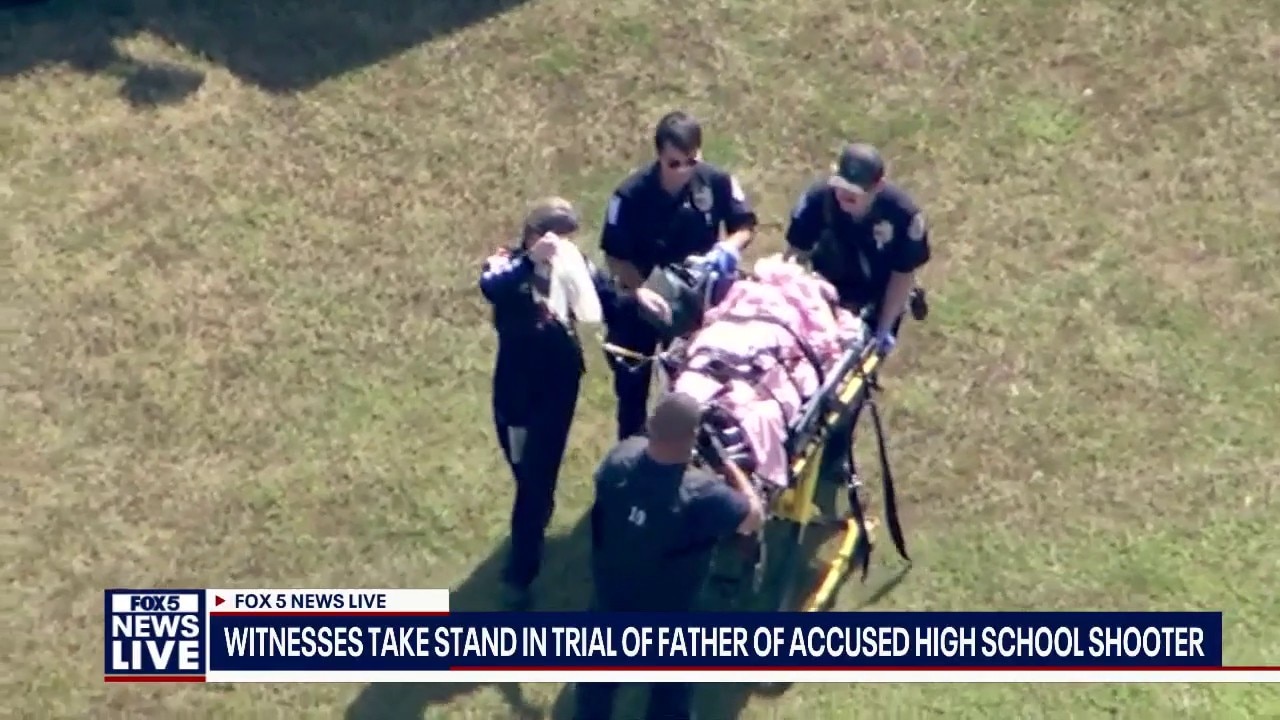
Survivors testified in emotional day 2 of Colin Gray trial
It was an emotional second day of testimony in the trial of Colin Gray, the father of the teenager accused in the 2024 mass shooting at Apalachee High School. Students who survived the shooting recounted their experience.
DAY 1 Recap
The backstory:
It was an emotional first day of testimony in the trial of Colin Gray, the father of the teenager accused in the 2024 mass shooting at Apalachee High School.
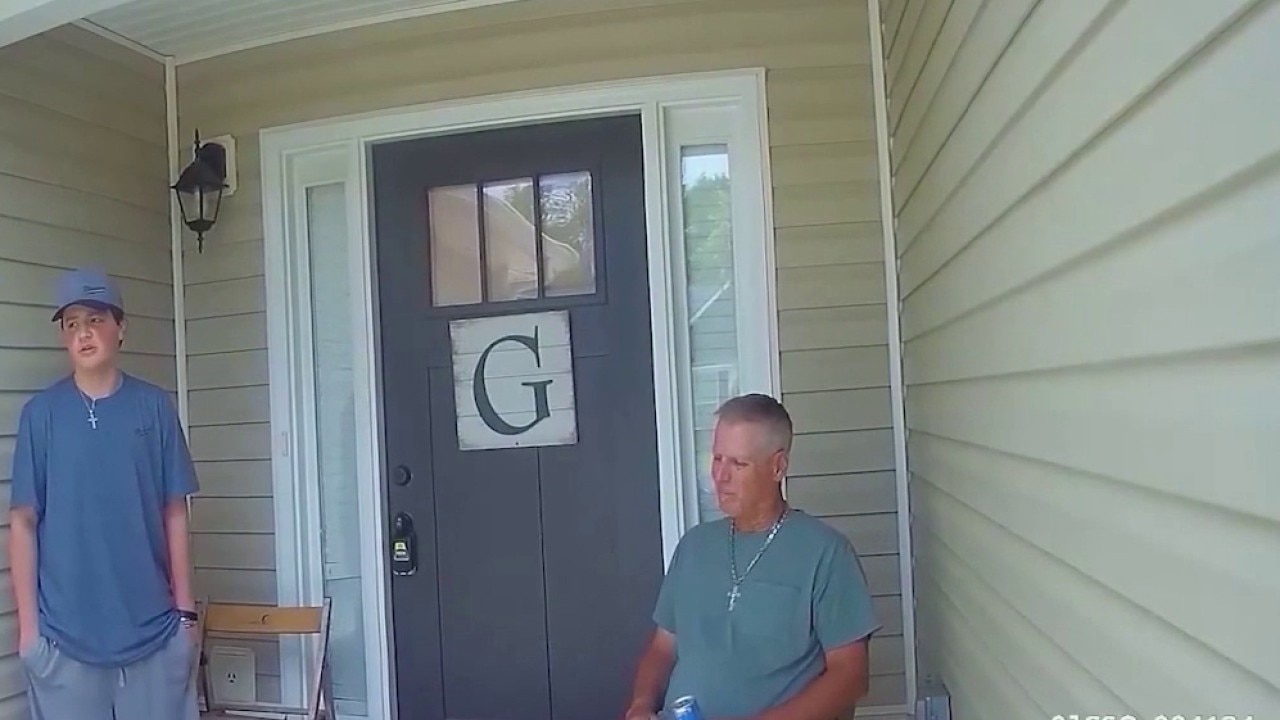
Second day of testimony ahead in Colin Gray trial
Tuesday will mark the second day of testimony in the trial for Colin Gray, father of accused Apalachee High School shooter Colt Gray. The prosecution is trying to prove Colin knew his son was a serious risk to the safety of others at school and didn't do anything to stop it.
Gray is charged with nearly 30 felony counts, including second-degree murder and involuntary manslaughter. Prosecutors allege he gave his son, Colt Gray, access to a SIG Sauer M400 rifle, knowing there were warning signs, and failed to prevent the Sept. 4, 2024, attack.
Testimony on Monday included accounts from teachers, administrators and Judd Smith, who described what they witnessed inside the school. The proceedings laid out two sharply different portrayals of the father-son relationship.
Prosecutors argued Colin Gray purchased the rifle as a Christmas gift in December 2023, months after law enforcement warned him about alleged online threats tied to his son. They contend he continued allowing access to firearms despite concerns about the teen’s behavior.
The defense countered that Colt Gray was living a "double life," sending affectionate text messages to his father while secretly drafting violent plans in private phone notes and online accounts. Defense attorneys also said the teen’s mother was aware of his interest in school shootings but did not share those details with Colin Gray.
"The evidence will show a teenager who is struggling mentally, a teenager who was deceptive — a teenager who hid his true intentions from everyone," the defense told jurors.
Colt Gray is awaiting his own trial and remains behind bars.
What's next:
As testimony continues, jurors are expected to hear more about the months leading up to the shooting — including prior visits by child welfare officials, the family’s contacts with law enforcement and school officials, and the state’s timeline of alleged warning signs. Prosecutors have said evidence will include information about online threats, firearm access in the home and the circumstances surrounding how the rifle used in the attack was obtained.
The trial is being held in Barrow County with a jury selected in Hall County. Jurors have been instructed to avoid news coverage and social media about the case and to decide the matter solely on evidence presented in court.