

Pilot killed, 2 troopers injured after helicopter, small plane crash at Carlisle airport
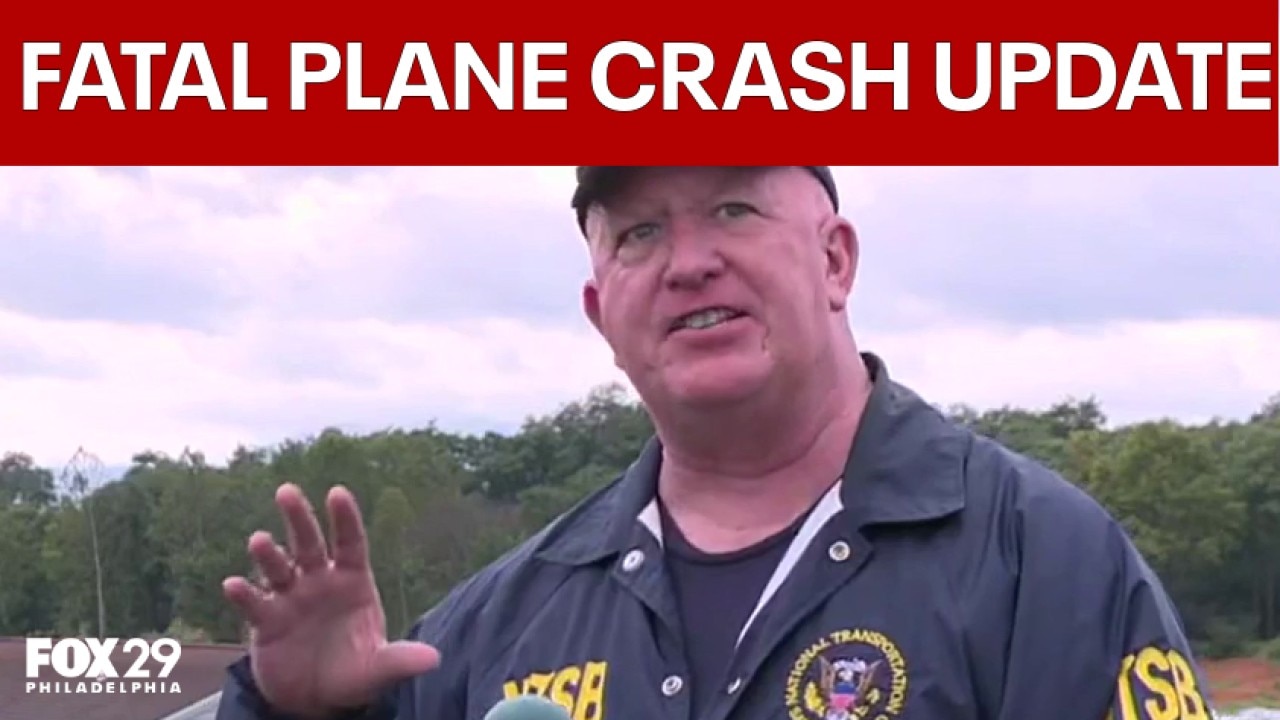
Fatal plane-helicopter crash in PA: NTSB official provides update
The NTSB held a media briefing at 5:30 pm EDT, Thursday, Aug. 20, on its investigation into Wednesday's collision between a helicopter and an airplane in Carlisle, PA.
CARLISLE, Pa. - A Cessna 150 airplane and a Bell 407 Pennsylvania State Police helicopter collided in midair near Carlisle on Wednesday, leaving a pilot dead and two state troopers injured.
Plane and helicopter collide near Carlisle
What we know:
The Federal Aviation Administration (FAA) reported that a Cessna 150 airplane and a Bell 407 helicopter crashed into each other in midair near Carlisle Regional Airport at around 6:50 p.m. on Wednesday, Aug. 19.
The helicopter was a Pennsylvania State Police helicopter.
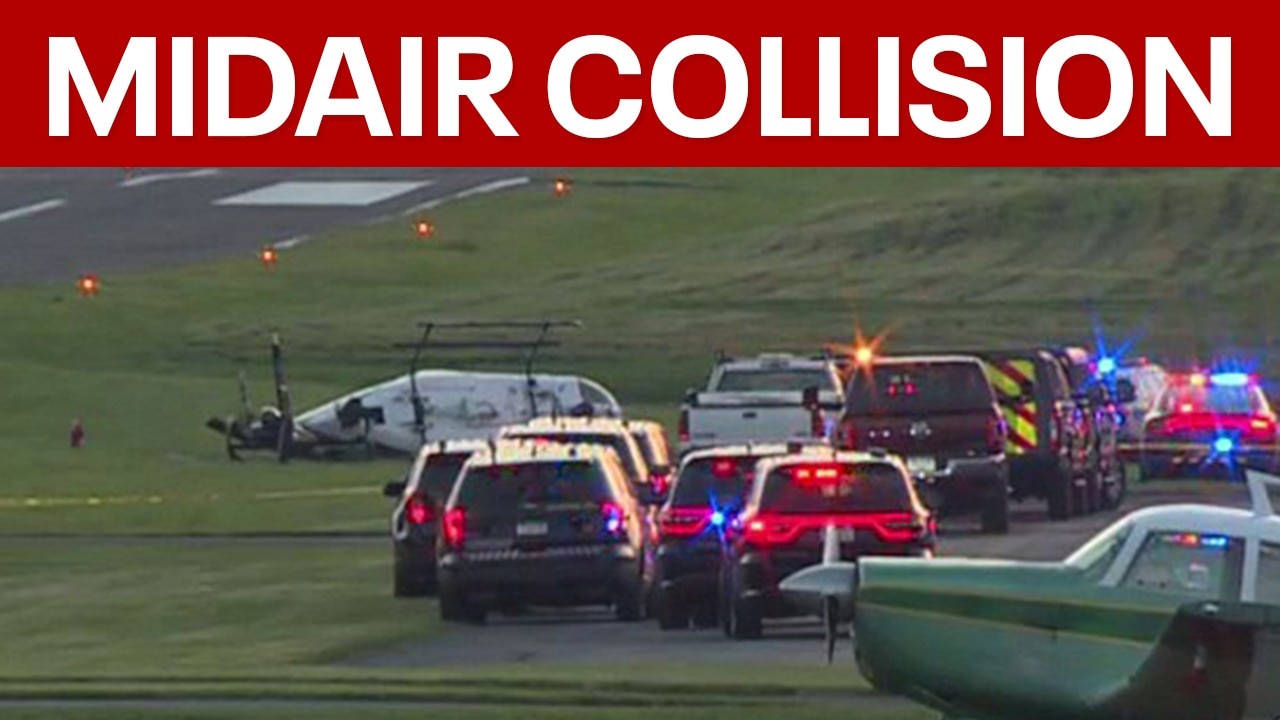
Pilot killed, 2 Pennsylvania troopers injured in midair collision
A pilot was killed and two Pennsylvania state troopers were injured when a small plane collided with their helicopter near an air strip in Carlisle, Pennsylvania.
Pennsylvania Gov. Josh Shapiro identified the injured troopers late Wednesday night as Corporal Pilot Bryce Corman and Trooper Pilot Jason Mills.
"Lt. Colonel Bivens and I spent time with State Police Corporal Pilot Bryce Corman, Trooper Pilot Jason Mills, and their families following a fatal aircraft collision in Carlisle involving a PSP helicopter and a Cessna 150," Shapiro said in a social media post. "Lori and I join Pennsylvanians tonight in praying for the family of the Cessna 150 pilot who was killed, as well as Corporal Corman, Trooper Mills, and their loved ones as they begin to recover."
Timeline:
At about 6:30 p.m., a helicopter crew based out of Harrisburg was conducting training at Carlisle Regional Airport, according to Colonel George Bivens of the Pennsylvania State Police.
At about 6:52 p.m., while hovering several feet off the ground in a grass area next to a runway, the helicopter was struck from behind by a Cessna 150, Bivens said.
"As that Cessna came down along that runway for an unknown reason, it veered hard to the right. At the last moment, it struck the helicopter from the rear," said Bivens.
The Cessna hit the helicopter’s tail rotor and main rotor, causing both aircraft to crash violently, Bivens said.
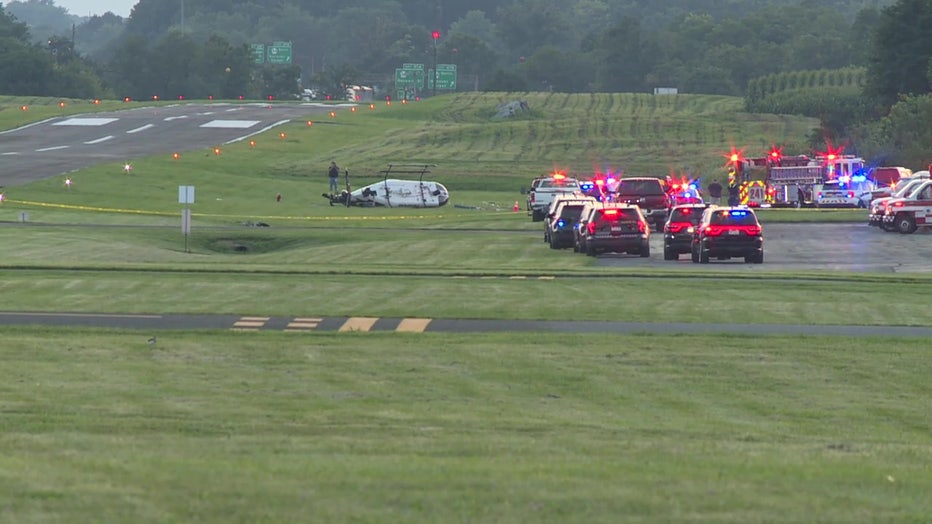
The plane came apart on impact, and the helicopter rolled over and crashed on its side and partially onto its roof.
The two troopers in the helicopter, Corporal Corman and Trooper Mills, were trapped after the crash but managed to escape, Bivens said.
"The corporal was in a position to push out a window and assist the trooper, who he believed had some more serious injuries and had a lot of bleeding, was able to assist him out through that window and got both of them out of, out of the helicopter," said Bivens. The pilot of the Cessna died in the crash.
NTSB and multiple agencies begin crash probe
The National Transportation Safety Board arrived at Carlisle Airport early Thursday to start investigating the collision.
"I don't say this often, but the NTSB has been given outstanding, if not unprecedented, support on this accident site," said Aaron McCarter, aviation accident investigator with the National Transportation Safety Board. He credited the Pennsylvania State Police, Cumberland County Fire Rescue and Sheriff's Department for providing necessary tools and assistance.
Investigators are working with the Federal Aviation Administration, Textron, Bell Helicopter Company and Rolls-Royce to determine the cause of the accident.
"We're taking the aircraft, both aircraft, down to Delaware, because there's a facility down there that's specialized," said McCarter. The wreckage will be moved to Clayton, Delaware for a more thorough investigation out of the elements and daily airport activity.
The Cessna 150 pilot, a certified flight instructor, was flying behind a Bell 407 state police helicopter, with two pilots—a flight instructor and one in training—on board. The helicopter was "on a training mission," McCarter said. The collision took place as the helicopter was conducting a "hover taxi," a common training maneuver where the helicopter hovers low and moves forward above the runway.
"We have a deceased pilot, and our thoughts and prayers go out to the family and the friends of the deceased pilot." He noted that the two helicopter pilots "survived with serious injuries, and are recovering very nicely," McCarter explained.
According to witness statements, the Cessna 150 pilot had been "working on his aircraft yesterday" before the flight, but McCarter said there is no evidence so far that this maintenance was connected to the crash. "There's nothing apparent right now," he said of the wreckage. He added, "Let's not hypothesize," emphasizing that facts—not speculation—will drive the investigation.
Investigators confirmed both flight crews communicated through the airport's common traffic advisory frequency, a typical practice at small, non-towered airports like Carlisle. "Communication was established between the flight crews," McCarter said. "You communicate through the CTF your intentions, you're landing, you're taking off... we know the communication was established and it took place."
McCarter described the Cessna's actions before the crash: "The Cessna came in straight and level, suddenly increased its pitch, severe nose up, did a left turn, leveled off again and then flew into the back of the helicopter." He described the flight path as "unusual" and added, "Right now we don't know the details about why the pilot was flying in that pattern altitude or in that manner, but we are going to find out."
What they're saying:
Officials credited first responders and medical staff at Hershey Medical Center for their rapid care.
"Both of them thankfully came out with just minor injuries in our stable," said Dr. Ashley Ludwig, trauma medical director.
"The moment tragedy struck, the Pennsylvania State Police mobilized, Dr. Ludwig mobilized, the other EMS personnel, mobilized and ensured that our troopers were able to get here to Penn State Health to get outstanding care in really what I would say was an extraordinarily short period of time," said Shapiro. He called the response "an example of Pennsylvania at its finest."
Ludwig later provided an update that "one of them is actually in the process of possibly being discharged this evening, and one is being admitted for observation."
The Pennsylvania State Police aviation unit and Hershey Medical Center teams played a critical role in the aftermath.
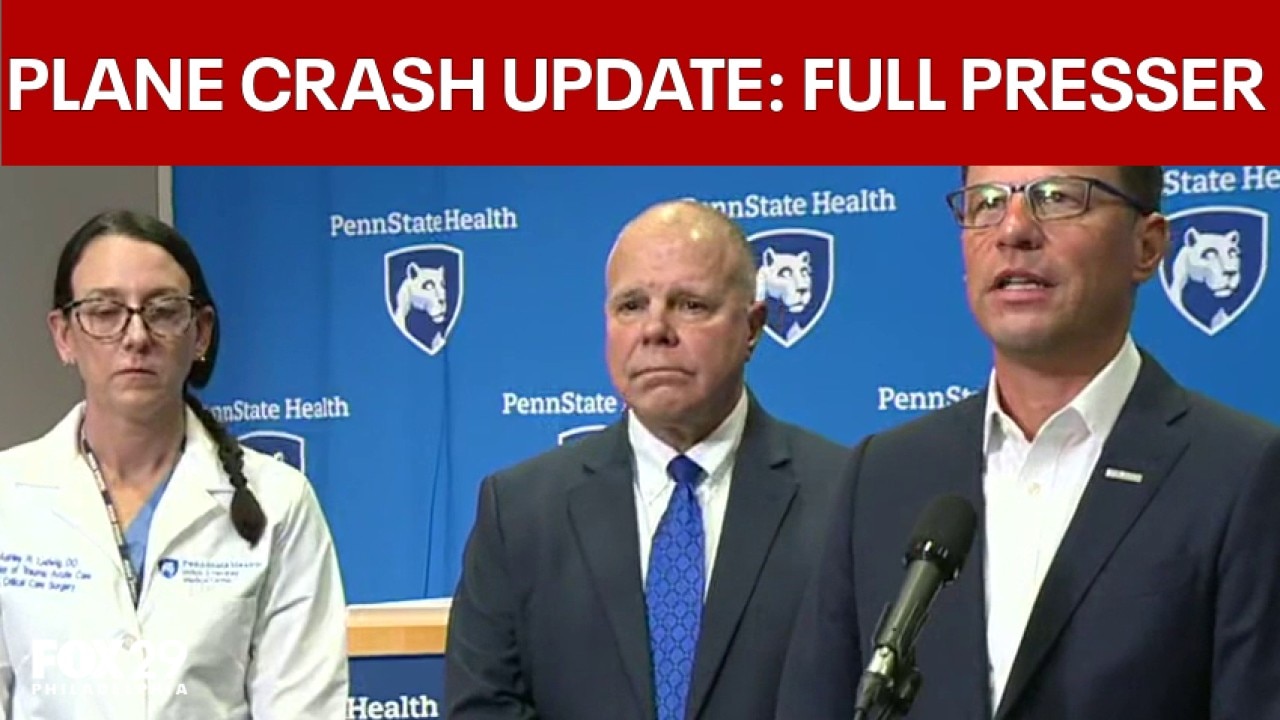
Pilot killed, troopers injured in Carlisle airport midair crash: FULL PRESSER
PA State Police and Pennsylvania Governor Josh Shapiro gave an update on a deadly helicopter-plane crash that occurred in Carlisle Wednesday evening.
Both crews responded quickly to the emergency, and leadership from the Pennsylvania State Police and Hershey Medical Center, including Dr. Ludwig and CEO Dr. Michael Kupperman, were present to oversee the situation, officials said.
Gov. Josh Shapiro said he met with the troopers’ families, "I express to them on behalf of all 13 million Pennsylvanians, how thankful we are for their service every day and how our prayers were all answered that they are going to be okay and survive their injuries," said Shapiro.
The investigation is being led by the Federal Aviation Administration (FAA) and National Transportation Safety Board (NTSB), supported by the Pennsylvania State Police. The crash site was secured, and the FAA arrived on scene within an hour, Bivens said. The NTSB was expected overnight.
Bivens explained that Carlisle Regional Airport does not have a control tower but uses a common traffic radio frequency. "There was some communication on that frequency. We'll have to, as part of the investigation, sort all of that out," he said.
What's next:
The National Transportation Safety Board will lead the crash investigation and update the public when more details become available.
What we don't know:
- The specific cause or causes of the collision have not been determined.
- It is unclear why the Cessna 150 was flying its particular pattern before the collision.
- Investigators have not yet established whether any mechanical issues were involved or if pilot error played a role.
- Full details of the communication between flight crews have not been released.
- Official flight track and speed data are still under review; only preliminary ADS-B information is available so far.
- The official video from the flight will be released when the NTSB puts out its docket.
The Source: Information from Pennsylvania State Police press conference at Hershey Medical Center, statements from Gov. Josh Shapiro, Colonel George Bivens, and Dr. Ashley Ludwig.