

Newest U.S. News college rankings released, how did Georgia schools do?
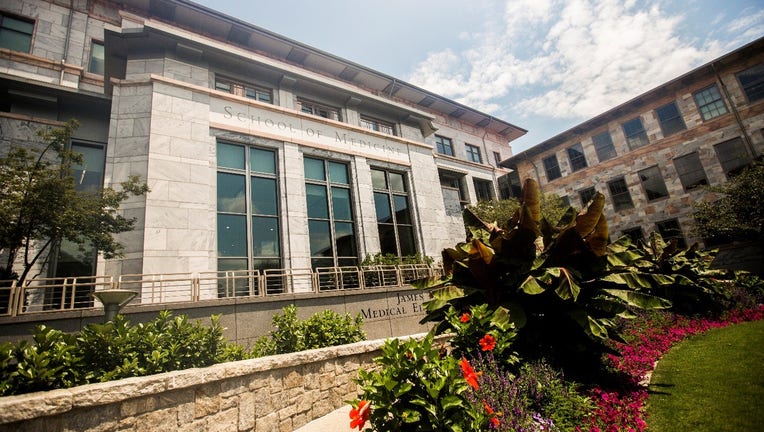
Emory University School of Medicine. Credit: Emory University
ATLANTA - Several Georgia institutions are once again among the nation’s most respected universities, according to the latest U.S. News & World Report rankings released Tuesday.
What we know:
Emory University held steady at No. 24 in the national universities category, maintaining its position as the highest-ranked school in the state.
Georgia Tech moved up one place to No. 32, while the University of Georgia remained in the top 50 at No. 46.
Mercer University was listed at No. 169, Georgia State University at No. 198, and Augusta University at No. 273.
Clark Atlanta University was ranked No. 329 and Georgia Southern University was ranked No. 343.
In the liberal arts category, Spelman College led all Georgia institutions, earning the No. 37 spot and also being recognized as the nation’s best historically Black college or university (HBCU).
Other Atlanta-area liberal arts colleges on the list included Agnes Scott College at No. 67, Morehouse College at No. 95, and Oglethorpe University at No. 156.
For Georgia’s top schools, student loan debt levels remain relatively modest.
Berry College in Mount Berry ranked No. 4 among Regional Universities South and claimed the top spot in Best Value Schools.
The Savannah College of Art and Design also placed in the top 10 of the regional rankings at No. 8, while Georgia College & State University narrowly missed the list, landing at No. 12.
The nation's highest-ranked universities this year were:
- Princeton University in Princeton, New Jersey
- Massachusetts Institute of Technology in Cambridge, Massachusetts
- Harvard University in Cambridge, Massachusetts
- Stanford University in Stanford, California
- Yale University in New Haven, Connecticut
The report evaluated more than 1,700 colleges and universities using multiple measures, including academic performance, graduation outcomes, and student debt.
Many families use the rankings to compare schools, and universities continue to highlight strong placements in their marketing.
What they're saying:
And while colleges often promote these rankings to attract applicants, some critics argue the system can be inconsistent and overly reliant on shifting formulas.
Critics claim that U.S. News relies on self-reported data and reputational surveys, which give institutions a strong incentive to take certain actions in an effort to improve their scores. Additionally, the rankings reportedly incorporate subjective factors like asking administrators to rank their peers. Additionally, critics claim the rankings fail to capture the full educational experience, including college social life.
While debates over methodology continue, U.S. News insists its rankings are meant as a tool — a starting point for families navigating the college search, not the final word on where to apply.