

New World screwworm in Texas: New cases detected
New World screwworm cases continue to increase
There are 16 cases of New World screwworm in the U.S., and all but one are in Texas. The feds confirmed that number on June 22.
Federal officials have confirmed a total of 15 cases of New World screwworm in Texas as of June 22, 2026.
Growing outbreak
The first case of New World screwworm in the United States was reported on June 3, 2026, in Zavala County. Since then, the country has recorded 16 total cases across two states, all found in domestic animals rather than wildlife.
Currently, New Mexico has recorded one case, while Texas accounts for the remaining 15. The most recent infections emerged in Edwards County (two cattle) and Crockett County (one sheep).
The USDA also confirmed a case in a goat in Terrell County which was identified in a castration site wound. Officials say this detection in Terrell County is about 180 miles west of the initial Texas detection and 74 miles west of the nearest previously confirmed case.
By the numbers:
Officials say for context, Mexico has reported more than 29,000 cases since November 2024 and currently has around 1,800 active cases.
The Texas Parks and Wildlife Department said updates will be provided as additional cases are confirmed. The agency has established a public information page and said situation reports will be updated daily when new detections occur.
Quarantine in place
There is currently a quarantine in place due to an established New World Screwworm Infested Zone in parts of the following Texas counties: Edwards, Gillespie, Kerr, Kimble, La Salle, Sutton, Uvalde, Val Verde, Webb, Zavala.
According to the Executive Director Orders issued, all warm-blooded animals in a zone may not move out of the zone without prior authorization from the Texas Animal Health Commission (TAHC).
Warm-blooded animals moving outside an infested zone must contact the TAHC to set up an inspection. During this inspection, an animal health official will fill out an animal movement certificate listing the product used for prevention or treatment and the animals' official ID. This certificate will need to accompany the animal movement. Additional guidance can be provided during an initial inspection request call to TAHC.
Texas scales up emergency response to combat destructive New World screwworm
Gov. Greg Abbott has activated the Texas State Emergency Operations Center to support the state’s response to a reemergence of the New World screwworm, a destructive livestock pest the state previously eradicated decades ago.
What they're saying:
"These developments obviously represent a serious threat to our livestock and wildlife, but they haven't caught us off guard," said Brooke Rollins, Secretary of Agriculture.
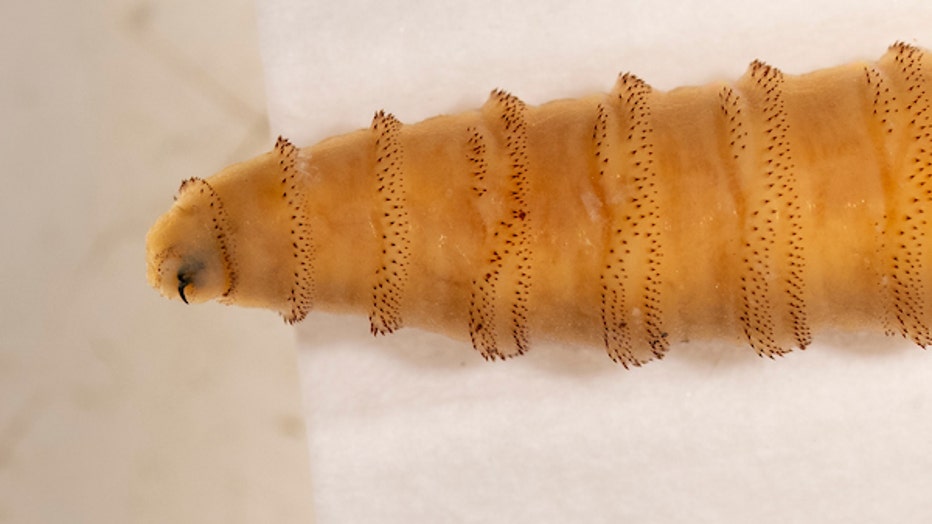
The parasitic fly lays eggs in open wounds and if it’s not treated, it can be deadly for animals, and in rare cases, people.
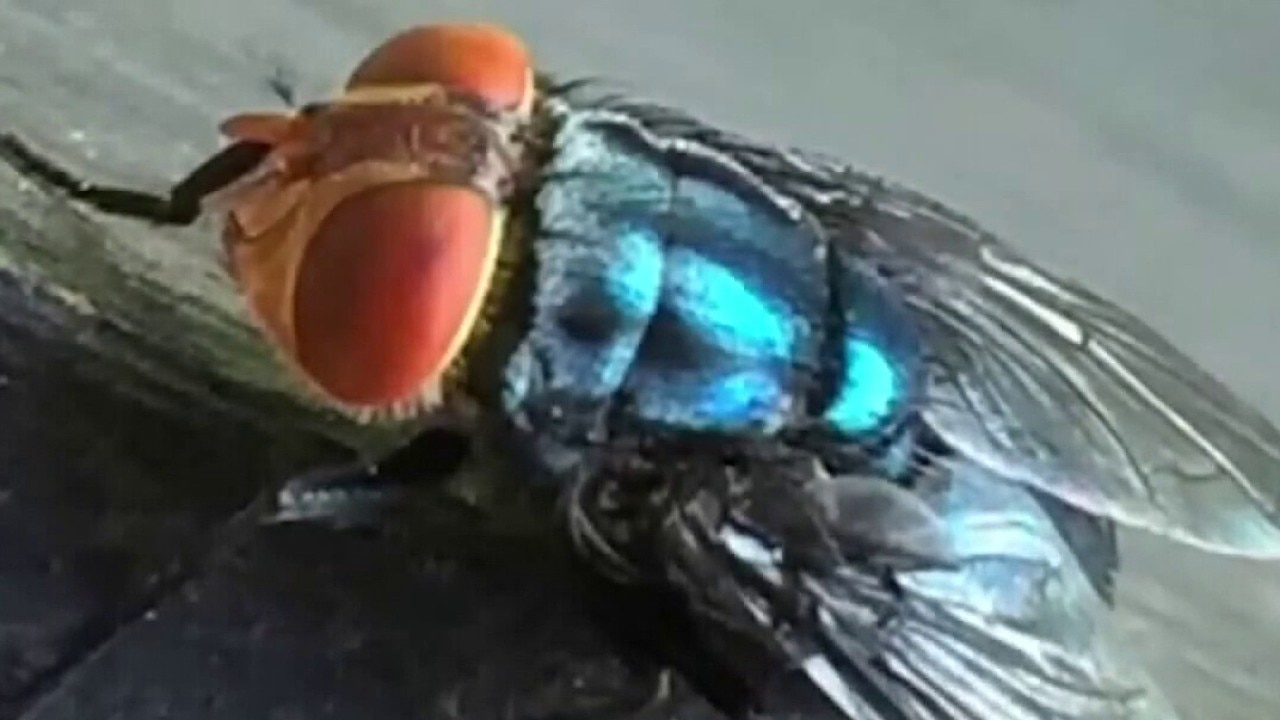
"The screwworm is a little bit larger, has red eyes and a green back, but the biggest thing to note is that the screwworm infects living tissue, whereas houseflies and other maggots are usually in dead, dying tissue," said Jeremy Hull with Travis County Parks.
Dig deeper:
In response to the latest detection, the USDA has begun sterile fly dispersal flights over Crockett County.
Officials say the cases in Edwards County were found within an area already under surveillance and were not unexpected.
The New World Screwworm rapid response team says additional cases may continue to pop up in affected areas even as sterile fly releases continue. That’s because the sterile insect technique does not kill existing larvae and, instead, it prevents future generations of flies.
With a life cycle of about 21 days, it can take multiple reproductive cycles before populations begin to die off.
New World screwworm fly (Cochliomyia hominivorax) on Friday, Jun 06, 2025, in College Station, Texas. (Michael Miller/Texas A&M AgriLife)
"It's important that we track the spread of this. It's important that they know where it is. And the sooner that we all deal with it, the sooner we'll get this behind us," said Hoppy Haden of Caldwell County.
The USDA and the "Texas Animal Health Commission" say eradication efforts remain aggressive, with impacted animals receiving treatment and tens of millions of sterile flies being released each week.
"Our goal is to have enough sterile flies deployed and out into Texas and wherever else this happens to be, before the next summer season pops up. That is the goal," said Rollins.
What is New World Screwworm?
The New World screwworm is a parasitic fly whose larvae feed on the living tissue of warm-blooded animals, posing a significant threat to livestock, wildlife and, in rare cases, humans.
Officials advised livestock owners and veterinarians to remain vigilant and report suspected infestations to the appropriate authorities. The Texas Animal Health Commission handles livestock-related cases, while the Texas Department of State Health Services oversees human infestation reports.
Identifying the New World screwworm
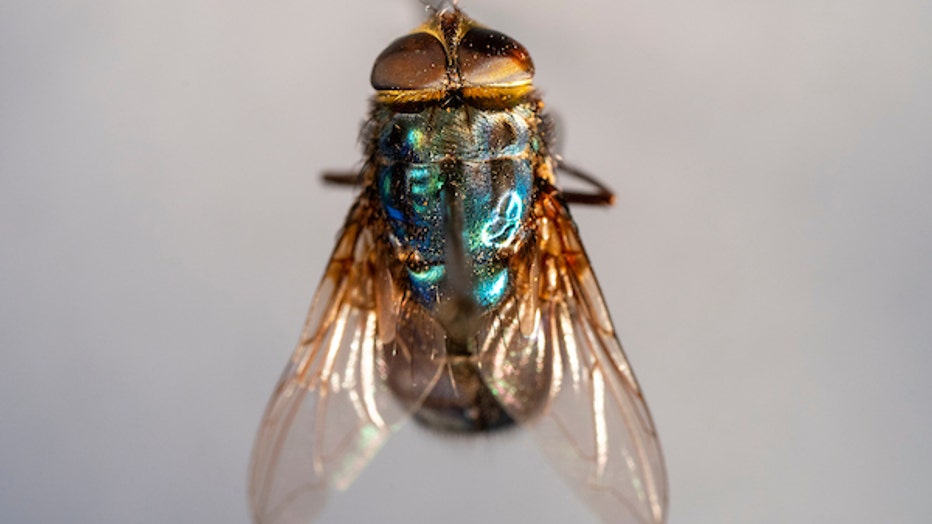
New World screwworm fly (Cochliomyia hominivorax) on Friday, Jun 06, 2025, in College Station, Texas. (Michael Miller/Texas A&M AgriLife)
The New World screwworm fly looks similar to other flies. It can be identified through its large orange eyes, yellow face, metallic blue body, and three stripes along its back.
Are humans at risk?
Though the risk to the public remains low, people can sometimes get an NWS infestation if they visit areas where the fly is present, such as Mexico, Central America or parts of South America and the Caribbean. People who do the following in areas with NWS might be at greater risk of infestation:
- People who sleep outdoors during the day (unhoused, campers)
- People who primarily work outdoors
- Ranchers and those who work with animals
- People with an open wound
- Those with diabetes or other skin conditions
DSHS urges people to take precautions by following these steps to prevent NWS infestation:
- Keep open wounds clean and covered
- Sleep indoors or in screened shelters, and keep window screens in good repair
- Wear loose-fitting, long-sleeved shirts and pants to prevent scrapes and insect bites
- Use an EPA-registered insect repellent to prevent insect bites
- Treat clothing and gear with products containing 0.5% permethrin, which is an insecticide and repellent.
People who see or feel larvae in or on their wounds should immediately contact their healthcare provider. If you think you might have been exposed to C. hominivorax or think you might have an NWS infestation, contact your healthcare provider.
The Source: Information in this article is from Texas Parks and Wildlife, the Texas Department of State Health Services, USDA and interviews conducted by FOX 7 Austin's Jenna King.