

Georgia man charged with laundering money tied to ISIS, DOJ says
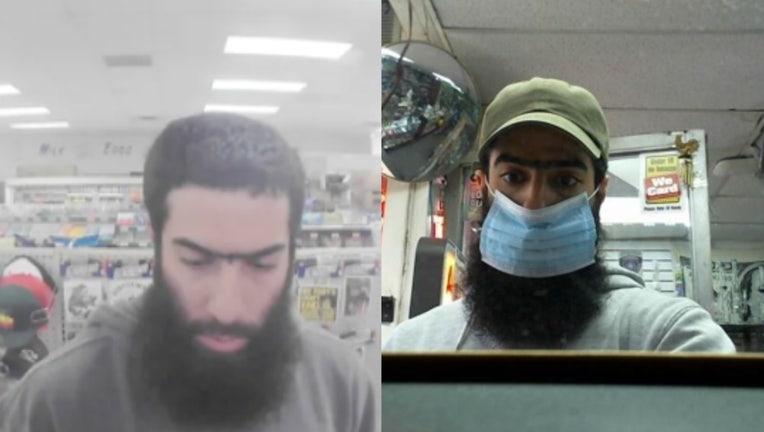
Federal suspect Younes Moustafa Younes, 34, of Lavonia, appears in cryptocurrency ATM surveillance photos after FBI Atlanta agents arrested him on federal international money laundering and destruction of evidence charges for allegedly funneling more
LAVONIA, Ga. - A northeast Georgia man is facing federal charges after investigators accused him of funneling more than $26,000 in cryptocurrency to groups and individuals tied to ISIS and attempting to destroy evidence ahead of his arrest, according to the U.S. Department of Justice.
What we know:
According to a federal criminal complaint, Younes Moustafa Younes, 34, of Lavonia, was charged with one count of international money laundering and one count of destruction of evidence.
The complaint alleges Younes sent $16,807 in cryptocurrency transactions between December 2025 and June 2026 using multiple phone numbers and accounts to conceal his identity. Investigators allege at least some of that money was intended to support ISIS efforts in Syria, and said cryptocurrency ATM cameras captured images of Younes during alleged transfers in March 2022 and May 2026.
FBI Atlanta agents arrested Younes on Wednesday, while executing search warrants on his apartment, car, electronic devices and workplace.
Prosecutors allege Younes altered and destroyed evidence up until his arrest. Inside his Lavonia apartment, agents reported finding three cellphones submerged in an unknown liquid, including one phone that had been smashed and another with its identification number removed and shredded paper soaking in an unknown liquid in a bathtub.
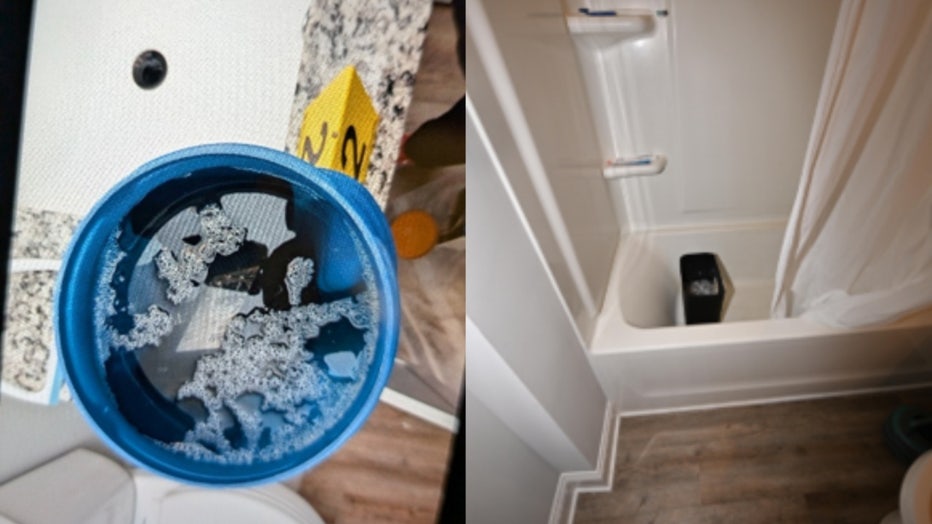
Federal investigators photograph three cellphones submerged in a bucket of liquid and shredded paper soaking inside a bathtub at the Lavonia apartment of 34-year-old suspect Younes Moustafa Younes, who is charged with international money laundering a
Younes made his initial appearance Thursday in federal court before a U.S. magistrate judge and remains in custody ahead of detention and probable cause hearings scheduled for Monday in Macon.
The backstory:
According to federal prosecutors, the FBI first identified Younes in 2020 after he allegedly accessed ISIS propaganda online. When interviewed by law enforcement at the time, he acknowledged viewing the material but denied supporting extremist ideologies.
Prosecutors allege Younes became increasingly radicalized over time, praising terrorist figures and sharing extremist content through encrypted messages. Between December 2021 and April 2022, investigators said he used an alias to send roughly $9,206 across 11 separate cryptocurrency transactions to addresses tied to the effort.
In September 2022, Younes allegedly sold his vehicle, cashed out his retirement funds, left his job and flew to Turkey on a one-way ticket, staying there for about two years.
Prosecutors said he was eventually arrested in Turkey and deported back to the United States, where investigators allege he continued expressing support for extremist causes and stayed in contact with people previously convicted on terrorism-related charges.
What we don't know:
Federal officials have not publicly identified the unknown liquid solution found inside Younes' apartment or detailed the circumstances surrounding his arrest and deportation from Turkey.
If convicted, Younes faces up to 20 years in federal prison and a $500,000 fine on the international money laundering charge, and up to 20 years in prison and a $250,000 fine on the destruction of evidence charge.
The Source: The information in this story comes from a news release and federal criminal complaint issued Thursday by the U.S. Department of Justice, following an investigation by FBI Atlanta with assistance from FBI Newark and the National Counterterrorism Center.