

'Dog days of summer' peaks this week: Intense heat and superstition
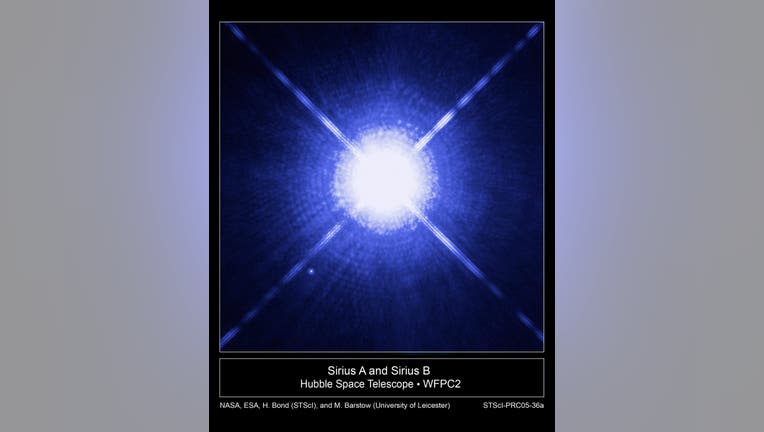
(NASA photo)
ATLANTA - The phrase "dog days of summer" might conjure images of panting pets and sweltering sidewalks, but its origin lies in the stars — not the weather forecast.
SEE ALSO: North Georgia braces for intense heat wave: Triple-digit temps on the way
Canis Major or ‘Greater Dog’ constellation
What we know:
The term traces back to the star Sirius, the brightest star visible from Earth and part of the constellation Canis Major, or "Greater Dog." Wednesday, July 23, marks the peak of this celestial phenomenon, when Sirius rises and sets with the sun. The "dog days" are said to fall 20 days before and after this peak, spanning July 3 through August 11.
Sirius, whose name comes from the Greek word for "scorching," was long believed to contribute to the year's hottest stretch. Ancient Egyptians around 3200 B.C. saw the star’s appearance as a signal for the annual flooding of the Nile, tying its brilliance to survival. The Greeks and Romans believed its dawn rising brought heat, drought, and even disease. Because of its intense brightness — 25 times greater than our sun — the Romans thought Sirius compounded the sun’s heat, triggering a brutal stretch of summer weather.
Where to see the Dog Star
Big picture view:
In modern times, Sirius remains best viewed about 75 minutes before sunrise, low on the eastern horizon. It lies approximately 8.6 light years from Earth and reaches peak visibility on July 23, just behind the sun.
While modern meteorology no longer connects Sirius to the weather, the phrase "dog days of summer" endures — particularly in places like Georgia, where the heat and humidity feel unrelenting.
Corn sweat and summer superstitions
Local perspective:
In rural Georgia, the dog days are steeped in superstition. Farmers often warn against planting during this time, insisting that seeds "won’t take" in the stifling heat. Others recall older generations claiming dogs were more likely to go mad, or rabid, during this stretch, prompting public health warnings well into the 20th century.
Before the arrival of widespread air conditioning, many Georgia businesses closed early in late July and early August, when temperatures and humidity made indoor work nearly unbearable. People gathered on shaded porches, sipping sweet tea and using hand fans to chase the thick air, too drained to move much under the weight of the heat.

Corn sweat is a thing and it's weird
Corn could be making the summer heat feel even hotter for millions of Americans. Corn sweats just like we do, and when it does, it causes the humidity around it to spike. It's a phenomenon called "corn sweat."
Even in more modern times, the season leaves a mark. In the southern part of the state, farmers still talk about "corn sweat" — a real phenomenon where acres of corn release moisture through their leaves, intensifying local humidity. The result is an oppressive, almost suffocating heat, especially during harvest season.
DOWNLOAD THE FOX LOCAL APP FOR THE LATEST FORECASTS
Why you should care:
So while the stars may no longer dictate the forecast, the dog days of summer remain as much a cultural touchstone as a meteorological one — where science, tradition, and Southern storytelling still meet under the July sun.
The Source: The National Weather Service, NASA, and the Old Farmer's Almanac provided the details for this article. FOX News and the Associated Press also contributed to this report.