

Dentist shares tips on how to spot, prevent and manage gum disease

Lowering the risk of gum disease
Nearly half of Americans age 30 and older have some level of gum disease. As we get older, more and more of us will struggle with gum health. How to lower the risk
ATLANTA - As a dentist, Dr. Hannah Alexander sees a lot of gum disease, or periodontal disease. It is an infection in the gum tissue that holds our teeth in place.
"So, a patient that has periodontal disease, most of the time they don’t have a cavity in their mouth," Alexander says. "That bacteria, it’s thriving based off of the environment."
Sometimes, Dr. Alexander says, the problem is structural.
"So, if the bite is not right, the tooth is going to actually get looser and looser," she says. "The bone around that is going to go away. It’s unstable."
Being lax about brushing and flossing regularly can also allow plaque to build up on your teeth, and bacteria to get under your gum line, and form pockets between the tooth and the gums.
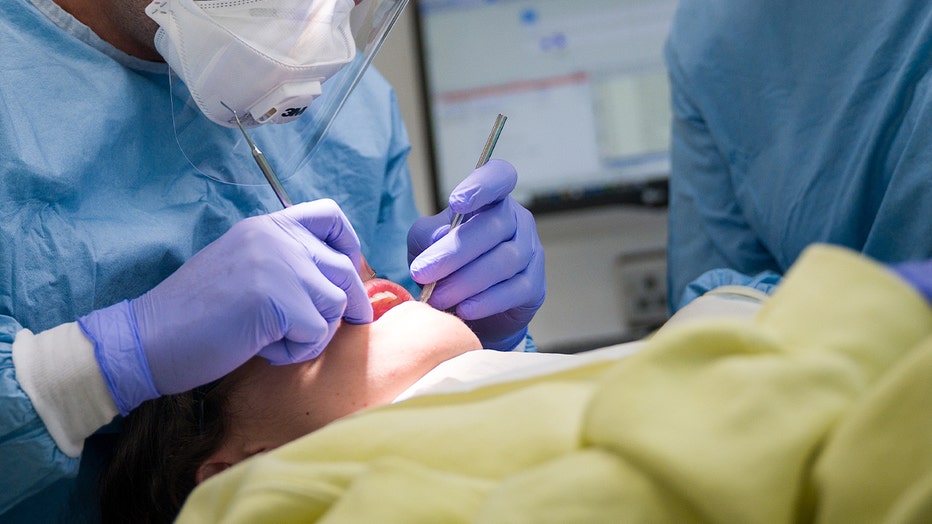
Early signs of gum disease are swollen, tender, or bleeding gums.
"It happens as you’re aging," Alexander says. "And if you have the genetics for it, you have the bone loss. Going to a dentist every 3 to 4 months, that’s going to help you stabilize periodontal disease."
If you can change habits early on, you may be able to slow down the damage.
Your dentist may tell you to ease up on how intensely you are brushing your teeth.
"(We recommend) not being as aggressive with a toothbrush, and being gentle to your gums and the tooth structure," she says.
Smoking is a major risk factor for gum disease and can make treating it more difficult.
And Alexander says small habits, like drinking a lot of soda or constantly snacking, can also damage your gums.
"When we talk about acidity in the mouth, if someone is snacking very frequent, like multiple times per hour, the mouth doesn’t have the ability to go back to neutral," she says. "So, therefore, the bacteria is going to survive."

Gum disease major issue for many
Gum disease is a major issue for a lot of people but there are things you can do to protect your gums and teeth.
If your gums are swollen, or sensitive, Dr. Alexander says, see your dentist.
Left untreated, she says, the bacteria that is damaging your gums can spread to other parts of your body, like your heart.
"(It can) cause a heart attack or stroke," Dr. Alexander says. "Bad breath is just the beginning."