

American Red Cross to offer free A1C test results for blood donors during November
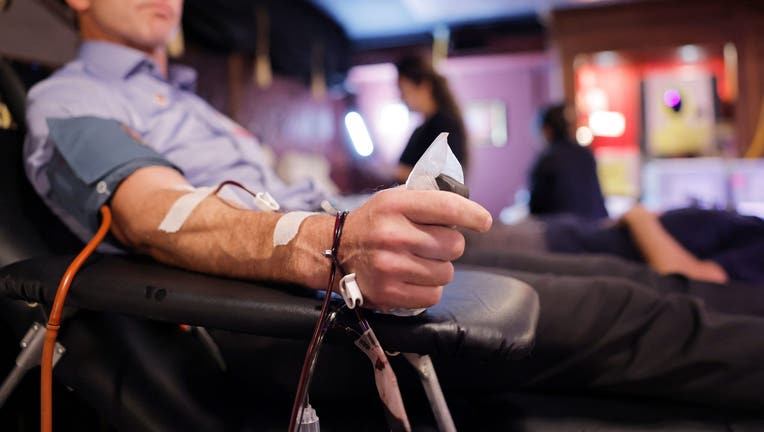
A volunteer donates blood during an American Red Cross blood drive at Hollywood's Magic Castle on July 28, 2026 in Los Angeles, California. The American Red Cross has declared a national blood crisis for just the second time in the organization’s his
For the second straight year, the American Red Cross will provide a free A1c test for everyone who donates blood during November, which is National Diabetes Month.
Big picture view:
The A1C test provides a number that gives a picture of your average blood glucose level over the past two to three months, according to the ADA.
Blood donors should not fast before giving blood to make sure they get the most accurate reading of their A1C, the Red Cross says.
The Red Cross provided about 550,000 A1C screenings nationwide during multiple months. Of those, about 145,000 — a little more than a quarter of donors — were notified that they had concerning A1C levels, which can be potential indicators of prediabetes or diabetes.
Dig deeper:
An A1C test, also known as the hemoglobin A1C, HbA1c, glycated hemoglobin, or glycohemoglobin test, can be used to diagnose diabetes or detect an early warning sign that doctors can use to help you avoid getting diabetes altogether. For people who have been diagnosed with diabetes, an A1C test can measure how well treatment is working.
For most people who live with diabetes, the ADA recommends an A1C target of 7% or less. Normal is considered 5.7% or lower, while 5.8% to 6.4% is considered prediabetes. An A1C of 6.5% or higher means the person has diabetes.
Type 2 diabetes is the most common form of diabetes, and it occurs when the body becomes resistant to insulin, meaning it cannot use it effectively to lower blood sugar. Blood sugar levels rise to potentially dangerous levels as the pancreas struggles to make more insulin. Type 2 diabetes can be prevented and can often be reversed through things like lifestyle changes, insulin injections and medication.
Prediabetes is a condition where blood sugar levels are higher than normal but not high enough for a diabetes diagnosis. But making lifestyle changes while the A1C is in a prediabetes level can help people prevent diabetes from developing at all.
For blood donors, being diabetic or even taking insulin injections or medication, including GLP1 medication, doesn’t disqualify them from giving blood as long as their diabetes is under control, the Red Cross says.
November is National Diabetes Awareness Month, an observance the American Diabetes Association created in 1975. President Ronald Reagan issued a proclamation in 1982 to make the monthlong observance official.
What you can do:
The Red Cross is trying to make sure people schedule and keep their blood donation appointments on the book to make sure the blood supply can handle fall activities.
Donors will receive up to $20 in gift cards if they donate by Nov. 22.
To schedule an appointment, visit RedCrossBlood.org, call 800-RED-CROSS or use the Red Cross Blood Donor app to schedule an appointment.
The Source: Information for this story came from the American Red Cross, the National Institutes of Health, the American Diabetes Association and DaysoftheYear.com. This story was reported from Orlando.