

What are data centers and why do they exist | Explainer
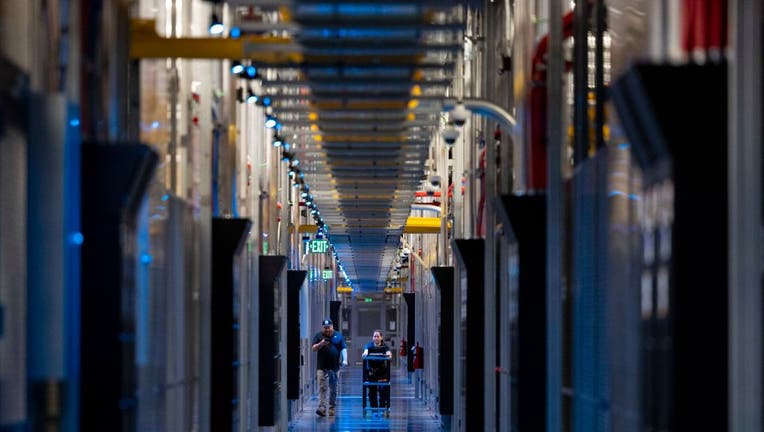
People walk through the hallways at Equinix Data Center in Ashburn, Virginia, on May 9, 2024. (Amanda Andrade-Rhoades for The Washington Post via Getty Images)
ATLANTA - Most people use data centers every single day without realizing it.
Every time someone sends a text message, streams a Netflix show, stores photos in the cloud, asks ChatGPT a question, checks Facebook, uses Google Maps or makes an online purchase, there is a good chance a data center is involved behind the scenes.
As artificial intelligence, cloud computing and online services continue to grow, data centers are becoming an increasingly important — and controversial — part of modern life.
What is a data center?
What we know:
A data center is basically a giant building filled with computers and networking equipment that store, process and deliver digital information.
Think of it as the physical "brain" behind the internet and many online services people use every day.
Inside a data center are rows of powerful computer servers that work around the clock to store websites, apps, emails, videos, medical records, banking information and countless other forms of digital data.
Sources
- IBM: https://www.ibm.com/think/topics/data-centers
- Cloudflare: https://www.cloudflare.com/learning/data-center/what-is-a-data-center/
- Amazon Web Services: https://aws.amazon.com/what-is/data-center/
These facilities also require massive cooling systems, backup power generators, batteries and security systems to keep everything running 24 hours a day.
How long have data centers been around?
Dig deeper:
Data centers have existed in some form since the 1940s and 1950s, when governments and large companies began using massive early computers.
One of the earliest examples was the ENIAC computer completed in 1945, which required a large dedicated facility to operate.
In the early days, entire rooms were needed to house a single computer.
Modern data centers began taking shape during the rise of the internet in the 1990s and expanded rapidly during the 2000s as smartphones, streaming services and cloud computing became common.
Now, the rapid growth of artificial intelligence is fueling another major expansion of the industry.
Sources
- IBM history of computing: https://www.ibm.com/history
- Computer History Museum: https://computerhistory.org
- Microsoft Azure: https://azure.microsoft.com/en-us/resources/cloud-computing-dictionary/what-is-a-data-center
Why do we need them?
Big picture view:
Modern society depends heavily on digital technology, and data centers help make that possible.
Without them, many everyday services would stop working or become extremely unreliable.
Data centers power things like:
- Internet searches
- Streaming services
- Banking systems
- Online shopping
- GPS navigation
- Social media
- Remote work tools
- Cloud storage
- Artificial intelligence
- Emergency communication systems
- Medical and government databases
Even businesses that appear "physical" often rely heavily on digital systems hosted in data centers.
Sources
- Uptime Institute: https://uptimeinstitute.com
- IBM: https://www.ibm.com/think/topics/data-centers
- Google Cloud: https://cloud.google.com/learn/what-is-a-data-center
What would life be like without them?
Why you should care:
Life without data centers would look dramatically different.
Large parts of the internet would stop functioning. Streaming services would disappear. Many apps would stop working. Online banking, cloud storage and social media would become difficult or impossible to use.
Simple tasks people now take for granted — like backing up photos, ordering food online or joining a Zoom meeting — would become far more complicated.
Many businesses, hospitals, schools and government agencies would struggle to operate because so many systems now depend on digital infrastructure.
In many ways, data centers are becoming as important to modern life as roads, airports and power plants.
Sources
- Cisco: https://www.cisco.com/c/en/us/solutions/data-center-virtualization/what-is-a-data-center.html
Why do some people not want them nearby?
The other side:
Despite their importance, data centers have sparked growing concern in communities across the country.
One major concern is power consumption. Data centers use enormous amounts of electricity, especially facilities supporting artificial intelligence systems.
Water use is another issue. Many data centers rely on cooling systems that consume large amounts of water, especially during hot weather.
Neighbors also sometimes complain about:
- Noise from cooling equipment and backup generators
- Large industrial-looking buildings
- Loss of green space
- Increased traffic during construction
- Concerns about environmental impacts
- Tax incentives given to large corporations
In some communities, residents feel data centers do not create enough permanent jobs compared to the amount of land, power and resources they consume.
Sources
- U.S. Department of Energy: https://www.energy.gov/eere/buildings/data-centers-and-servers
- The New York Times: https://www.nytimes.com/2024/03/28/business/energy-environment/data-centers-ai-electricity.html
- Reuters: https://www.reuters.com/world/us/artificial-intelligence-data-centers-power-demand-2024-03-20/
- MIT Technology Review: https://www.technologyreview.com
What are some myths about data centers?
What they're saying:
Several misconceptions about data centers continue to circulate online and in public debates.
Myth: Data centers are "full of secrets" or spying on people
While cybersecurity and privacy concerns are real, most data centers are simply storage and computing facilities for businesses, apps and websites. Employees are not sitting around reading people’s emails or social media messages.
Myth: Data centers are fully automated and employ nobody
Modern data centers actually require teams of technicians, engineers, electricians, security workers and maintenance staff to keep them operating.
Myth: They are only for tech companies
Many industries rely on data centers, including healthcare, banking, education, transportation, retail and government agencies.
Myth: Data centers are always bad for the environment
Some facilities consume enormous resources, but many companies are also investing heavily in renewable energy, energy efficiency and advanced cooling systems designed to reduce environmental impacts.
Sources
- IBM: https://www.ibm.com/think/topics/hyperscale-data-center
- Microsoft sustainability: https://www.microsoft.com/en-us/sustainability
- Google sustainability: https://sustainability.google
What do we still not know about data centers?
What's next:
As the industry grows rapidly, there are still major unanswered questions.
Experts are still debating how much electricity future artificial intelligence systems will require and whether existing power grids can handle that demand long term.
There are also ongoing questions about:
- Future water consumption
- Environmental impacts
- How communities should regulate growth
- Whether enough renewable energy will be available
- Cybersecurity risks
- How AI could reshape internet infrastructure
- The long-term economic benefits for local communities
Some researchers also worry society is becoming increasingly dependent on digital infrastructure that most people do not fully understand.
Sources
- International Energy Agency: https://www.iea.org
- MIT Technology Review: https://www.technologyreview.com
- Goldman Sachs Research: https://www.goldmansachs.com/intelligence
Final thoughts
Local perspective:
Data centers are largely invisible to the average person, but they now help power much of modern life.
Supporters see them as critical infrastructure for the future economy, especially as artificial intelligence continues expanding. Critics worry about energy use, environmental impacts and whether communities are giving up too much for facilities many residents never directly see or interact with.
Like highways, airports and electrical grids, data centers are becoming part of the backbone of modern society — even if most people rarely think about them.