

Lake Hartwell won't be the same: Why the Army Corps is changing how high the water can rise
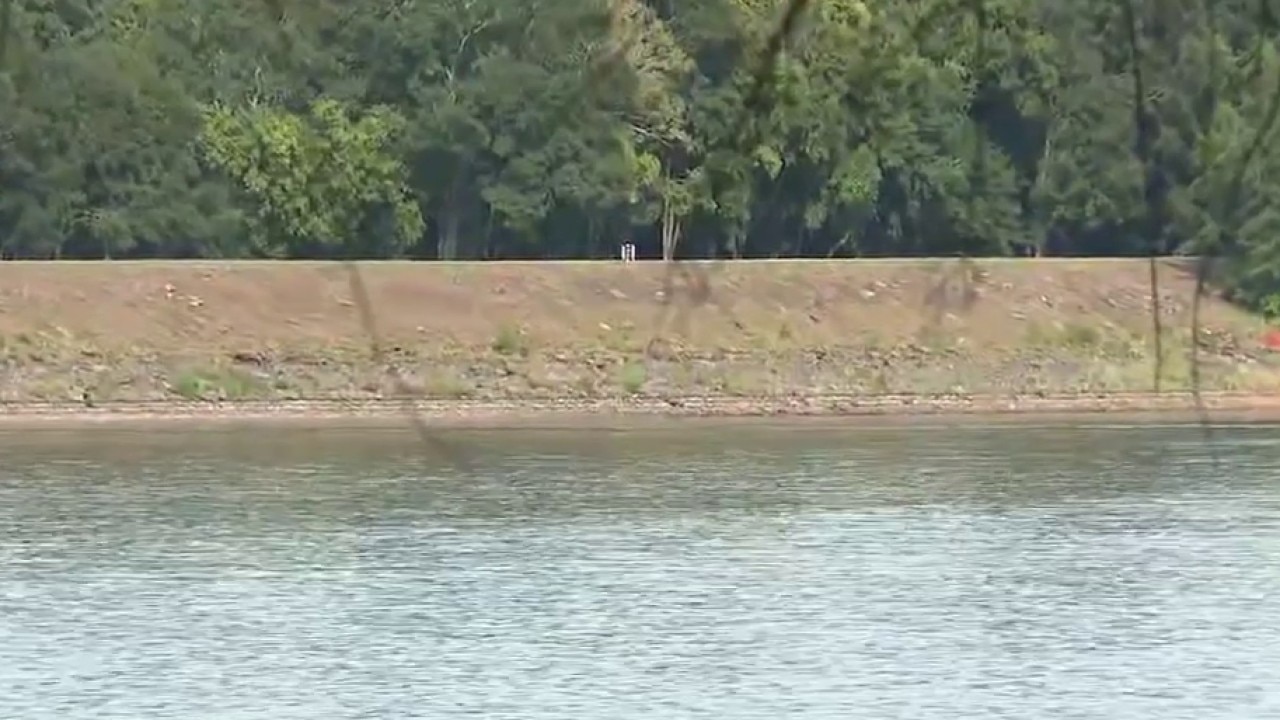
Lake Hartwell will not return to full pool for a decade
A dike issue at Clemson University will keep Lake Hartwell from reaching its normal capacity, establishing a lower pool level for the next decade.
The U.S. Army Corps of Engineers is placing a new restriction on how high Lake Hartwell can rise as engineers address a safety concern involving the Clemson Lower Diversion Dam Saddle Dike.
What we know:
The lake's normal operating level, or guide curve, is being lowered to 656 feet above mean sea level year-round. The Corps will also keep Hartwell Lake below a maximum elevation of 662 feet during periods of heavy rainfall.
The restriction is intended to reduce pressure on the Saddle Dike and slow erosion caused by seepage through and under the structure.
Justin Nixon, dam and levee safety program manager for the U.S. Army Corps of Engineers' Savannah District, said the current low lake level is not the result of the Corps drawing down Hartwell Lake.
"The Army Corps of Engineers is not drawing down or draining Hartwell Lake," Nixon said. "The low water levels folks see today are 100% due to the severe regional drought that we've been experiencing for over a year."
The Corps says the basin is currently experiencing Level 2 drought conditions, with Hartwell Lake already roughly 8 feet below its normal guide curve.
Because the lake is already below 656 feet, recreational users will not see an immediate change from the new restriction.
Why is Hartwell Lake being restricted? What is happening at the Clemson Saddle Dike?
Engineers have identified seepage through and underneath portions of the Clemson Lower Diversion Dam Saddle Dike.
The Saddle Dike is an earth structure made from natural materials.
Water can move between soil particles. As the lake rises, the pressure against the structure increases, creating a stronger driving force for water movement and erosion.
"The higher the water level, the greater the pressure," Nixon said. "And that's the driving force where we're seeing a slow-progressing erosion that's degrading over time."
The Corps says water moving through soil structures can carry fine soil particles with it, gradually creating pathways through the structure.
This process, known as piping or backward erosion, can weaken the dike over time.
Is there an immediate danger?
No.
The Corps says there is no immediate threat of failure.
However, detailed evaluations indicate the erosion is worsening.
The Corps considers the situation a high priority and is taking action now to reduce the stress on the structure while a permanent solution is developed.
"The public is not in immediate danger," Nixon said. "However, we treat this as a high-urgency situation where we want to make sure that we go ahead and implement and start coming up with the permanent engineered fix for this."
What does the new lake level mean? How high will Hartwell Lake be allowed to rise?
Under the temporary restriction, the normal target level will be 656 feet MSL year-round.
The maximum lake level will be 662 feet MSL, providing flood-storage capacity while limiting pressure on the Saddle Dike.
Previously, Hartwell Lake's guide curve typically varied seasonally, reaching 660 feet MSL in summer and 656 feet in winter.
The new restriction makes 656 feet the year-round target.
Nixon said the Corps will allow the lake to rise when rain returns, but it will not allow the water to reach the levels it historically could under normal operations.
"Our new target pool elevations are actually higher," Nixon said. "We are about six feet below our target pool level. Once rains come back, we will allow the water levels to come back."
Will the lake immediately drop to 656 feet?
No.
The lake is already below the new 656-foot target because of the ongoing drought.
Once drought conditions end and rainfall returns, the Corps will allow the lake to rise, but it will manage releases to keep the lake from exceeding the new limits.
How will this affect recreation? What about boat ramps, docks and swimming areas?
The Corps says the lake will remain open for recreation, but lower water levels can create additional challenges.
Many boat ramps are expected to remain functional at 656 feet, although access will be reduced compared with higher-water years.
Some shallow ramps may close.
Designated swim beaches generally become unusable when the lake falls below 657 feet, meaning designated swim areas will remain closed or dry under the 656-foot restriction.
The Corps also says shallow-water docks will experience dry conditions more frequently than in past non-drought years.
Nixon acknowledged that the restriction could affect recreation and homeowners.
"While we acknowledge the homeowners and, you know, what's going to be impacts to recreation and housing price, cost, my major priority is making sure that the public is safe," Nixon said.
How long will the restriction remain in place?
What's next:
The lake level restriction is an interim safety measure that will remain in place while the Corps develops a permanent engineering solution.
The Corps is initiating a formal Dam Safety Modification Study to evaluate alternatives for stabilizing the Saddle Dike.
The Corps says these studies typically take up to two years, with design, funding approval, and physical construction potentially taking five to 10 years or more.
Nixon said the study process is designed to make sure engineers fully understand the complex geology and the erosion problem before construction begins.
"We want to make sure that we are fully informed so that we can come up with the best and most effective solution prior to construction," Nixon said.
Why not simply repair the dike now?
The Corps says it is following a process to evaluate the problem and determine the appropriate permanent fix.
That includes engineering evaluations, monitoring, exploratory borings, additional instrumentation, soil testing and modeling of the seepage and erosion.
The Corps has been monitoring the Saddle Dike since seepage was identified in 2015.
In 2018, the dike was reclassified to a higher risk level, prompting a more extensive issue evaluation study.
Nixon said the Corps has been actively evaluating the structure since it discovered the seepage.
"Our engineers have been actively and continuously evaluating the dike," Nixon said.
Why you should care:
The Clemson Saddle Dike is part of the Clemson Protective Works on the South Carolina side of Hartwell Lake.
The structures were built before Hartwell Lake was filled and are designed to help prevent the lake from flooding Clemson University properties.
The Corps says a failure of the Saddle Dike could flood low-lying areas behind it, including portions of Clemson University's infrastructure and sewage treatment plant, and would require a significant drawdown of Hartwell Lake for emergency repairs.
For now, the Corps says there is no immediate danger to the public.
The lake level restriction is intended to reduce pressure on the Saddle Dike while engineers work toward a permanent solution.
The Source: This story is based on information from the U.S. Army Corps of Engineers Savannah District's Hartwell Lake Level Restrictions webpage and an interview with Justin Nixon, dam and levee safety program manager for the U.S. Army Corps of Engineers Savannah District. The Corps says the restriction is intended to reduce stress on the Clemson Saddle Dike while a permanent engineering solution is developed.