

Here's how a government shutdown affects student loan payments

Government shutdown: Viewer questions answered
The U.S. is under its first federal government shutdown in nearly seven years after Senate Democrats rejected a Republican-backed bill to keep funding the government. Government funding legislation was not passed by Congress on Tuesday night, which means many government offices across the nation will be temporarily shuttered, and nonexempt federal employees will be furloughed, adding to the strain on workers and the nation’s economy. Political Analyst Richard Gordon answers your questions.
The U.S. Department of Education says many of its core operations will continue despite a government shutdown – though 87% of its workforce will be furloughed.
The government officially shut down overnight after Congress failed to pass a funding measure before the 12 a.m. Wednesday deadline. When this happens, many federal services pause, federal workers are furloughed, and Americans may feel ripple effects across daily life.
Here’s what it means for the Department of Education.
READ MORE: Government shutdown starts: Here's what closes during a shutdown
Will the shutdown affect student loan payments?
What they're saying:
Student loan borrowers must continue making payments, even during a shutdown, as student aid will be largely unaffected in the short term, according to the department’s shutdown contingency plan. Pell Grants and federal loans will continue to be disbursed.
RELATED: Some student loan borrowers brace for smaller paychecks
By the numbers:
The Education Department manages a $1.6 trillion federal student loan portfolio. About 9.9 million students receive some form of federal aid from some 5,400 colleges, according to the department. Within the Office of Federal Student Aid, the department plans to furlough 632 of the 747 employees during the shutdown, although it didn’t say which ones. For most student loan issues, borrowers work with loan servicers hired by the department rather than directly with FSA staff.
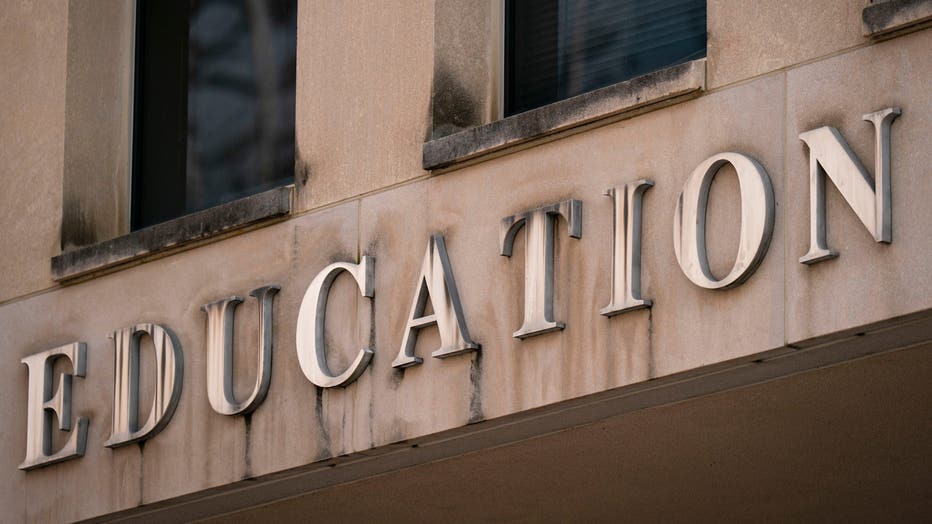
The US Department of Education headquarters in Washington, DC, US, on Thursday, March 13, 2025. Photographer: Al Drago/Bloomberg via Getty Images
The department will also continue to process the Free Application for Federal Student Aid, or FAFSA, which is a key piece of how colleges and universities provide aid packages to incoming students.
Will furloughed federal workers be rehired?
Dig deeper:
Since he took office, President Donald Trump has called for the dismantling of the Education Department, saying it has been overrun by liberal thinking. Agency leaders have been making plans to parcel out its operations to other departments, and in July the Supreme Court upheld mass layoffs that halved the department’s staff.
The department had about 4,100 employees when Trump took office in January. It now has about 2,500. Education Secretary Linda McMahon said some staffers were brought back after officials found that the cuts went too deep.

U.S. government shutdown in effect as funding runs out
A government shutdown is now in effect after funding ran out late Tuesday night.
The Trump administration has suggested that in a shutdown, federal agencies could see more positions eliminated entirely. In past shutdowns, furloughed employees were brought back once Congress restored federal funding. This time, the White House’s Office of Management and Budget has threatened the mass firing of federal workers.
How long will the shutdown last?
The backstory:
Republicans supported a short-term measure to fund the government generally at current levels through Nov. 21, but Democrats blocked it, insisting the measure address their concerns on health care. They want to reverse the Medicaid cuts in Trump’s mega-bill passed this summer and extend tax credits that make health insurance premiums more affordable for millions of people who purchase through the marketplaces established by the Affordable Care Act.

President Trump on government shutdown & more
President Trump answered questions for the media before departing for Virginia. The president talked about layoffs amid a possible government shutdown, Hamas and more.
Republicans called the Democratic proposal a nonstarter that would cost taxpayers more than $1 trillion.
What's next:
Neither side shows any signs of budging, which could make this shutdown a prolonged one. The last time the government shut down was December 22, 2018, during Trump’s first term. It lasted 35 days and cost the U.S. roughly $3 billion in lost GDP, the Congressional Budget Office estimated.
The Source: This report includes information from The Associated Press and previous FOX Local reporting.