

Georgia flu cases surge to highest possible level, more deaths reported

Flu cases in Georgia surge first week of new year
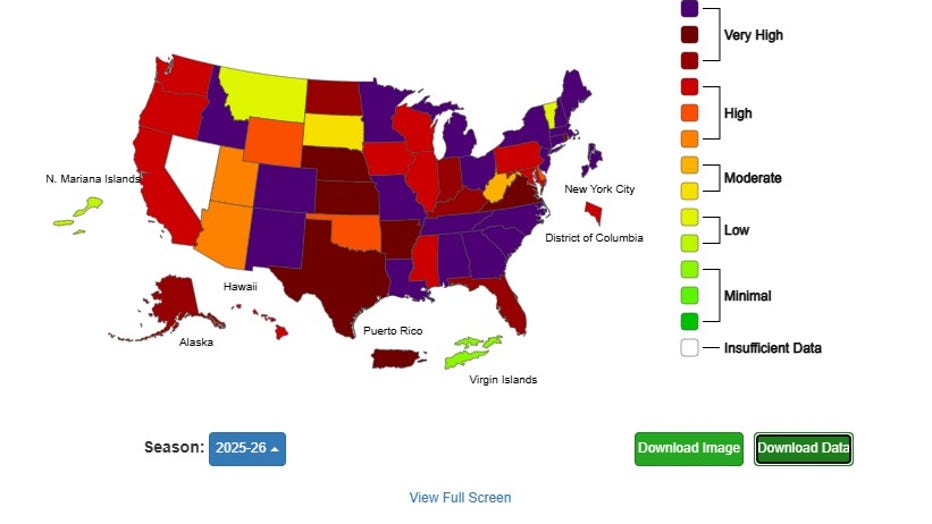
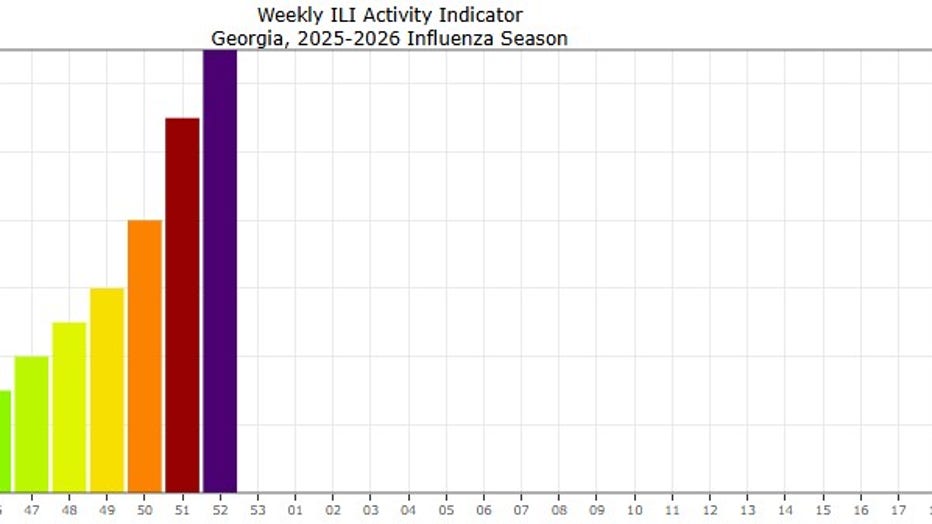
Flu activity is surging across Georgia, pushing the state into the highest level of the "very high" category for reported cases, according to the latest public health data.
ATLANTA - Flu activity is surging across Georgia, pushing the state into the highest level of the "very high" category for reported cases, according to the latest public health data.
PREVIOUS STORY: Georgia moves into 'very high' flu activity category
What we know:
The Georgia Department of Public Health reports that during the week ending Dec. 27, seven flu-associated deaths were recorded statewide, along with 511 hospitalizations and 12 confirmed influenza outbreaks.
For the week ending Dec. 20, there were 2 flu-related deaths that week and 317 hospitalizations.
Since early October, Georgia has logged 29 flu-related deaths, 1,580 hospitalizations and 73 outbreaks, signaling one of the most severe flu seasons in recent years.
It appears that the hardest hit age category are those ages 5 to 24, followed by the 25 to 39 age group. The third-hardest hit age category is ages birth to 4 years old, followed by those older than 65. The least impacted age group so far has been those ages 50 to 64.
Health officials say influenza activity continues to trend upward, with nearly one-third of clinical lab tests now coming back positive.
What they're saying:
"In August, I knew this was going to be a bad year," said Dr. Cecil Bennett, Newnan Family Medicine Associates. "I told my staff this was going to be a bad year, and it's proving to be a bad year."
"The numbers are now alarming, and the numbers are most concerned about are the number of seniors that are actually going into the hospital and having complications and end up in the ICU," Dr. Bennett said. "Those numbers, I predict, are only going to get worse."

New flu numbers released, 1/3 of all tests positive
The new flu numbers have been released by the CDC and 1/3 of all tests are positive for the flu. Additionally, Georgia flu activity is considered to be "very high" at this time.
"Avoid those who are sick, wear a mask if we are sick or around people who are sick, make sure we wash our hands again, cough into our sleeves and not into our hands, all of these will decrease the risk of us getting the flu," Dr. Bennett said.
"Unfortunately, we still have about two more months of flu season that we have to go through, so it's not too late to get the flu shot," Dr. Bennett said.
Big picture view:
Georgia is not alone. Neighboring states — including Tennessee, Alabama, North Carolina and South Carolina — are also classified at the highest of the very high flu activity category, with Florida close behind.
The Centers for Disease Control and Prevention says influenza A(H3N2) is the dominant strain circulating this season, which is often associated with more severe illness, particularly among older adults and young children. Nationwide, the CDC estimates at least 11 million illnesses, 120,000 hospitalizations and 5,000 deaths so far this season.
Health officials urge anyone six months and older who has not yet been vaccinated to get a flu shot and to seek medical care early if symptoms worsen, especially those at higher risk for complications. Flu activity is expected to remain elevated for several more weeks.

Dr. Winawer talks about rising flu numbers
Dr. Winawer joined Good Day Atlanta on Jan. 5 to talk about the rise in flu cases across the U.S.
After several years of unusually low flu activity during the COVID-19 pandemic, influenza cases and deaths have risen sharply and are now returning to — and in some cases exceeding — historical pre-pandemic levels, according to data from the Centers for Disease Control and Prevention.
Health experts note that the last five years were an anomaly for influenza. During the height of the pandemic in 2020 and 2021, widespread masking, school closures, reduced travel and social distancing led to what researchers described as a near disappearance of the flu, with deaths dropping from a typical annual range of 25,000 to 50,000 nationwide to fewer than 1,000 in some seasons.
As those mitigation measures ended, flu activity rebounded quickly. The 2023–2024 season marked a return to more typical pre-pandemic patterns, with an estimated 40 million illnesses and about 28,000 deaths nationwide. The following 2024–2025 season was classified by the CDC as "high severity," becoming the most severe flu season since 2017–18 and recording a sharp increase in hospitalizations along with a record number of pediatric deaths for a non-pandemic year. As of early 2026, CDC surveillance shows influenza activity remains elevated and continues to increase across much of the United States.
What you can do
What they're saying:
Health officials recommend that everyone 6 months and older get a flu shot each year. Vaccination can help protect you from getting sick and also helps protect people around you who are more vulnerable, including older adults and those with weakened immune systems. It takes about two weeks after vaccination for your body to build protection, so getting a flu shot sooner rather than later is important. The CDC says that being vaccinated can reduce the risk of severe illness, hospitalization, and, in rare cases, death. If you have questions about the vaccine, a healthcare provider can help you decide what is best for you.
Flu shots are widely available at public health departments, doctors’ offices, grocery stores, clinics, and pharmacies. No matter where you get vaccinated, it is one of the most effective steps you can take during flu season.
Flu symptoms can range from mild to severe and may include fever, cough, sore throat, runny or stuffy nose, body aches, headaches, chills, and fatigue. Some people are at higher risk for serious complications, including adults 65 and older, young children — especially those under age 2 — pregnant women, and people with chronic conditions such as asthma, diabetes, or heart disease. In some cases, doctors may prescribe antiviral medications, which work best when started within 48 hours of symptoms.
There are also simple steps you can take to help prevent the spread of the flu:
- Wash your hands often with soap and warm water. If soap and water are not available, use alcohol-based hand sanitizer.
- Cover coughs and sneezes with your elbow or sleeve.
- Avoid touching your face, especially your eyes, nose, and mouth.
- If you are sick, stay home from work or school until you are fever-free for at least 24 hours without the use of fever-reducing medicine.
- If you are caring for someone who is sick, limit their contact with others in the household as much as possible.