

Why Georgia Tech students are living in a missile silo
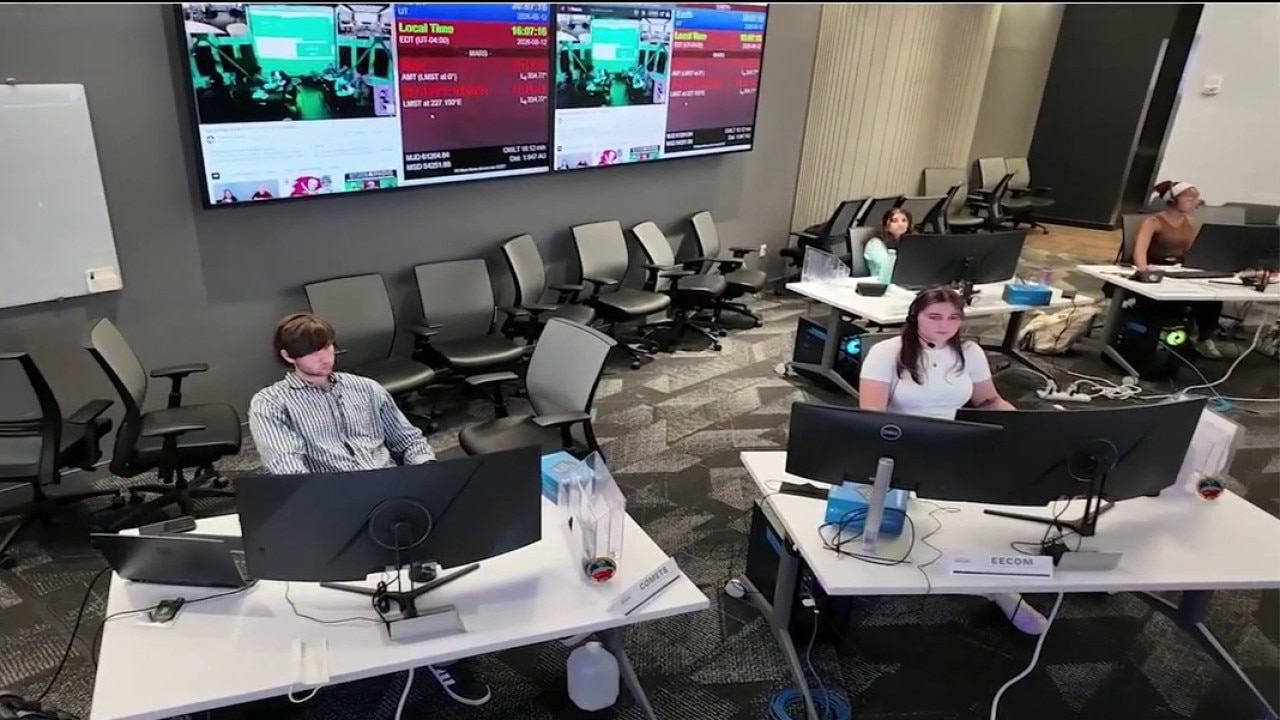
Georgia Tech team runs simulated Mars mission
Georgia Tech students are operating a simulated Mars mission with a crew living inside an isolated Arkansas missile silo.
ATLANTA - A group of college students on Georgia Tech's campus is on a mission to Mars.
While it's a simulated mission, the research and training they're doing is very real.
What we know:
SEA 1 - THALASSA mission control is on Georgia Tech's campus, while the six-member crew is living in isolation about 500 miles away in a former nuclear missile silo called Titan Ranch in Vilonia, Arkansas.
The idea was conceived by Vic Paulson, an aerospace engineering Ph.D. student, who was inspired after experiencing a zero-gravity flight.
"An analog astronaut mission is taking as close to an actual space mission as you can get, and simulating it on Earth," Paulson said. "For our astronauts we want to mirror their mental state as much as possible of what it would be like being on Mars."
Paulson and her team engineered and built all equipment for the mission in about ten months, including the command center communication system and the space suits.
The goal is to better understand how humans operate in space-like conditions.
By the numbers:
The six-member crew is living about 600 miles away from campus in an old nuclear missile silo in Arkansas for 10 days.
The crew spends an hour and a half to two hours exercising each day while consuming freeze-dried food and breathing recycled air.
Because signals take time to travel to Mars, mission control in Atlanta communicates with the crew on a 20-minute delay during 24/7 operations.
"These students have been trained for six months," Vic Paulson, Southeast Analog founder, said. "They've had simulation weekends to prepare. They're using proper voice loop terminology."
The organization is the first entirely student-run analog astronaut mission organization in the United States, Paulson said.
It was founded and is led out of Georgia Tech here in Atlanta, and now includes students from more than 30 universities.
What they're saying:
Gabriel Buggi, incoming Southeast Analog president, said the training is invaluable.
"[To] understand the kind of challenges that come with living on another planet long term and conducting research," Buggi said.
Buggi said the suit hardware, the mission control architecture, the flight rules, and the onboard research program were all built by students.
What's next:
What’s next
The crew is well into their 10-day mission, which began on August 7th and is scheduled to conclude on Tuesday.
Buggi will take over the leadership role from Paulson, and hopes to do a second mission next year in a more advanced pressurized facility.
Paulson hopes the team's work will help support the efforts needed to send real astronauts to Mars within her lifetime.
She said they would need the resources, funding, and public passion felt during the first lunar landing.
"Putting a human on Mars in the next few years is a technological feasibility, but it needs support," Vic Paulson, Southeast Analog founder, said.
The Source: The information in this story was gathered from FOX 5 reporter Rob DiRienzo, who visited Mission Control on Georgia Tech's campus, as well as interviews with Southeast Analog founder Vic Paulson and incoming president Gabriel Buggi.