

Ice storm final countdown: What you should do right now to prepare
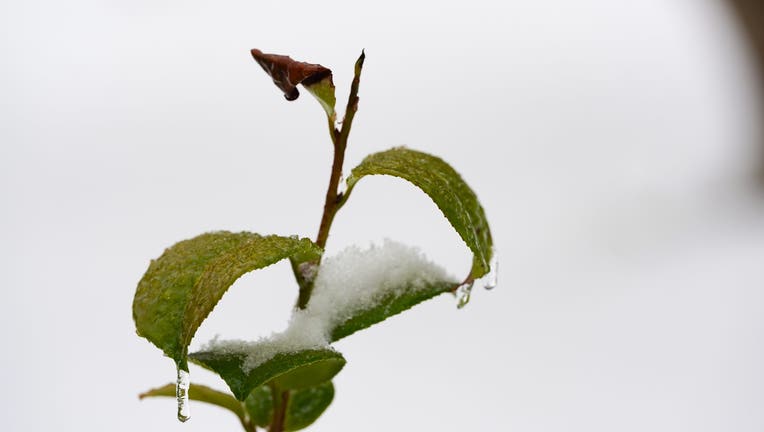
A leaf with snow and ice can be seen as Atlanta residents receive snow on January 10, 2025 in Atlanta, Georgia. (Photo by Megan Varner/Getty Images)
ATLANTA - With less than 24 hours before freezing rain is forecast to fall in metro Atlanta, potentially coating everything in up to an inch of ice.
What we know:
An Ice Storm Warning expanded to include most of the metro Atlanta are with a quarter-inch to a full inch of ice expected to accumulate. This will lead to downed trees and power lines. It will cause paved surfaces to turn into fields of unnavigable ice.
Be prepared to stay home for the next few days and be ready to hunker down without power for up to 72 hours or longer, according to Georgia Power.
What we don't know:
With the final day to prepare, here are some things you should be doing or planning to do.
Water everywhere
If the power goes out, the pumps at water treatment plants can fail, or pipes can freeze.
- The tub trick: Clean one bathtub and fill it with water. This isn't for drinking; it’s for manually flushing toilets. If on the off chance you lose water service, you can take a bucket and dump it into the top portion of the toilet to allow for flushing.
- The "slow drip": Once the temperature drops below freezing, leave your faucets (both hot and cold) at a very slow drip. This keeps water moving and prevents pipes from bursting.
- Open cabinets: Open the cabinet doors under your kitchen and bathroom sinks to let the house’s residual heat reach the pipes.
Deep freeze your food
Don't wait for the power to go out to protect your food.
- Deep freeze: Turn your refrigerator and freezer to their coldest settings right now. This creates a "buffer" of cold that can buy you an extra 4–6 hours if the power drops.
- The "ice block" trick: Fill Tupperware or clean milk jugs with water and freeze them tonight. If the power goes out, move these "ice blocks" from the freezer to the fridge to act as an old-fashioned icebox.
- The coin test: If you have to leave your home, place a frozen cup of water in the freezer with a coin on top. If you return and the coin is at the bottom, you know the food thawed completely and is unsafe to eat.
Good eats
Don’t just buy food; prepare it while you still have a stove and microwave.
- Hard-boil eggs: They are a perfect, no-cook protein that stays good for a few days.
- Pre-cook meats: Brown some ground beef or grill chicken tonight. Reheating meat on a camping stove (or eating it cold) is much easier than cooking it from scratch in the dark.
- Fill the Thermos: Boil a large pot of water right before the storm hits and put it in a high-quality thermos. You’ll be very grateful for hot coffee or oatmeal on Sunday morning without needing a heat source. You will want to do this late Saturday evening.
Heating up your home
You can’t heat a whole house without power, but you can heat one room.
- Pick the "warm room": Choose a small room with the fewest windows (often a bedroom or den).
- The blanket fort: If it gets truly cold, don’t be afraid to set up a tent indoors or build a literal blanket fort. Keeping your body heat concentrated in a tiny space makes a massive difference.
- Seal the drafts: Use those clean towels from your laundry to block the gaps at the bottom of exterior doors.
Let there be light
- The "jug lantern": If you have a headlamp or flashlight, strap it facing inward toward a gallon jug of water. It diffuses the light and illuminates the entire room.
- One light on: Leave one lamp switched "On" so that when the power finally returns, even if it’s 3 a.m., you’ll know immediately.
The great outdoors
- Gas up: If you have a car, fill the tank now. If the power is out, gas station pumps won't work.
- Wipers Up: For those without carports for garages, pull your windshield wipers away from the glass so they don't freeze to the windshield.
- Clear the path: If you have salt or even non-clumping kitty litter, sprinkle it on your front steps before the rain starts to help with traction later. You can also use bird seed.
- Outdoor furniture: If you have a patio umbrella, take it down. The weight of the ice will snap the ribs.
- Vehicle placement: If you have a garage, use it. If not, park away from trees. A single iced-over pine limb can crush a roof.
- Tankless water heaters: If yours is mounted on an exterior wall, it is highly vulnerable. Ensure it stays plugged in (it has internal heaters), but if the power fails, you should drain it according to the manual to prevent the heat exchanger from cracking.
- Fuel up: If you have a gas grill, make sure the propane tank is full today. You can't use it inside, but if you're stuck for three days, it's the only way you'll get a hot meal once the microwave is dead. Never use a gas oven, grill, or camping stove inside for heat. Carbon monoxide is a silent killer, and it’s a major risk during Southern ice storms.
Digital details
Ice storms in the South often lead to overloaded cell towers or "micro-outages" where the internet stays up but power is down.
- Download offline maps: Use Google Maps to download the metro Atlanta area for offline use. If cell towers get bogged down, GPS will still work.
- The "one text" rule: Tell your out-of-state emergency contact that you will text them once a day at a specific time to save your phone battery.
- Screenshot everything: Take screenshots of your insurance policy, emergency phone numbers, and any medical prescriptions. Don't rely on being able to log into an app.
- Brightness down: Set your phone to "Low Power Mode" and turn your brightness to the minimum before the power goes out. Every percent of battery is a lifeline for weather updates later.
- Surge protection: Unplug your microwave, TV, and computer. When Georgia Power flips the grid back on, the initial surge is what usually kills appliances.
Safety dance
- The 3-foot rule: If you use a space heater, keep it 3 feet away from curtains, bedding, or furniture.
- Battery check: Ensure your Carbon Monoxide (CO) detector has fresh batteries. CO poisoning is a major risk during ice storms when people use alternative heating or run generators too close to the house.
- Flashlights over candles: Avoid candles if possible. One accidental tip-over while you're bundled in blankets can be catastrophic.
Pets preps
- The "paw check": If you have to take a dog out, wipe their paws immediately when they come back in. Atlanta uses salt and chemical de-icers that can burn their pads or be toxic if licked.
- Medication buffer: If you are low on a critical prescription, try to get to the pharmacy today. Once the ice hits tomorrow afternoon, many pharmacies will close due to staff being unable to travel.
The Source: The details in this article come from multiple emergency management preparation lists. The National Weather Service contributed to this report.