

Artemis II: Meet the astronauts headed to the moon and back
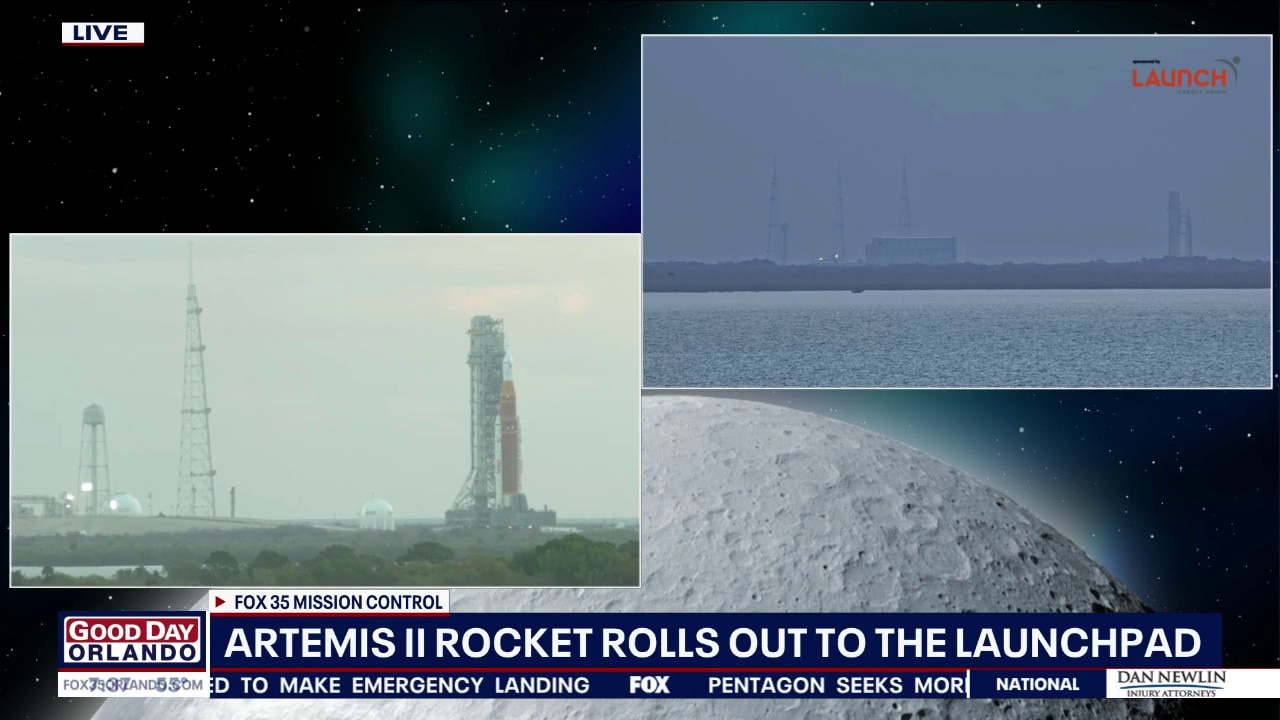
Artemis II rocket rolls out to KSC launch pad
NASA is rolling out its massive Artemis II moon rocket back to the launch pad at Kennedy Space Center ahead of a possible April launch. Dr. Addy Dove, a planetary scientist at the University of Central Florida, joins Good Day Orlando to talk about the importance of the mission.
Artemis II will be the first crewed mission to the moon in more than 50 years. The mission is expected to not only test the technological capabilities to send the Orion spacecraft to deep space and back, but also how deep space impacts humans.
Artemis II is the second test flight in a series of more advanced space flights with the ultimate goal of landing humans back on the moon's southern region – and eventually building a "moon base."
Here's what you need to know about the four astronauts leading the Artemis II mission.
Meet the Artemis II astronauts
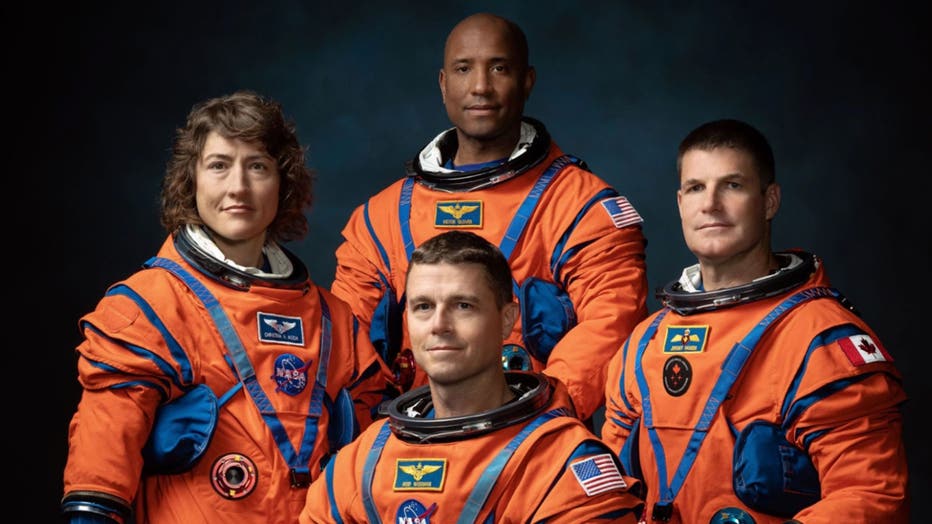
The crew of NASA’s Artemis II mission (left to right): NASA astronauts Christina Hammock Koch, Reid Wiseman (seated), Victor Glover, and Canadian Space Agency astronaut Jeremy Hansen. (Credit: NASA)
There are three NASA astronauts and one Canadian Space Agency astronaut that are part of the Artemis II flight mission:
- Commander Reid Wiseman
- Pilot Victor Glover
- Mission specialist Christina Koch
- Mission specialist Jeremy Hansen (Canadian Space Agency).
What they're saying:
"I could not be prouder that these brave four will kickstart our journeys to the Moon and beyond," said Director of Flight Operations Norm Knight at NASA Johnson.
"They represent exactly what an astronaut corps should be: a mix of highly capable and accomplished individuals with the skills and determination to take on any trial as a team. The Artemis II mission will be challenging, and we’ll test our limits as we prepare to put future astronauts on the Moon. With Reid, Victor, Christina, and Jeremy at the controls, I have no doubt we’re ready to face every challenge that comes our way."
Big picture view:
Reid Wiseman
Reid Wiseman is a 27-year Navy veteran, a pilot, a father, an engineer, and a Baltimore native.
He was selected as an astronaut by NASA in 2009 and served as Flight Engineer aboard the International Space Station for Expedition 41 in 2014. During the 165-day mission, Reid and his crewmates completed over 300 scientific experiments in areas such as human physiology, medicine, physical science, Earth science and astrophysics. This was Reid’s first spaceflight, which also included almost 13 hours as lead spacewalker during two trips outside the orbital complex.
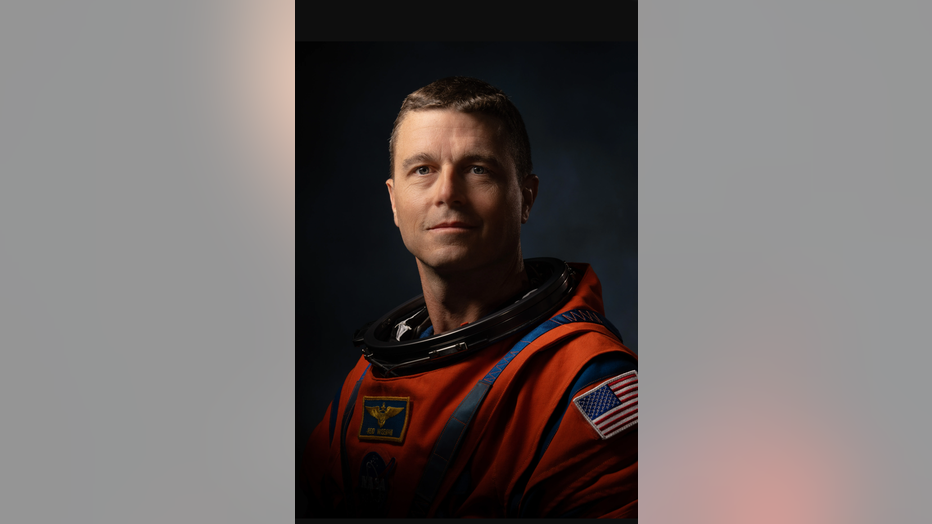
Jeremy Hansen, Commander of Artemis II. Credit: NASA
He earned a Bachelor of Science degree from Rensselaer Polytechnic Institute in Troy, New York, and a Master of Science in Systems Engineering from the Johns Hopkins University in Baltimore. He served as Chief of the Astronaut Office. Wiseman has been assigned as Commander of NASA’s Artemis II mission.
Victor Glover
Victor J. Glover, Jr. was selected as an astronaut in 2013 while serving as a Legislative Fellow in the United States Senate.
He most recently served as pilot of the Crew-1 dragon spacecraft, named Resilience, which flew to the International Space Station, where he also served as Flight Engineer for Expedition 64/65.
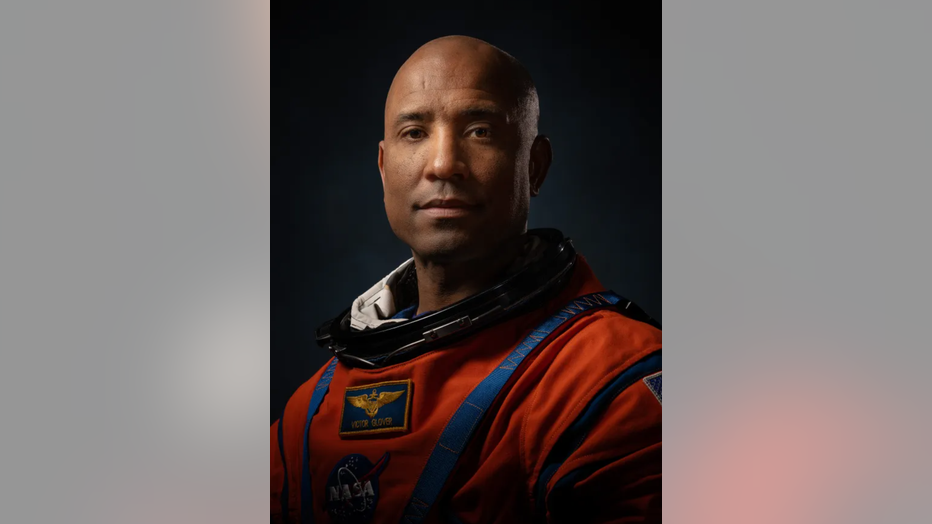
Victor Glover, Pilot of Artemis II Credit: NASA
The California native earned an undergraduate engineering degree as a two-sport athlete, while serving his community. Glover is a Naval Aviator and was a test pilot in the F/A‐18 Hornet, Super Hornet and EA‐18G Growler.
He and his family have been stationed in many locations in the United States and Japan.
Glover has been assigned as Pilot of NASA’s Artemis II mission around the Moon.
Christina Koch
Christina Koch is an explorer and engineer who became an astronaut in 2013.
Her previous experience in spaceflight was living and working on the International Space Station for almost all of 2019 in Expeditions 59, 60, and 61. For this mission, she flew on the Russian Soyuz rocket and trained extensively in Russia.
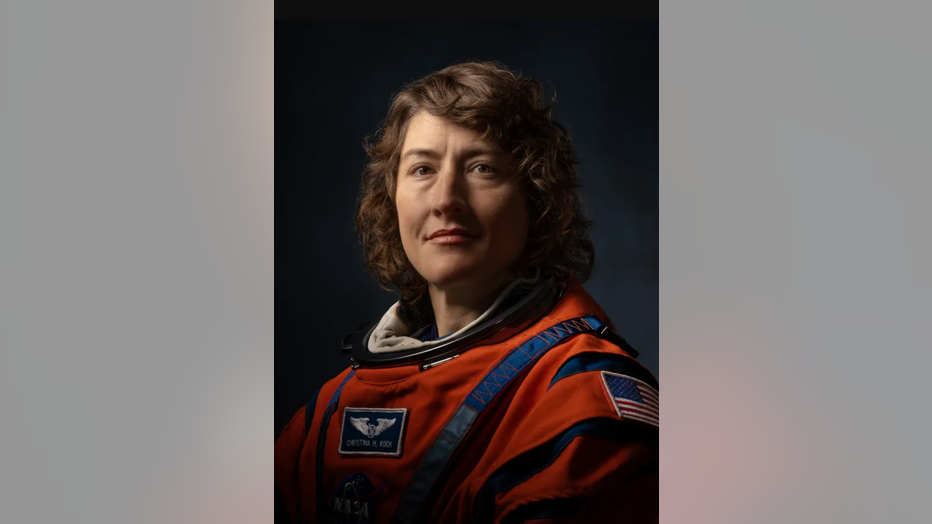
Christina Koch, Mission Specialist of Artemis II Credit: NASA
Christina spent a total of 328 consecutive days in space and participated in the first all-female spacewalks. After this spaceflight and before being assigned to Artemis II, she served as Branch Chief of the Assigned Crew Branch in the Astronaut Office and did a rotation as Assistant for Technical Integration for the Center Director at NASA’s Johnson Space Center.
Prior to becoming an astronaut, Christina’s experience spanned both space science mission instrument development and remote scientific field engineering in the Antarctic and Arctic.
Jeremy Hansen
Representing Canada, Jeremy Hansen is making his first flight to space.
A colonel in the Canadian Armed Forces and former fighter pilot, Hansen holds a Bachelor of Science in space science from Royal Military College of Canada in Kingston, Ontario, and a Master of Science in physics from the same institution in 2000, with a research focus on Wide Field of View Satellite Tracking.
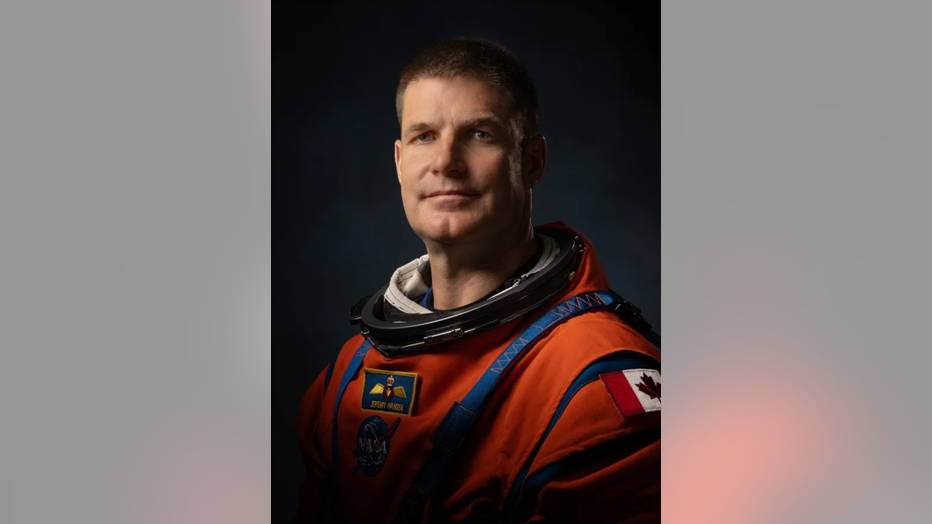
Jeremy Hansen, Mission Specialist of Artemis II Credit: NASA
He was one of two recruits selected by CSA in May 2009 through the third Canadian Astronaut Recruitment Campaign and has served as Capcom in NASA’s Mission Control Center at Johnson and, in 2017, became the first Canadian to be entrusted with leading a NASA astronaut class, leading the training of astronaut candidates from the United States and Canada.
Hansen is married with three children.
The Artemis II mission
Dig deeper:
The approximately 10-day Artemis II flight test will launch on the agency’s powerful Space Launch System rocket, prove the Orion spacecraft’s life-support systems, and validate the capabilities and techniques needed for humans to live and work in deep space.
"We are going back to the Moon and Canada is at the center of this exciting journey," said the Honorable François-Philippe Champagne, the minister responsible for the Canadian Space Agency.
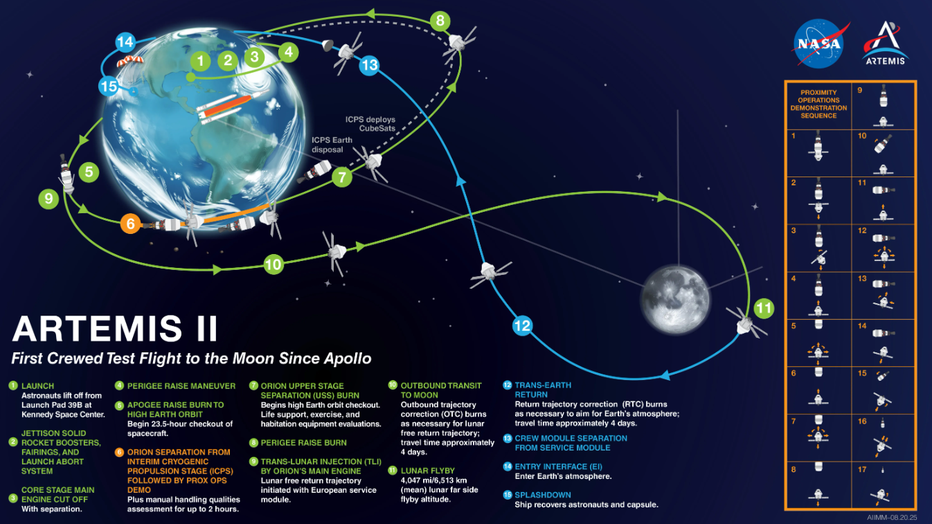
Artemis II flight plan. Credit: NASA infographic
"Thanks to our longstanding collaboration with NASA, a Canadian astronaut will fly on this historic mission. On behalf of all Canadians, I want to congratulate Jeremy for being at the forefront of one of the most ambitious human endeavors ever undertaken. Canada’s participation in the Artemis program is not only a defining chapter of our history in space, but also a testament to the friendship and close partnership between our two nations."
Artemis III, Artemis IV, and Artemis V
The Artemis mission is a series of at least 5 space flights whose goal is to land astronauts on the moon.
Artemis I (November 2020): An uncrewed flight to the lunar service and back to Earth.
Artemis II (Tent. April 2026): A crewed flight to the moon's orbit and back to Earth.
Artemis III (2027): Low-orbit demonstration flights of one or both commercial Landers from Space and Blue Origin. It will also be a crewed mission to test "rendezvous and docking capabilities between Orion and private commercial spacecraft needed to land astronauts on the Moon."
Artemis IV (early 2028): This mission's goal is to land humans on the moon and have them transfer from the Orion spacecraft to a lunar lander. The goal is to figure out whether SpaceX's or Blue Origin's will house the astronauts. Work here will also be to standardize the SLS rocket.
Artemis V (late 2028): A lunar surface mission, as well as the initial building of a "moon base."
NASA said it then envisions yearly launches.
The Source: This story was reported from Orlando and Los Angeles. Information pulled from NASA and Artemis II mission web pages, and NASA news conferences.